Bánh Xèo
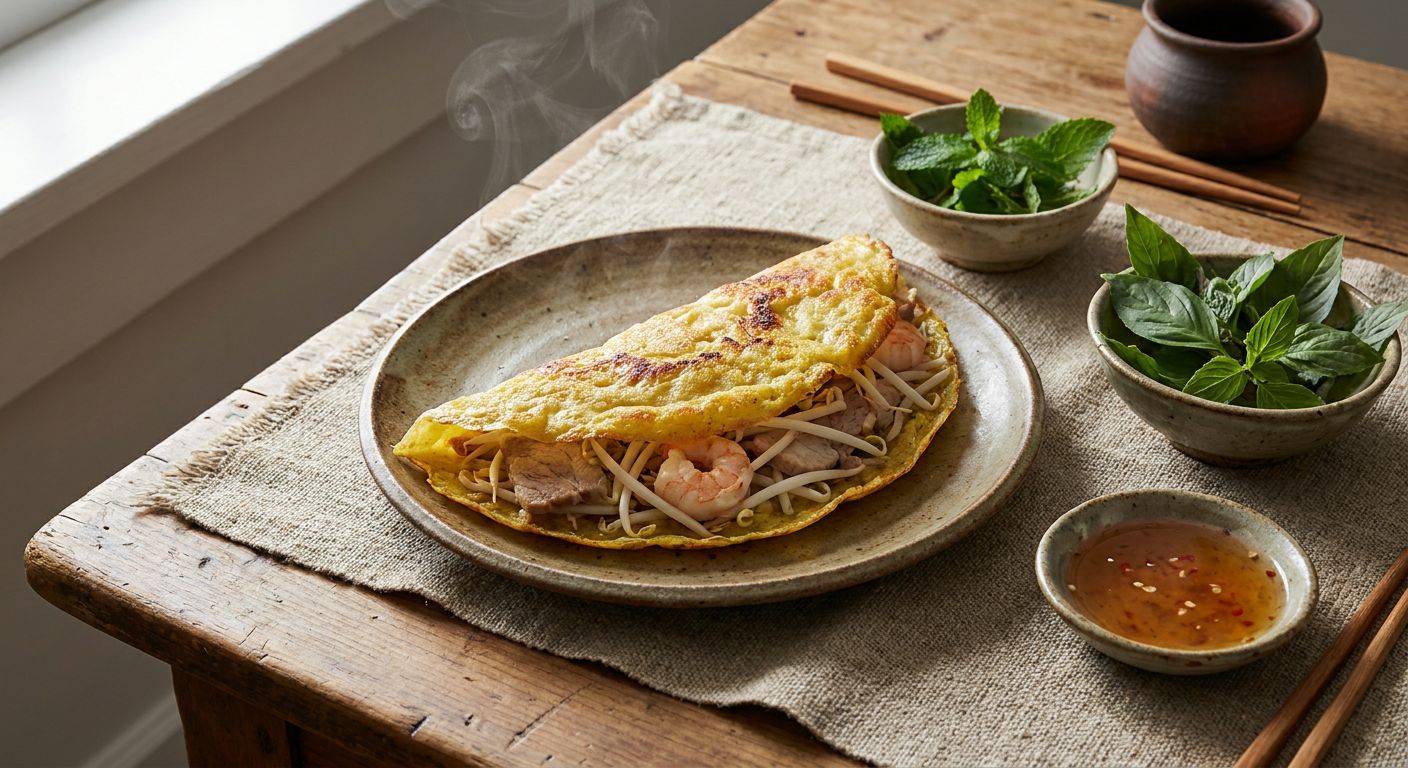
Bánh xèo — the sizzling crepe named for its own sound — is Vietnam's answer to the folded omelet-pancake: a turmeric-coconut batter fried thin and lacy, wrapped around shrimp, pork, and bean sprouts, then eaten in lettuce cups with herbs and nuoc cham. The crepe shatters; the lettuce softens; the sauce ties it. No fork, no plate etiquette — hands only.
- **Rest the batter 30 minutes.** Rice flour batters fry lacy and crisp only after hydration; unrested batter fries dense. The consistency target is thin cream — add water by the spoon if it thickens as it rests.
- **The bridge:** rice flour is the crispness engine — wheat flour makes a pancake, not a lace shell, and cannot be bridged. Coconut milk is traditional and adds richness; the northern versions skip it, so omitting it is not a failure, just a different school.
Bánh Xèo
Prep: 30 minutes, plus 30 minutes resting · Cook: 20 minutes · Total: About 1 hour 20 minutes · Makes 4 large crepes
Ingredients
The batter
- 150 g rice flour, 30 g cornstarch, ½ tsp turmeric, 1 tsp salt
- 300 ml coconut milk, 200 ml water
- 2 spring onions, sliced thin
- Rested 30 minutes (the rice flour hydrates and the bubbles settle)
The filling
- 12 shrimp (about 200 g), peeled, halved; 150 g pork belly or shoulder, sliced thin
- 200 g bean sprouts; a handful of chives
To eat
- Lettuce cups (about 150 g), mint, perilla or cilantro
- Nuoc cham (the #27's recipe: fish sauce, lime, sugar, garlic, chili)
Instructions
- **Crisp the filling first (2 minutes per crepe).** In a small nonstick or cast-iron pan (20–22 cm) over medium-high heat, film with oil, and fry 3 shrimp and a few pork slices until just cooked — they will sizzle and the pork's edges will brown. Checkpoint — the filling should be nearly cooked before the batter goes in — the crepe cooks in 3 minutes and raw filling would stay raw. Push the filling to one side of the pan.
- **The pour, the sizzle, the lid (2–3 minutes).** Stir the batter, pour a ladleful into the hot pan, and immediately swirl to a thin layer — it should crackle loudly (the "xèo"). Drizzle a teaspoon of oil around the pan's edge, cover 2 minutes to steam the top, then uncover and let the bottom crisp 1 more minute. Scatter sprouts and chives on one half, fold the crepe over, and slide it out. Checkpoint — the finished crepe should be lacy at the edges, golden from turmeric, and crisp enough to crackle when cut — the bottom fried to a shattering shell, the top set by steam. If it bends like an omelet, the batter was thick or the heat low; the crisp shell is the dish.
- **Eat by hand, in lettuce cups.** Tear a piece of crepe into a lettuce cup, add herbs, dip the whole bundle in nuoc cham, and eat in one or two bites. Checkpoint — eating test: the first bite should crunch (crepe), snap (sprouts), and then go soft (lettuce, herbs) with the sauce's salty-sour lift. This is a texture stack — if you plate it with a fork, you have made an omelet and lost the format.
Troubleshooting
| Symptom | Cause | Fix |
|---|---|---|
| Crepe bends, never crisps | Batter thick, heat low, or crowded pan | Thin cream batter; medium-high; one crepe at a time |
| Crepe tears at the fold | Folded too early or too thick | Crisp first, fold once the shell sets |
| Sticks to the pan | Not enough oil at the edge | The teaspoon drizzle around the rim each time |
Storage, Make-Ahead & Variations
- The batter keeps 1 day refrigerated (re-whisk); crepes are made and eaten in sequence — the family stands at the stove by tradition, each crepe eaten as it leaves the pan. Nuoc cham keeps a week. - Variations: the central Vietnamese version is small and thick (bánh khọt, #38); the southern version adds more coconut and sprouts. The fusion direction: bánh xèo's batter as a crisp shell for the karaage (#23), with the nuoc cham doing exactly what it always does.