Balachaung
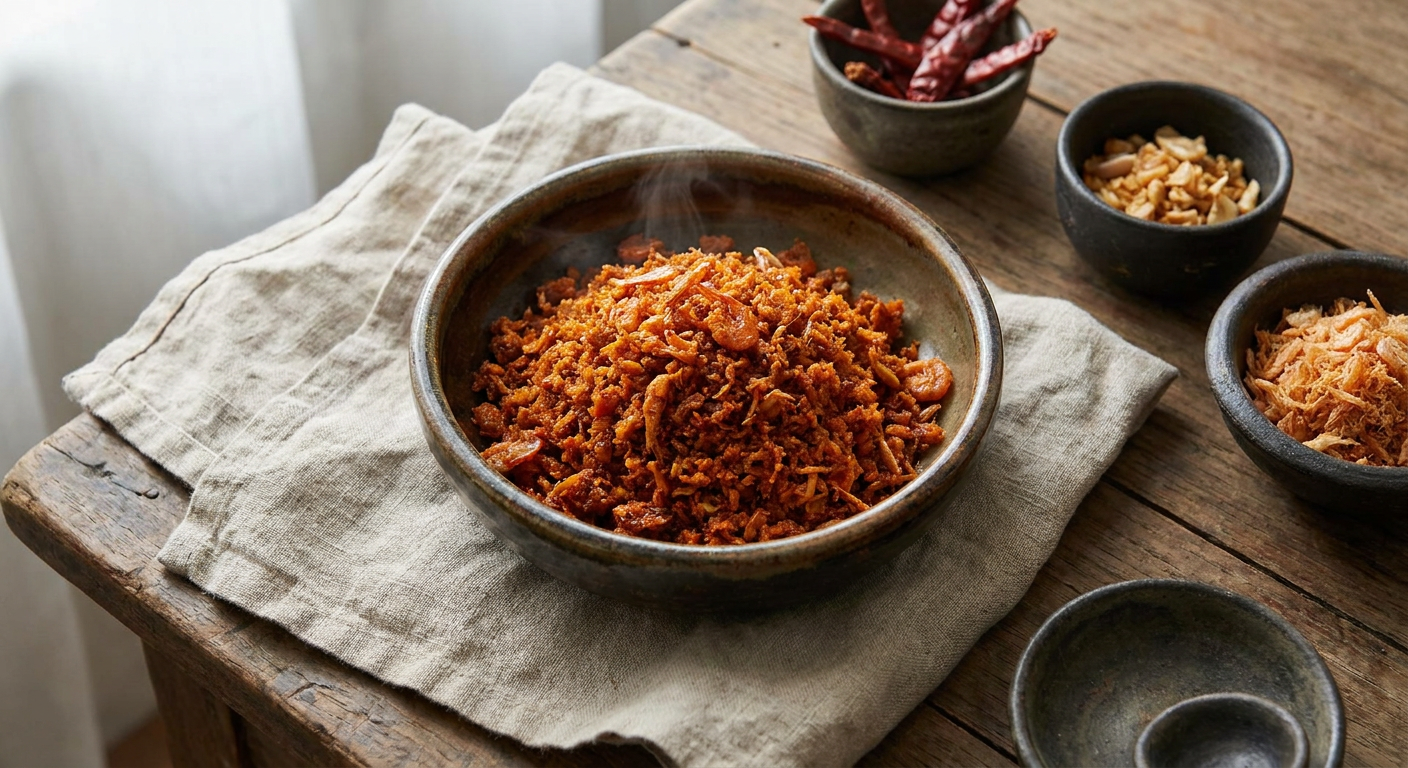
Balachaung — Burmese crispy shrimp relish — is the condiment that quietly rules every Burmese table: dried shrimp pounded with fried garlic, shallots, and chilies into a crumbly, savory-spicy, intensely flavored relish that goes over rice, into soups, alongside curries (#94), and straight off the spoon. It is Myanmar's answer to the shrimp-paste condiments of its neighbors — drier, crisper, and made to be eaten by the pinchful.
Quantities live in the recipe card.
The relish
- the lift
- **Pound the shrimp first.** Blitz or pound the dried shrimp to a coarse, fluffy crumb — not a powder. This texture is the relish's body, and pre-pounding lets it fry evenly.
- **The bridge:** dried shrimp are in every Asian grocery; there is no substitute — they are the dish. The ngapi is the depth layer and bridges with fish sauce in the frying oil.
Balachaung
Prep: 15 minutes · Cook: 25 minutes · Total: About 40 minutes · Makes about 1½ cups
Ingredients
The relish
- 100 g dried shrimp, rinsed briefly and patted dry
- 8 cloves garlic (about 30 g), sliced; 3 shallots (about 100 g), sliced thin
- 8–10 dried red chilies (about 15 g), snipped, or 1 tbsp chili flakes
- ½ tsp turmeric; 1 tsp shrimp paste (ngapi) or fish sauce (about 5 ml)
- 150 ml neutral oil; ½ tsp salt, or to taste
- 1 tbsp tamarind or lime juice (about 15 ml) — the lift
Instructions
- **Fry the aromatics in stages (15 minutes).** In the oil over medium heat, fry the garlic until pale gold (2 minutes), lift with a slotted spoon; fry the shallots until golden (3–4 minutes), lift; fry the chilies 30 seconds, lift. The oil stays in the pan, now aromatically flavored. Checkpoint — each element should be fried separately to its own doneness — the garlic barely gold (it darkens as it drains), the shallots deep gold, the chilies just fragrant. One-pan-everything burns the garlic while rawning the shallots; the stages are the technique.
- **Fry the shrimp (5–7 minutes).** Add the pounded shrimp to the flavored oil and fry 5–7 minutes, stirring constantly, until it turns deep orange-pink, toasts fragrantly, and crisps. Stir in the turmeric, ngapi, and salt for the last minute. Checkpoint — the shrimp should smell toasted rather than fishy and fry to a crisp crumb that rattles in the pan. The oil will turn a deep orange. The ngapi dissolves in — taste at this stage: intensely savory, toasty, faintly funky, salty.
- **Combine and finish.** Return the fried garlic, shallots, and chilies to the pan with the shrimp; stir 2 minutes to marry. Off the heat, add the tamarind or lime — just enough to lift the whole relish — and let it cool in the pan, the oil soaking back in. Checkpoint — eating test over plain rice: a pinch of balachaung transforms it — crunch, shrimp-savor, garlic's sweetness, chili's slow fire, the sour note arriving last. The relish should be crumbly and glistening with oil, never oily-wet, and so intense that a teaspoon flavors a whole bowl of rice. It improves over days as the flavors marry in the jar.
Troubleshooting
| Symptom | Cause | Fix |
|---|---|---|
| Relish burnt-bitter | Garlic and shrimp fried together, too dark | The stages, and pull the garlic early |
| Texture oily-wet | Oil over-measured, under-fried shrimp | Fry the shrimp drier; drain before jarring |
| Flavor flat despite salt | Missing the sour lift | The tamarind or lime at the end is structural |
Storage, Make-Ahead & Variations
- Keeps 2–3 weeks refrigerated in a sealed jar (the oil preserves); improves in week one. Room temperature for a week in hot climates, per the Burmese table; refrigerate here. - Variations: the fish version, the extra-chili version. The fusion crossings — #147's balachaung caesar and, in spirit, #99's dip logic reversed — both stand on this recipe's crumb.