Bulgogi
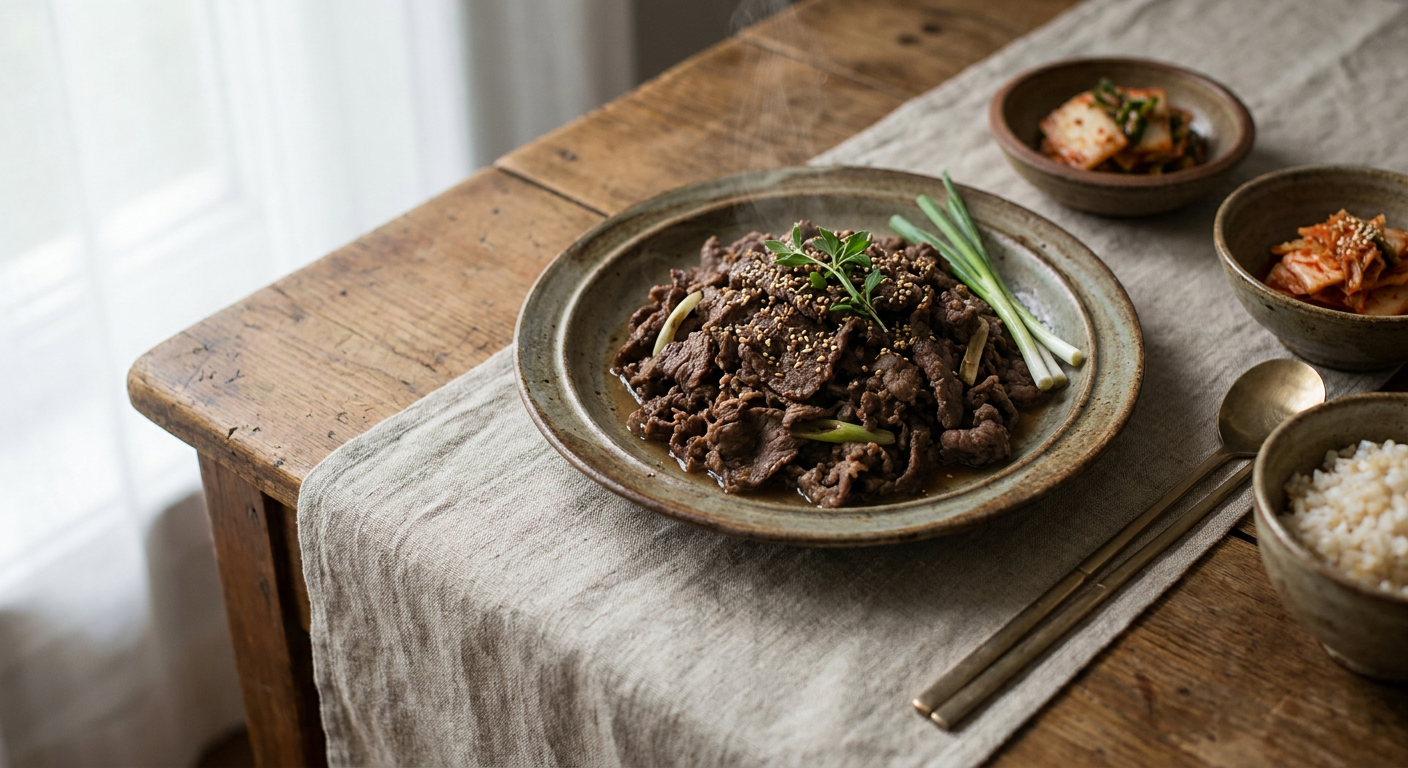
Quantities live in the recipe card.
The beef and marinade
- ask for "bulgogi slice" or freeze 1 hour (about -5 °C firm) and slice yourself
- the pear's juice does most of the sweetening
To cook and serve
Doneness & Quality Checkpoints
- The marinade: 1 hour, pear-forward, shaken off before searing.
- The sear: screaming pan, single layer, glaze and char in 90 seconds.
- The service: ssam format with ssamjang, or the rice bowl with juices.
Bulgogi
Prep: 20 minutes, plus 1 hour marinating · Cook: 10 minutes · Total: About 1 hour 30 minutes · Serves 4
Ingredients
The beef and marinade
- 600 g beef (ribeye or sirloin), sliced 2–3 mm thin — ask for "bulgogi slice" or freeze 1 hour (about -5 °C firm) and slice yourself
- ½ Asian pear (about 150 g), grated with juice; or ⅓ apple plus 1 tsp sugar as the bridge
- 4 cloves garlic, minced; 1 tbsp minced ginger (about 10 g); ½ onion (about 100 g), grated or minced
- 3 tbsp soy sauce (about 45 ml); 1 tbsp honey or brown sugar (about 20 g) — the pear's juice does most of the sweetening
- 1 tbsp toasted sesame oil (about 15 ml); 1 tsp toasted sesame seeds (about 4 g); a firm grind of black pepper
- 2 spring onions (about 30 g), sliced; a splash (1 tbsp, about 15 g) of water if needed
To cook and serve
- A grill, broiler, or ripping cast-iron pan; neutral oil
- Lettuce leaves (about 100 g), perilla or sesame leaves (about 20 g), sliced garlic (10 g) and chili for wrapping
- Ssamjang (3 tbsp doenjang or miso + 1 tbsp gochujang + 1 tsp sesame oil + garlic) for the wraps; steamed rice
Instructions
- **Sear screaming hot, in a single layer (90 seconds a batch).** Heat the grill, broiler, or cast-iron pan as hot as it goes — a cast-iron surface past 230 °C, shimmering. Shake the marinade off each beef slice (wet meat steams; you want the glaze), and sear in a single layer, undisturbed 45–60 seconds, then turn for another 30–45 seconds. Checkpoint — the slices should catch and caramelize immediately, the marinade's sugars lacquering them dark — the goal is glaze and char, not simmer. A crowded pan boils in its own marinade and turns gray and sweet-soupy: cook in four or five batches, or on a grill griddle where the liquid falls away.
- **Rest the batches, then pile and scatter.** Each batch rests 1 minute while the next sears; the pile is served with its collected juices spooned over, spring onions and sesame scattered. Checkpoint — the eating test straight: tender, thin, glossy with the pear-soy glaze, garlic and sesame in the finish, faintly charred at the edges. If the meat is gray and wet, the pan was crowded or the marinade not shaken off — the fix is always heat and space.
- **Serve ssam-style or over rice.** The wrap format: a lettuce or perilla leaf, a slice of bulgogi, a sliver of garlic and chili, a dab of ssamjang, folded and eaten whole. Or the rice bowl: bulgogi and its juices over hot rice. Checkpoint — the ssam bite should be its own balanced packet — cool lettuce, hot sweet meat, the salty-spicy ssamjang, raw garlic's bite. The rice bowl is the comfort version. Both are authentic; the wrap is the older idea.
Finish & Plate
The pile of glazed slices to the table with the wrap tray and rice, or individual rice bowls. Banchan (the #60's kimchi, pickled radish) around, and the grill kept hot for a second round — bulgogi at the table is a rhythm, not a course.
Troubleshooting
| Symptom | Cause | Fix |
|---|---|---|
| Meat gray, watery, sweet | Crowded pan, wet marinade | Shake dry, sear in batches, high heat |
| Meat tough | Sliced too thick | Freeze 1 hour; slice 2–3 mm |
| Marinade flavor absent | Under-marinated | The full hour minimum; massage it in |
Storage, Make-Ahead & Variations
- Marinated beef keeps 1 day; the marinade batch keeps 3 days for the next meat. Cooked bulgogi keeps 2 days and re-sears well. - Variations: the dak bulgogi (chicken) and dwaeji bulgogi (spicy pork, gochujang-based) siblings; the traditional stir-fry with onion and carrot. The fusion direction — #130's bulgogi cheesesteak — is this recipe in a hoagie roll, and the site's bridge logic says: make the marinade once, eat it twice.