Canh Chua Cá
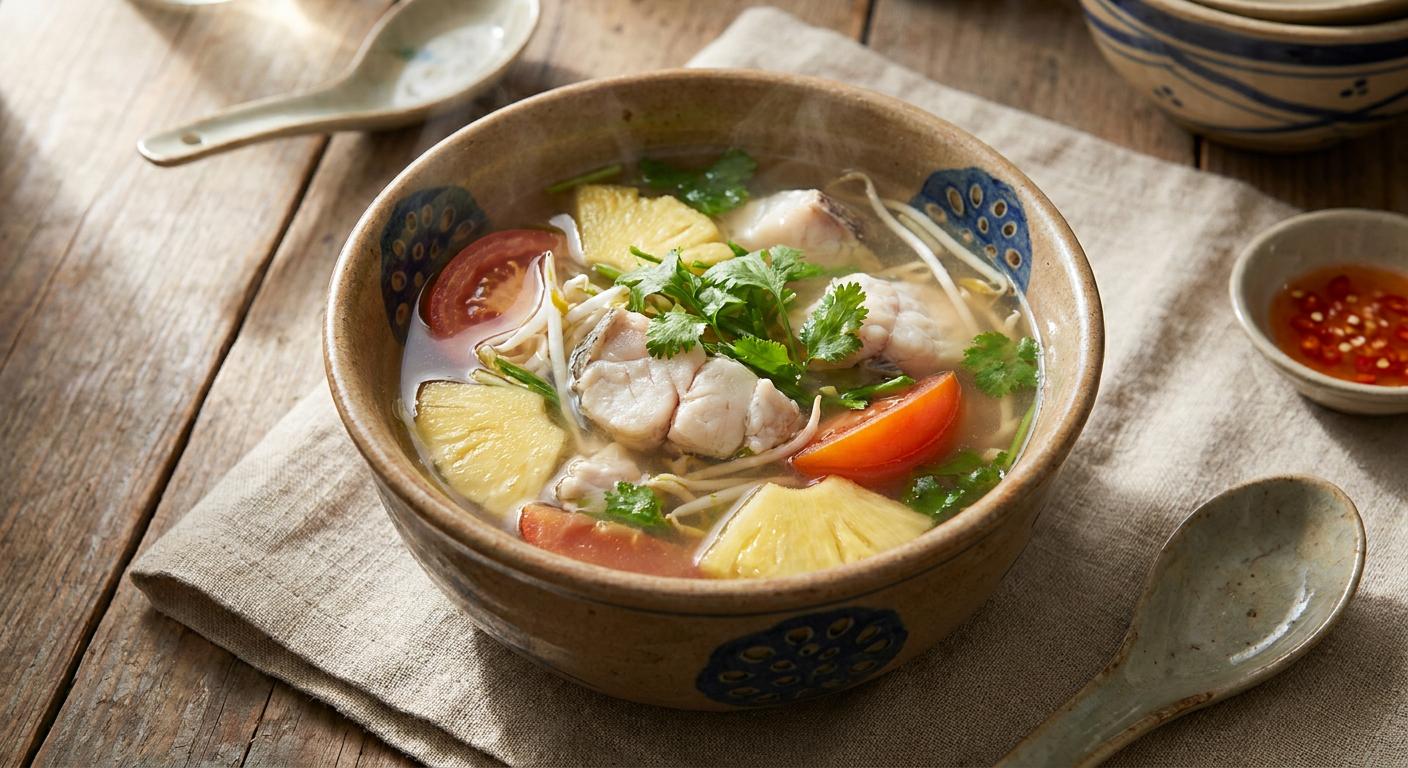
Canh chua — the Mekong Delta's sour fish soup — is hot-weather cooking at its most brilliant: tamarind sour, pineapple sweet, tomato umami, and a river fish poached in it all, finished with a sizzle of garlic and rice paddy herb. It is the antidote soup — the dish Vietnamese families make when the heat kills every appetite.
- **Soak and strain the tamarind first.** This is the sour engine, and its strength varies by brand — taste the strained liquid and adjust the soup at the end by the spoon. Bottled concentrate is consistent and a fine bridge.
- **The bridge:** ngò om (rice paddy herb) has a lemony-citrus flavor nothing quite copies; mint plus a strip of lime zest bridges. The Mekong version uses taro stem — skipped here without apology; bean sprouts and celery carry the crunch.
Canh Chua Cá
Prep: 20 minutes · Cook: 25 minutes · Total: About 45 minutes · Serves 4
Ingredients
The soup
- 500 g river fish (catfish is authentic; swai, tilapia, or snapper bridge), steaks or chunks
- 1 tbsp fish sauce (about 15 ml) rubbed on the fish; ½ tsp turmeric
- 800 ml water or light fish stock
- 3 tbsp tamarind pulp (about 45 g) soaked in 100 ml hot water, mashed and strained — or 2 tbsp bottled tamarind concentrate
- 200 g pineapple, bite chunks; 3 tomatoes (about 250 g), wedged
- 1 tbsp fish sauce, 1 tsp sugar (about 4 g), more to taste
- 100 g bean sprouts; 100 g celery (the Vietnamese leafy kind if found, or stalk), cut in lengths; 3 okra, halved (all optional but traditional)
The finish sizzle
- 2 tbsp oil; 3 cloves garlic, sliced; 1 tbsp minced shallot
- Rice paddy herb (ngò om) or cilantro and mint, a large handful
Instructions
- **Build the sour-sweet base (10 minutes).** Bring the water or stock to a simmer with the tamarind liquid, pineapple, and tomatoes. Simmer 5 minutes — the pineapple softens slightly and the tomato collapses into the broth, souring and sweetening it at once. Checkpoint — taste the broth now: the sour should lead clearly, the pineapple's sweetness trailing it, salt under both. This is a soup built on acid first — if it tastes like tomato soup with a sour hint, add tamarind by the spoon.
- **Add the fish and vegetables (8 minutes).** Slide the fish in — the broth should barely tremble, never boil (boiling fish makes it cloudy and the flesh tough) — with the okra, celery, and bean sprouts. Poach gently until the fish is just cooked through (63 °C). Checkpoint — the fish is done when it turns opaque and the flesh at the bone flakes under a chopstick's nudge. Pull the pot off the heat the moment it does — fish in sour soup continues cooking in residual heat, and overcooked fish is the most common failure.
- **The finish sizzle (1 minute).** Fry the garlic and shallot in the oil until golden, pour the whole sizzling spoonful over the soup's surface, and scatter the herbs. Serve immediately. Checkpoint — eating test: the first spoonful is sour-bright, sweet behind it, the fish tender and clean; the garlic sizzle rides the top; the herbs perfume the finish. Rice alongside to temper — canh chua is eaten as one dish of a rice meal, spooned over the rice by preference.
Troubleshooting
| Symptom | Cause | Fix |
|---|---|---|
| Soup tastes flat, one-note sour | Sugar or fish sauce short | Balance by teaspoons — sour needs both |
| Fish tough and dry | Boiled, or over-poached | Trembling broth, pull at 63 °C |
| Broth cloudy | Boiled fish, skipped skim | Bare simmer; skim after the fish goes in |
Storage, Make-Ahead & Variations
- Best on the day made; the fish over-cooks in storage, but the broth base (tamarind through tomato) keeps 3 days and revives with fresh fish. The sizzle and herbs are always last-minute. - Variations: the shrimp version (canh chua tôm — add the shrimp in the last 2 minutes); the chicken version. The fusion direction: this broth as the base for the tom yum mussels — the two sour-soup traditions of Southeast Asia meeting over shellfish.