Dakgalbi
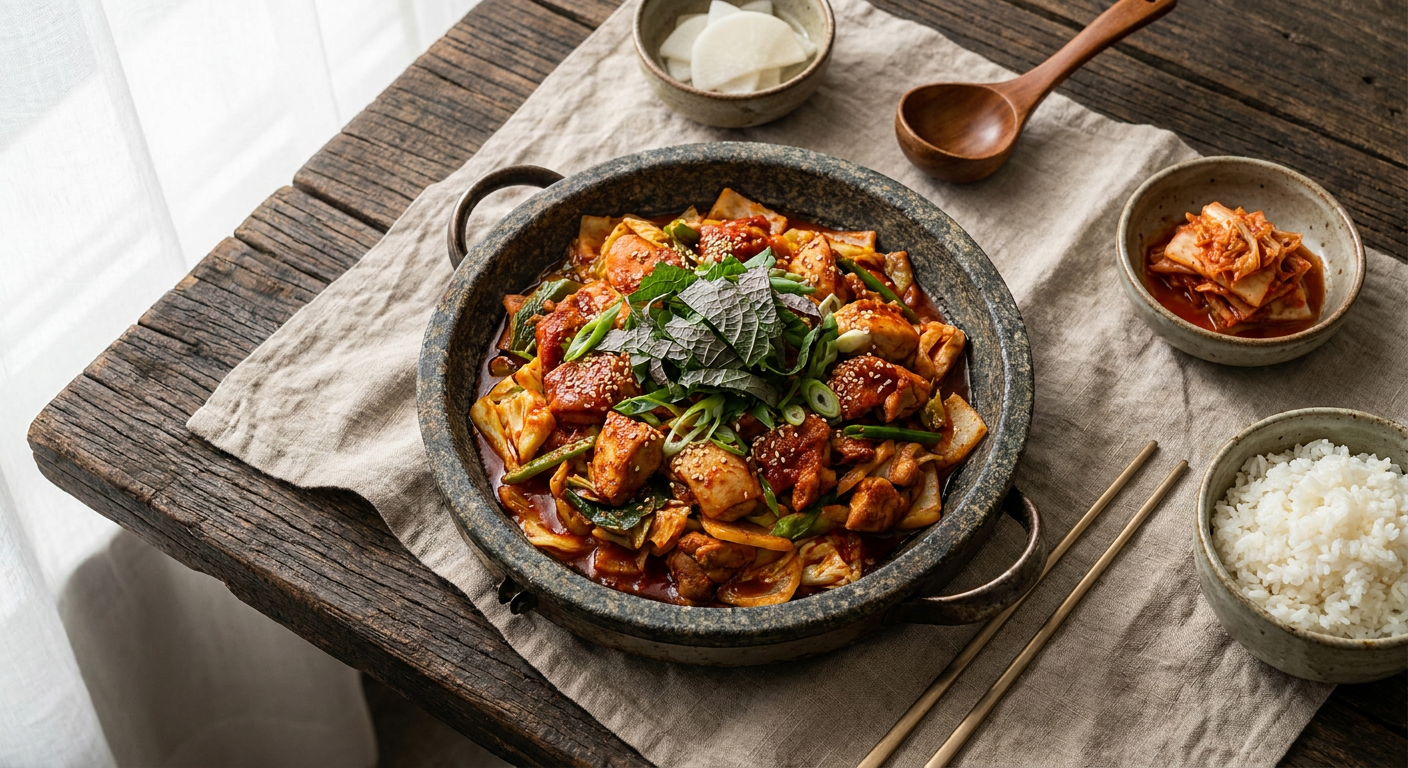
Dakgalbi — Chuncheon's spicy chicken stir-fry — is a big-pan party dish: chicken and cabbage, rice cakes and sweet potato, all tossed in a gochujang marinade and stir-fried together at the table until the whole pan runs red and caramelized. It is bibimbap's (#58) rowdy cousin — one sauce, one pan, everyone eating from it — and the finishing fried rice is mandatory.
- **Marinate the chicken 30 minutes.** The gochujang marinade is the dish's everything — the same trinity family as the bulgogi's (#59) soy version, turned red. Meanwhile, soak the rice cakes if they are hard, and cut everything.
- **The bridge:** chicken thigh stays juicy through the stir-fry (breast dries); sweet potato is the traditional counter-sweet and worth keeping. A wide pan or a table burner is the format — the dish is meant to cook where it is eaten, or at least finish there.
Dakgalbi
Prep: 25 minutes, plus 30 minutes marinating · Cook: 20 minutes · Total: About 1 hour 15 minutes · Serves 3–4
Ingredients
The chicken and marinade
- 700 g boneless chicken thigh, cut to bite pieces
- 2 tbsp gochujang (about 40 g); 1 tbsp gochugaru (about 8 g); 1 tbsp soy sauce (about 15 ml)
- 2 tbsp honey or sugar (about 30 g); 1 tbsp sesame oil (about 15 ml)
- 4 cloves garlic, minced; 1 tbsp minced ginger (about 10 g); black pepper
- (For genuine Chuncheon depth: 1 tsp minced kimchi, optional)
The pan
- ¼ napa cabbage (about 300 g), torn; 1 sweet potato (about 200 g), thin half-moons
- 150 g garae-tteok rice cakes (the #64's); 1 onion (about 150 g), wedged; 2 spring onions in lengths
- 2 tbsp neutral oil; a splash of water as needed
- Sesame seeds to finish
The finish (non-negotiable)
- 2 bowls cooked rice; a sheet of dried seaweed, shredded; 1 tsp sesame oil
Instructions
- **Stir-fry in stages (15 minutes).** Heat the oil in a wide pan over high heat. Sear the chicken with its marinade 4–5 minutes until the sauce darkens and caramelizes at the pan's edges, then add the sweet potato and a splash of water, cover 3 minutes. Uncover, add the cabbage, onion, and rice cakes, and stir-fry everything together 5–6 minutes more, tossing as the cabbage wilts and the rice cakes soften. Checkpoint — the pan should be running thick, red, and glossy — the marinade reducing onto the ingredients rather than pooling. The sweet potato should be tender at the edge, the cabbage wilted but still structural, the rice cakes chewy-soft. If the pan goes dry, a splash of water (never more marinade — it will scorch).
- **Serve from the pan, in waves.** Set the pan on a trivet (or keep it on the table burner) — everyone eats directly from it, mixing in the spring onions and sesame seeds. Checkpoint — eating test: the chicken is spicy-sweet and lacquered, the cabbage has drunk the sauce, the sweet potato's sweetness matches the gochujang's, the rice cake's chew anchors each bite. The heat builds — this is a dish with a ceiling, and the rice beside it is the fire escape.
- **The bokkeumbap finish.** When the eaters slow, push the remains aside, add the rice and sesame oil directly to the pan, and fry it in the leftover sauce, scraping the caramelized bits from the bottom until each grain is stained red. Shredded seaweed over. Checkpoint — the finishing rice is the whole tradition — it drinks the pan's entire history in three minutes and is the part regulars order the pan for. It should be crimson, glossy, crisp-flecked, and fought over to the last grain.
Troubleshooting
| Symptom | Cause | Fix |
|---|---|---|
| Sauce scorched, bitter | High heat, no tossing | High but attentive; splashes of water |
| Rice cakes hard | Under-soaked or under-cooked | Soak; cover the pan a few minutes |
| Chicken dry | Breast meat, or over-fried | Thigh; pull the pan at juicy |
Storage, Make-Ahead & Variations
- Marinated chicken keeps 1 day; the cooked pan is made and eaten in its two acts. Extra marinade keeps 3 days for the next pan. - Variations: the cheese-filled modern version (mozzarella melted into the pan's center — genuinely good), the seafood addition. The fusion direction — #131's sliders and #135's alfredo — both borrow this marinade's arithmetic.