Hủ Tiếu Nam Vang
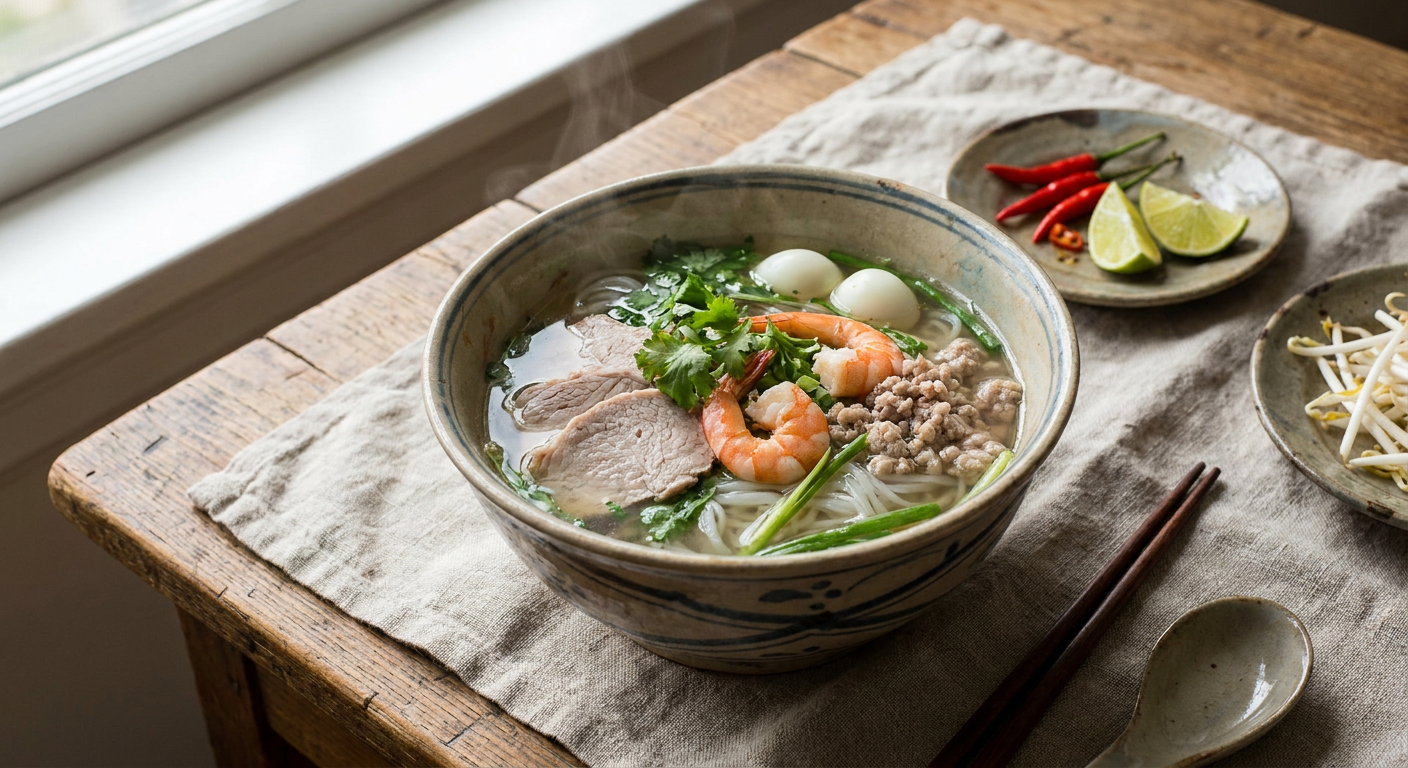
Hủ Tiếu Nam Vang — "Phnom Penh noodles" — is the Saigon bowl of Cambodian origin: a clear pork-and-dried-shrimp broth over slippery rice noodles, topped with ground pork, sliced pork, shrimp, and — the surprise of the dish — crispy garlic and a wedge of lime, eaten with a mountain of greens. The name records a migration; the bowl is entirely at home in Vietnam.
- **Simmer a clear broth.** Blanch the bones 5 minutes, rinse, then simmer with dried shrimp, onion, and ginger 1 hour at a tremble — the target is a light, sweet clarity, not the deep amber of phở (#24). Lift the pork loin at 25 minutes.
- **The bridge:** the dish's name is a history lesson — Nam Vang is Phnom Penh — and the dried shrimp are its Cambodian accent; skip them and the broth loses its sea-sweet note (a few extra shrimp fresh in the bowl helps but is not the same).
Hủ Tiếu Nam Vang
Prep: 30 minutes · Cook: 1 hour 15 minutes · Total: About 1 hour 45 minutes · Serves 4
Ingredients
The broth
- 500 g pork bones (or 300 g pork ribs plus one pork trotter section)
- 100 g pork loin (for slicing) and 200 g ground pork
- 20 g dried shrimp, rinsed; 1 onion halved; 3 slices ginger; 1 tsp salt
- 2 litres water; 1 tbsp fish sauce, plus more at the finish
The bowls
- 300 g hủ tiếu noodles (thin flat rice noodles) or banh pho, soaked and briefly boiled
- 8 shrimp (about 200 g), poached 2 minutes and halved
- 2 cloves garlic, sliced and fried crisp in 2 tbsp oil (the oil is the soup's crown)
- Spring onion and cilantro, chopped; lettuce, watercress, or garlic chives to blanch
The table
- The #25 pickles; lime wedges, sliced chili, soy sauce or Maggi; bean sprouts (about 150 g) and Chinese celery or celery leaves
Instructions
- **Build the bowls' pork toppings.** Poach the ground pork in the simmering broth (breaking it into small pieces — it cooks in wisps, the texture the bowl wants), lift, and reserve; slice the pork loin paper-thin; halve the poached shrimp. Checkpoint — the ground pork should cook to tiny irregular pieces, not a solid cake — drop it in loose and stir once. This topping is the dish's signature texture: wispy meat against the slices and shrimp.
- **Cook the noodles; warm the bowls.** Soak the noodles until pliable, then boil 1–2 minutes to order; drain hard. Blanch the greens in the broth for 30 seconds and keep warm. Checkpoint — the noodles should be slick and separate, not clumped; the bowls hot from a rinse. This is a clear soup: lukewarm bowls and wet noodles dilute the broth's delicate balance.
- **Assemble: noodles, toppings, broth, crown.** Noodles in each bowl, ground pork and pork slices over, shrimp beside, blanched greens tucked in. Ladle the hot broth over, crown with fried garlic and a drizzle of its oil, and scatter scallion and cilantro. The table does the rest — lime, chili, pickles, sprouts, Maggi by the shake. Checkpoint — eating test: the broth first — light, sweet, sea-scented, clearer than phở; then the noodle and the three pork-and-shrimp textures; the garlic's crunch and the lime's sharpness turning a gentle bowl vivid. If the broth tastes thin, it is under-salted at the pot (fish sauce by the teaspoon) — its gentleness should never be blandness.
Troubleshooting
| Symptom | Cause | Fix |
|---|---|---|
| Broth tastes watery | Under-simmered or too much water | 1 hour minimum; season with fish sauce, not salt |
| Ground pork clumped | Dropped in a lump | Drop loose, stir once, break gently |
| Noodles gluey | Over-soaked or over-boiled | Watch the clock; rinse briefly after drain |
Storage, Make-Ahead & Variations
- Broth and toppings keep 3 days — the make-ahead bowl; assemble to order. Fried garlic keeps 3 days in its oil. - Variations: hủ tiếu khô (the dry version — broth on the side, noodles tossed in sauce); the squid-and-prawn extravagance. The fusion direction: this broth as the base for the pho French dip (#113) where phở itself would overwhelm — delicacy has its uses.