Haemul Pajeon
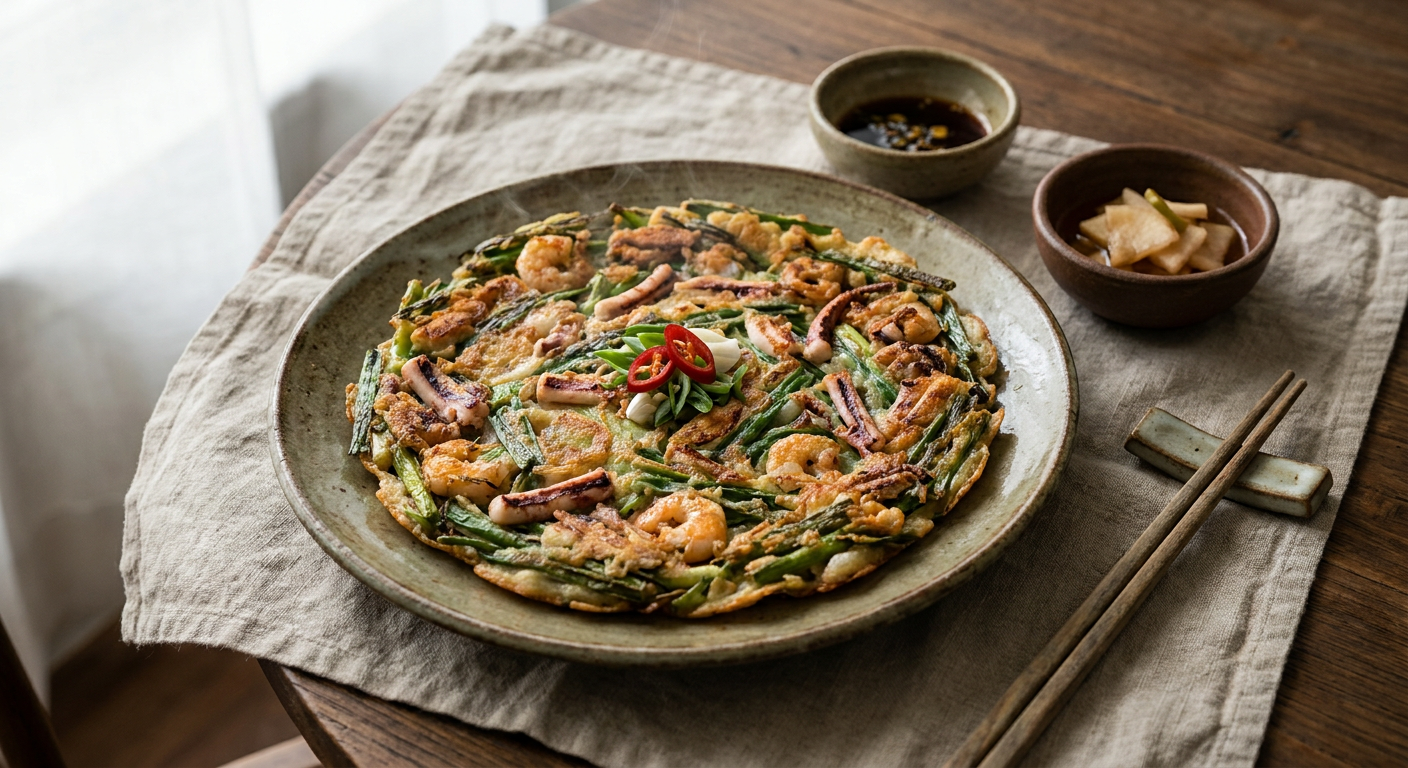
Haemul pajeon — seafood scallion pancake — is Korea's rain-day snack: a lace-thin batter full of scallions and squid-shrimp, fried crisp at the edges and damp-tender at the center, torn with chopsticks and dipped in soy-vinegar. The scallion is not an aromatic here — it is the pancake's spine.
- **The batter must be thin and cold.** The target consistency is between crepe and heavy cream — it should coat the scallions in a veil, not a blanket. The rice flour or starch is the crisp-edge secret; all-wheat batter goes leathery.
- **The bridge:** a Korean "buchim garu" (pancake flour) exists and is excellent; the flour-plus-starch blend above is its honest reproduction. Squid and shrimp are the classic; any quick-cooking seafood or even just scallions alone (pajeon proper) carries the format.
Haemul Pajeon
Prep: 20 minutes · Cook: 15 minutes · Total: About 35 minutes · Makes 2 large pancakes (serves 3–4)
Ingredients
The pancake
- 6–8 scallions (about 150 g), whole, roots trimmed, halved lengthwise if very thick
- 150 g seafood mix: squid rings and small shrimp, patted very dry
- 1 small chili, sliced (optional)
- 100 g all-purpose flour + 30 g rice flour or potato starch (the crispness blend), ½ tsp salt
- 200 ml ice-cold water (start with 180 ml, adjust)
- Neutral oil, 3–4 mm deep in the pan
The dipping sauce
- 2 tbsp soy sauce (about 30 ml); 1 tbsp rice vinegar; 1 tsp sugar (about 4 g)
- 1 tsp sesame oil (about 5 ml); 1 tsp sesame seeds; 1 clove garlic, minced; a pinch of chili flakes; 2 tbsp sliced scallion
Instructions
- **Lay the scallions, pour the veil (3 minutes).** Heat the oil in a wide pan over medium-high until shimmering. Lay the scallions in a tight single layer across the pan, scatter the seafood over them, and pour the thin batter evenly across everything — a lace veil, with scallion and seafood still showing through. Checkpoint — you should see scallions through the batter in patches — this pancake is mostly filling barely bound, and that ratio is the goal. A thick poured layer makes bready pajeon, the most common failure.
- **Fry undisturbed, then crisp (5–6 minutes).** Let the pancake cook undisturbed 3–4 minutes until the bottom is deeply crisp and lacy at the edges, shaking the pan gently to loosen. Add a spoon more oil at the edge, and flip with a wide spatula (or slide onto a plate and invert — the confident method) to crisp the second side 2–3 minutes. Checkpoint — both faces should be deep golden, the edges lacy-brown and audibly crisp. Press the center: it should give slightly — the tender middle against the crisp edge is the pancake's intended contrast, not undercooking.
- **Serve whole, cut at the table.** Slide onto a board, cut into squares with scissors (the Korean way), and serve with the sauce for dipping. Checkpoint — eating test: a dipped square gives crunch at the lace edges, the scallion's sweet softness, the seafood's bite, and the sauce's soy-vinegar sharpness — with makgeolli (Korean rice wine) or beer, this is the rain-day tradition complete. The pancake should be eaten within minutes; it does not hold.
Troubleshooting
| Symptom | Cause | Fix |
|---|---|---|
| Pancake bready, thick | Batter over-poured | The veil — scallions show through |
| Soggy, oily center | Under-heated pan or wet seafood | Pat seafood dry; shimmering oil |
| Fell apart at the flip | Filling overload, thin spots | More batter where it tears; the plate-flip method |
Storage, Make-Ahead & Variations
- Made and eaten immediately; the batter holds 1 day refrigerated (re-whisk; add a splash of ice water). The sauce keeps 1 week. - Variations: kimchi pajeon (fold in chopped sour kimchi — a classic), the plain scallion version, the oyster version. The fusion direction — the pajeon as a pizza base (#126 neighborhood) — has been tried in Seoul's own labs; the lace base invites toppings.