Japchae
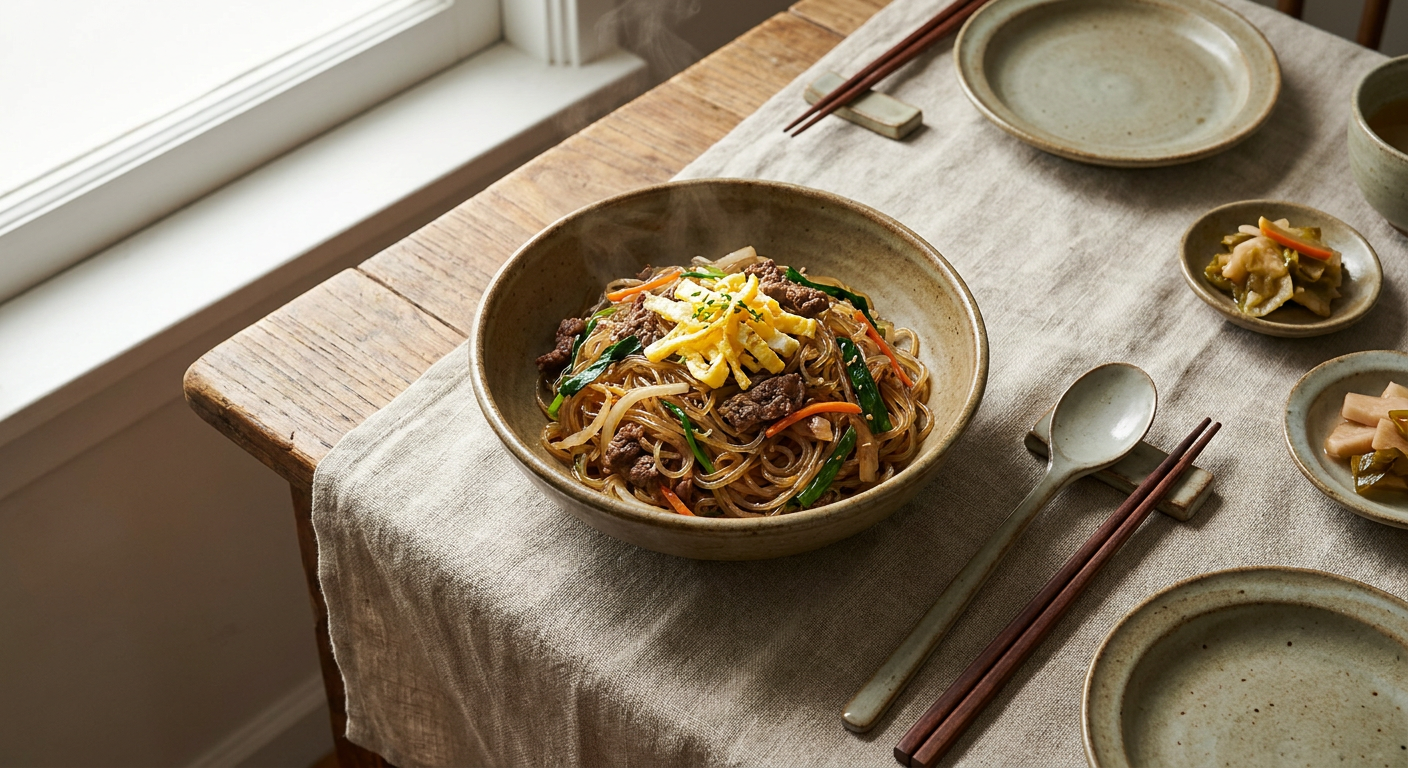
Japchae — glass noodles stir-fried with sesame-marinated vegetables and, classically, thin beef — is the Korean celebration dish that became an everyday one. The noodles are sweet potato starch (dangmyeon): slippery, chewy, and neutral, ready to drink soy and sesame. Like bibimbap (#58), it is many small preparations married at the end — but here in one glossy tangle.
Quantities live in the recipe card.
The noodles
The components (each cooked separately)
The seasoning (the dish's voice)
- **Cook each vegetable separately, season each with a whisper of sesame.** The bibimbap law again — each component distinct, then married. The noodles boil while the vegetables cook in sequence.
- **The bridge:** dangmyeon (Korean sweet potato noodles) are the dish's body — chewier and more neutral than any other glass noodle. Chinese mung vermicelli bridges at a texture loss (softer, less chew); the dish remains recognizable. Sweet potato noodles are in every Korean grocery and keep for years.
Japchae
Prep: 30 minutes · Cook: 20 minutes · Total: About 50 minutes · Serves 4
Ingredients
The noodles
- 100 g dried sweet potato glass noodles (dangmyeon), boiled 6–8 minutes, rinsed, cut with scissors
The components (each cooked separately)
- 150 g spinach, blanched and squeezed; 100 g carrots (about 100 g), julienned
- 100 g shiitake mushrooms, sliced; 1 onion (about 150 g), sliced
- 150 g beef or more mushrooms, sliced thin — marinated 15 minutes in 1 tbsp soy (about 15 ml), 1 tsp sugar, 1 tsp sesame oil, garlic
The seasoning (the dish's voice)
- 3 tbsp soy sauce (about 45 ml); 2 tbsp sugar or honey (about 30 g)
- 2 tbsp toasted sesame oil (about 30 ml); 1 tbsp toasted sesame seeds (about 8 g); a grind of black pepper; 3 cloves garlic, minced
Instructions
- **Boil and season the noodles first.** Boil the dangmyeon until tender-chewy (6–8 minutes), rinse, drain, cut roughly with scissors, and while still warm, toss with half the soy, half the sugar, and a tablespoon of the sesame oil. Let them sit and drink. Checkpoint — the warm noodles absorb the seasoning now — this preliminary dressing is why the finished japchae tastes through the noodle, not on it. Taste one: it should already be pleasantly soy-sweet-sesame.
- **Cook the components in sequence (15 minutes).** Stir-fry each vegetable and the marinated beef separately, in a lightly oiled pan, each just done and each seasoned with a pinch of salt. Checkpoint — each component keeps its character: carrot still slightly crisp, spinach dark and squeezed, mushroom savory, onion translucent with edges. Pile them as you go.
- **The final marriage (3 minutes).** Return everything to the wide pan — noodles, all the components — and toss over medium heat with the remaining soy, sugar, sesame oil, garlic, and pepper until glossy and unified, 2–3 minutes. Off the heat: sesame seeds. Checkpoint — eating test: a tangle of noodles with every bite carrying something different — chew, sesame, soy-sweet, a vegetable's texture — glossy but not oily, savory but distinctly sweet. Japchae is sweet, and that is not a flaw: the sugar-soy-sesame trinity is its identity. Served warm or at room temperature, it is the potluck dish that arrives first and empties first.
Troubleshooting
| Symptom | Cause | Fix |
|---|---|---|
| Noodles gluey, clumped | Under-rinsed or over-boiled | Rinse until slick; boil to chewy, not soft |
| Dish oily, heavy | Oil added all at once | Season in stages; finish with a measured spoon |
| Flat, one-note | Skimped sugar or sesame | Both are structural — taste and rebuild |
Storage, Make-Ahead & Variations
- Keeps 2 days refrigerated and is genuinely good cold from the box — the picnic and potluck classic. Components hold 1 day; the final toss is to order. - Variations: the vegetarian mushroom-forward version (traditional for ancestral tables), the adding-of-what's-there format. The fusion direction — japchae's noodles in the #104's carbonara — is the site's own silk-and-cheese experiment, and the neutral-chew noodle invites it.