Karaage Chicken
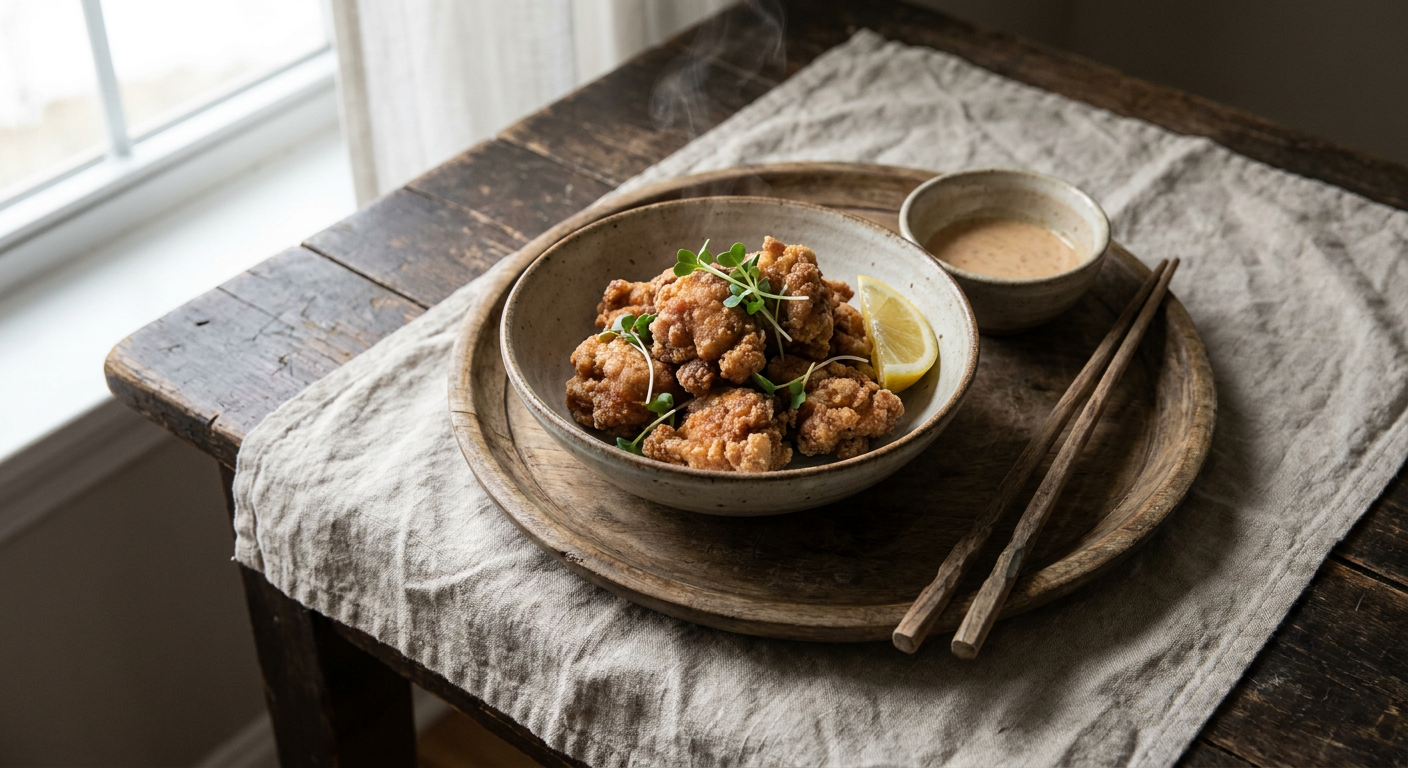
Karaage — Japanese fried chicken — is double-fried in a potato-starch crust, marinated first in soy, ginger, and sake, and eaten hot with lemon and mayo. Where American fried chicken is a thick armored crust, karaage is a thin, shattering, aggressively seasoned shell around juicy ginger-soy chicken. The marinade is the recipe; the starch is the texture.
- **Marinate 1 hour, no longer than 3.** The soy draws salt inward and the ginger's enzyme tenderizes gently — overnight, the texture turns mushy-soft. This clock matters more than the fry's.
- **The bridge:** potato starch (katakuriko) makes the glassy, blistered shell that defines karaage; cornstarch is close and softer; flour is a different dish entirely. Every Asian grocery sells potato starch, and it keeps forever — worth the jar.
Karaage Chicken
Prep: 15 minutes, plus 1 hour marinating · Cook: 15 minutes · Total: About 1 hour 30 minutes · Serves 4
Ingredients
The chicken and marinade
- 700 g boneless chicken thighs, cut to 3 cm pieces (skin on for the full effect)
- 2 tbsp soy sauce (about 30 ml), 1 tbsp sake, 1 tbsp mirin
- 1 tbsp grated ginger (about 15 g) with its juice; 2 cloves garlic, grated; a pinch of white pepper
The crust and fry
- 80 g potato starch or cornstarch (potato is the authentic glassy crunch; 10 g per serving is roughly the dust)
- Neutral oil, 3 cm deep, at 170 °C first fry, 190 °C second
To serve
- Lemon wedges; Kewpie mayo; a pinch of salt and sansho
Instructions
- **Drain, then dust.** Lift the marinated chicken from the liquid (drain well — wet pieces paste instead of crust), and toss in the starch in a bag until each piece is evenly matte-dusted. Let sit 5 minutes so the starch hydrates onto the surface. Checkpoint — the pieces should look dry-powdered, with no wet spots and no loose piles of starch. A thin, even, hydrated coat is the karaage crust — the bag's shake-and-rest does what a batter never could here.
- **First fry (4 minutes at 170 °C).** Fry in batches of 6–8 pieces, undisturbed for the first 90 seconds, then turn occasionally until the shell is pale gold and set. Drain on a rack. Checkpoint — the first fry cooks the chicken through — test the largest piece: juices run clear at the bone-side. The shell will look underdone. That is correct — the second fry finishes it.
- **Second fry (90 seconds at 190 °C).** Raise the oil's temperature, return all the chicken (in 2 batches if needed), and fry 90 seconds until the shells blister into glassy gold ridges. Drain, salt lightly, serve immediately. Checkpoint — eating test: the crust should shatter audibly and stick slightly to your fingers (that tacky-glass texture is potato starch's signature), the chicken inside juicy and tasting thoroughly of ginger and soy. A squeeze of lemon cuts the richness; the mayo amplifies it. Both are correct answers.
Troubleshooting
| Symptom | Cause | Fix |
|---|---|---|
| Crust pale and soft | Skipped the second fry | The 190 °C return is where the glass happens |
| Chicken bland inside | Short marinade, or drained wet | 1 hour minimum; drain before dusting |
| Crust detached | Starch applied too thick and dry | Thin even coat, 5-minute rest to hydrate |
Storage, Make-Ahead & Variations
- Marinated raw chicken holds 1 day; cooked karaage is a 10-minute-old food — the re-fry (90 seconds at 190 °C) revives day-old karaage remarkably, which is why it is a bento and konbini staple. - Variations: the nanban version (dipped in sweet vinegar and topped with tartar sauce); the fusion direction — karaage in the banh mi (#25) or over the chirashi rice (#6), where its aggressive seasoning is exactly what a mild rice dish wants.