Kimchi Jjigae
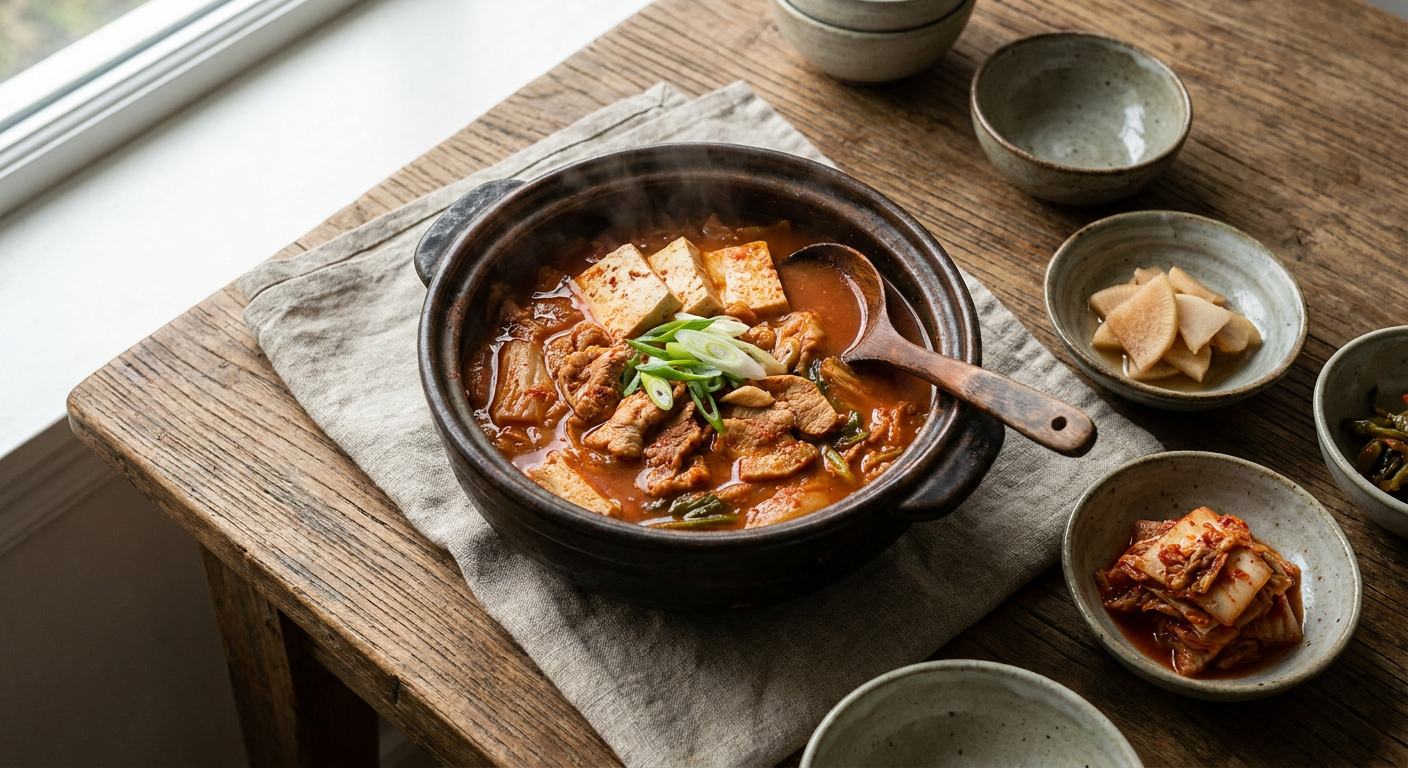
Kimchi jjigae — kimchi stew — is Korea's default comfort stew: sour, ripe kimchi simmered with pork and tofu in its own juice until the whole pot is orange, bubbling, and fiercely good. The entire secret is one word: ripeness. Fresh kimchi makes a flat, sad stew; the sour, fizzy, week-old kimchi at the back of the jar makes the real one.
Quantities live in the recipe card.
The stew
- the older and more sour, the better
- the honest alternative)
To serve
- this stew demands it
- **Fry the kimchi first.** The classic technique: render the pork, then stir-fry the kimchi in the pork fat for 3–4 minutes before any liquid — this cooks the kimchi's raw sour edge down to a deep, sweet-sour depth. This is the step that separates the deep-flavored stews from the boiled ones.
- **The bridge:** the older your kimchi, the better the stew — leave a jar on the counter a day or two if it's fresh. Gochugaru and gochujang are both in the standard Korean aisle now; the stew works without the paste, not without the flakes.
Kimchi Jjigae
Prep: 15 minutes · Cook: 25 minutes · Total: About 40 minutes · Serves 3–4
Ingredients
The stew
- 400 g ripe (sour) kimchi, cut in bite pieces, juice reserved — the older and more sour, the better
- 200 g pork belly or shoulder, sliced thin (or canned tuna — the honest alternative)
- 1 onion (about 150 g), sliced; 3 cloves garlic, minced; 1 tbsp gochugaru (Korean chili flakes, about 8 g)
- 1 tbsp gochujang (about 20 g); 1 tbsp soy sauce; 1 tsp sesame oil
- 300 ml water or anchovy-kelp stock; 1 tsp sugar if the kimchi is very sour
- 200 g soft tofu, in thick slices
- 2 spring onions, sliced; a few slices of fresh chili; sesame seeds
To serve
- Steamed rice — this stew demands it
Instructions
- **Render, fry, build (8 minutes).** Brown the pork in the pot, add the garlic and onion, then the kimchi and its juice — stir-fry 3–4 minutes until the kimchi wilts and darkens. Add the gochugaru, gochujang, and soy sauce and stir 1 minute. Checkpoint — the pot should smell deeply sweet-sour and red — the kimchi frying in pork fat is the flavor base of the entire stew. If it smells sharply sour-raw still, give it another 2 minutes.
- **Simmer (12–15 minutes).** Add the water or stock, bring to a rolling bubble, and simmer 12–15 minutes — the stew should reduce slightly, darken, and thicken at the edges. Checkpoint — the stew's body: the liquid should taste intensely of cooked kimchi — sour, savory, hot, faintly sweet — not like chili water. The pork should be tender and the kimchi's cabbage translucency is your doneness sign: fully cooked kimchi is glossy and soft.
- **Tofu and finish (3 minutes).** Lay the tofu slices on top, simmer 3 minutes (do not stir hard — the tofu breaks), and finish with spring onion, chili, sesame oil, and sesame seeds. Serve still bubbling. Checkpoint — eating test with rice: the broth first — hot, sour, savory; then a piece of the cooked kimchi (mellowed, still structured), the pork, and the tofu (which has drunk the broth's color). It should taste like the bottom of the kimchi jar turned into a meal. If it tastes thin, simmer longer — this stew only improves with reduction.
Troubleshooting
| Symptom | Cause | Fix |
|---|---|---|
| Stew flat, one-dimensional | Fresh (unripe) kimchi | Age the kimchi; or add the reserved kimchi juice |
| Tastes raw-sour, sharp | Kimchi not fried first | The 3–4 minute fry in pork fat — do not skip |
| Too thin, watery | Under-reduced | Simmer open, longer — the stew concentrates |
Storage, Make-Ahead & Variations
- Improves overnight — the classic make-ahead. Keeps 3 days; the tofu is best added fresh each reheating. - Variations: the tuna version (chamchi jjigae), the instant-ramen addition for the full midnight meal. The fusion direction — #129's kimchi grilled cheese — is this flavor profile minus the broth, and the stew's broth over rice is the same instinct served wetter.