Laphet Thoke (Tea Leaf Salad)
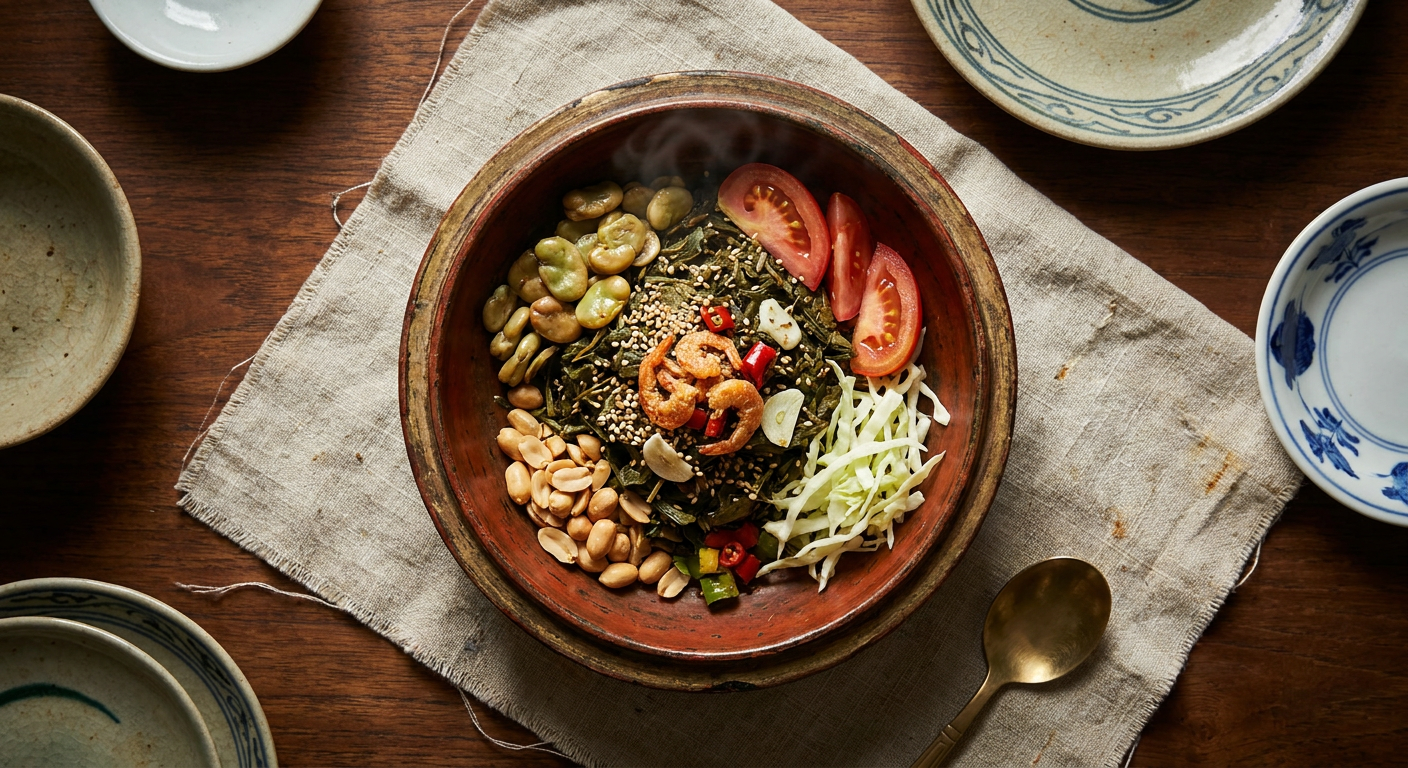
Laphet thoke — fermented tea leaf salad — is Myanmar's signature dish and its social ritual: pickled green tea leaves (sour, bitter, deeply savory) surrounded by an assembly of crunchy, savory, and fried garnishes — peanuts, sesame, fried garlic, dried shrimp, tomatoes — combined by the diner's fork at the table. It is the only cuisine on earth that made tea a food rather than a drink, and the salad's architecture — one fermented center, many textures — is Burmese cooking in miniature.
Quantities live in the recipe card.
The tea leaves
- sold jarred in Burmese/Asian groceries, often labeled "tea leaf salad mix") — the bridge below if unfindable
The garnish plate (the classic components, each in its own pile)
- the volume-giver some versions include
- **Source the tea leaves — this is the dish.** Jarred laphet is sold in Burmese groceries and online (the "Ahh-mah" and "Golden Lily" brands are common in North America); it keeps for months refrigerated. If truly unfindable: strong green tea leaves (or gunpowder green), brewed very strong and fermented 3 days in a jar with a little salt and oil, approaches the sour-bitter depth — a genuine project, honestly labeled a cousin.
- **The bridge for garnishes:** everything else is standard pantry-plus. The dish's structure — fermented center, crunchy surround — is the technique; the laphet is the soul.
Laphet Thoke (Tea Leaf Salad)
Prep: 25 minutes · Cook: No cook · Total: About 25 minutes · Serves 4
Ingredients
The tea leaves
- 100 g fermented tea leaves (laphet — sold jarred in Burmese/Asian groceries, often labeled "tea leaf salad mix") — the bridge below if unfindable
The garnish plate (the classic components, each in its own pile)
- 50 g roasted peanuts; 2 tbsp sesame seeds (about 15 g), toasted
- 6 cloves garlic (about 20 g), sliced and fried crisp in 3 tbsp oil; 2 shallots (about 50 g), diced
- 2 tbsp dried shrimp (about 12 g), toasted
- 2 tomatoes (about 150 g), diced; 1 chili, sliced
- 1 cup shredded cabbage (about 100 g) — the volume-giver some versions include
- Lime wedges; a pinch of chili flakes
Instructions
- **Prepare the piles.** Rinse the tea leaves if very salty, drain, and roughly chop. Fry the garlic crisp. Toast the peanuts, sesame, and dried shrimp. Dice the tomatoes and shallots. Each component in its own small pile on a tray — the traditional presentation is a circle of garnishes around the tea-leaf center. Checkpoint — the tray should look like a color wheel of textures — gold garlic, red tomato, white cabbage, brown peanut, green-black tea center. Each pile tastes complete alone; the salad is composed at the fork.
- **Combine at the table (or per serving).** Each diner (or the host) takes a spoon of each garnish plus a pinch of tea leaves, tosses them together on their plate with a squeeze of lime and a pinch of chili, and eats by fork or with rice. Checkpoint — eating test: the first forkful is a texture wheel — garlic's shatter, peanut's crunch, tomato's wet, sesame's pop — and then the tea leaf arrives: sour, bitter, tannic, savory, unlike any other food. The bitterness is the dish's spine; the garnishes are its orchestra. It should taste like a strong espresso's savory cousin — an acquired taste Myanmar acquires early and visitors remember for decades.
Troubleshooting
| Symptom | Cause | Fix |
|---|---|---|
| Tea leaves too salty | Brine-packed jar | Rinse and drain; taste before composing |
| Bitterness overwhelming | First-timer's palate | More peanut, tomato, and lime — the balance is personal |
| Garnishes limp | Fried components held warm | Garlic and shrimp fried crisp, served room temperature |
Storage, Make-Ahead & Variations
- Jarred tea leaves keep months; the fried and toasted garnishes keep 3 days in separate jars — the salad assembles in minutes, endlessly. The #144's tacos are the fusion crossing. - Variations: with shredded ginger, with crispy broad beans (another authentic crunch), the restaurant's all-in-one tossed version. The #147's balachaung caesar carries the same fermented-center logic into a Western salad.