Miso-Glazed Black Cod
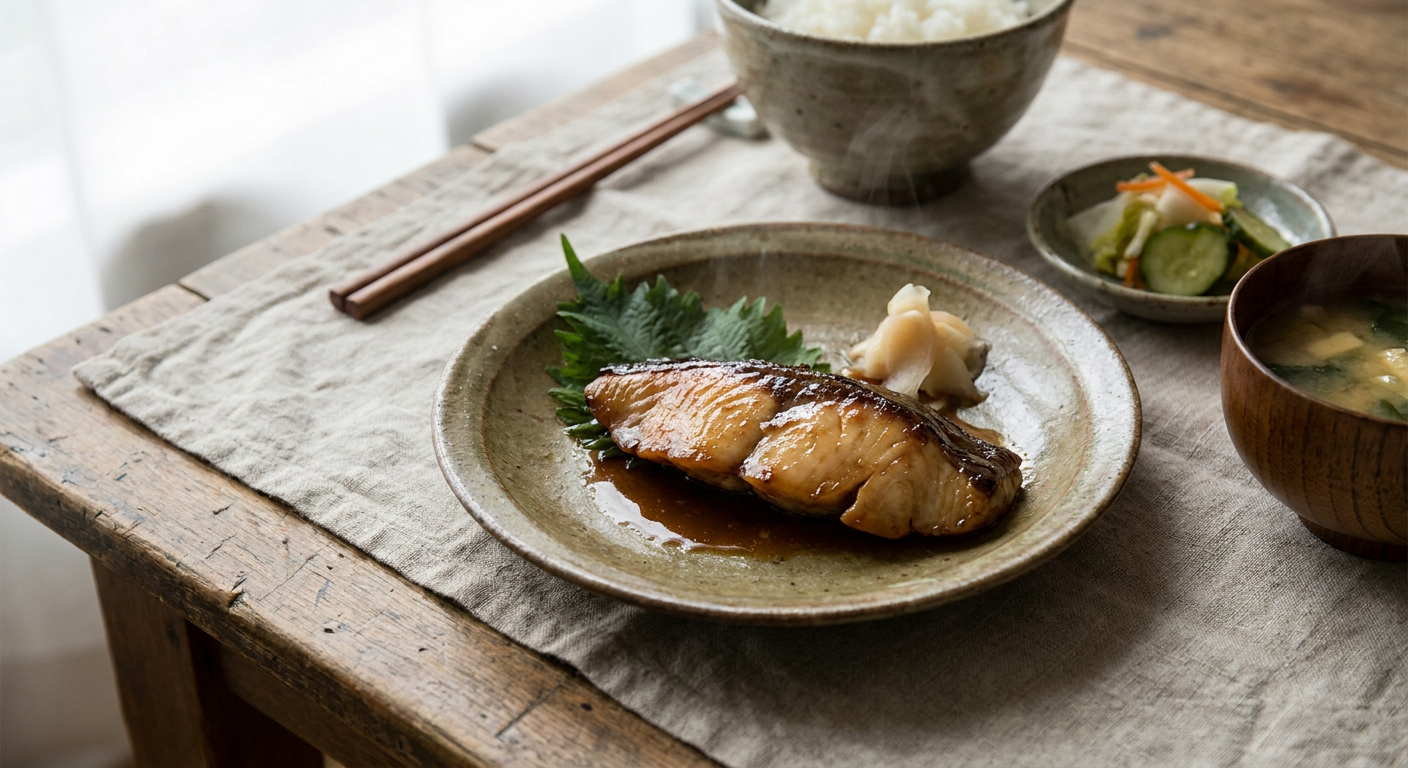
Quantities live in the recipe card.
The marinade (saikyo style)
- it is the sweetest, palest miso, mellowed with rice)
- taste first)
The fish
To serve
Doneness & Quality Checkpoints
- The cure: 48+ hours for black cod, matte-dry surface before cooking.
- The sear: deep brown on the presentation side before the flip.
- The finish: blistered glaze, flesh just opaque, 54 °C at center.
Miso-Glazed Black Cod
Prep: 10 minutes, plus 2–3 days curing · Cook: 15 minutes · Total: About 25 minutes (plus the cure) · Serves 4
Ingredients
The marinade (saikyo style)
- 150 g white miso (saikyo miso if you can find it — it is the sweetest, palest miso, mellowed with rice)
- 80 g mirin
- 50 g sake
- 40 g sugar (skip this if your miso is already quite sweet — taste first)
The fish
- 4 portions black cod (sablefish), 150–180 g each (about 650 g total), pin-boned, skin on
- Neutral oil, for the pan
To serve
- Pickled ginger; a few drops of yuzu juice or a light sprinkle of yuzu kosho
Instructions
- **Cure the fish (2–3 days, or a minimum of overnight).** Pat the fillets dry, coat all sides in the marinade, and press them into a container so the paste stays in contact. Refrigerate, covered, 48–72 hours. Checkpoint — at day two the flesh at the cut edge looks slightly firmer and more translucent — the miso is both seasoning and gently curing the fish. This is what a 30-minute marinade cannot do: salt and enzymes working slowly inward, so the center tastes of miso, not just the surface.
- **Wipe, do not rinse.** Scrape the excess marinade off with the back of a knife until the fish is matte, not wet. A wet fillet will scorch before it caramelizes; a truly clean fillet has lost its glaze. Matte is the goal. Checkpoint — the fillet should feel tacky-dry, like cured ham on the outside. If you can see pools of marinade, keep wiping.
- **Sear and finish (4 minutes stovetop + 8–10 minutes oven).** Heat the oven to 200 °C. Film an oven-safe pan with oil and get it medium-hot — not smoking. Lay the fillets skin-side up (flesh down) and cook without moving them 3–4 minutes, until the edges caramelize to deep brown. Flip, transfer to the oven, and roast 8–10 minutes, until the glaze blisters and the flesh at the thickest point flakes at a gentle nudge (about 54 °C if you use a thermometer). Checkpoint — the surface should be burnished mahogany with a few black blisters — the line between caramelized and burnt is about 90 seconds wide, so check at 8 minutes. The flesh below should be silky and just opaque.
Finish & Plate
Serve one fillet per person on warm plates, skin-side down if the skin crisped, with pickled ginger to cut the sweetness and — this is the restaurant trick — a very light squeeze of yuzu at the table. Steamed rice and a bitter green (broccolini, charred) complete the plate without competing.
Troubleshooting
| Symptom | Cause | Fix |
|---|---|---|
| Glaze burnt, fish raw at center | Wet marinade or too-high heat | Wipe to matte; medium-hot pan, finish in oven |
| Fish tastes only of salt | Miso too dark, or cure too long for lean fish | White/saikyo miso; 1 day max for lean substitutes |
| Flesh dry and fibrous | Overcooked past 54 °C | Pull at the flake-nudge; carryover finishes it |
Storage, Make-Ahead & Variations
- The cured, uncooked fillets freeze well for 2 weeks — thaw overnight in the fridge, wipe, and cook. Cooked leftovers flake beautifully over warm rice for a next-day donburi. - Variations: the same cure on salmon cheeks or cod collars (grill instead of pan-sear); a lighter 12-hour cure on 300 g firm tofu steaks for a vegetarian version. The marinade, thinned with sake, becomes a glaze for grilled eggplant. And the bridge-forward note for shoppers: black cod runs expensive per portion, but the cure means a little goes far — two 150 g fillets plus rice and pickles feed two generously, which is how the restaurant justifies the price too.