Naengmyeon
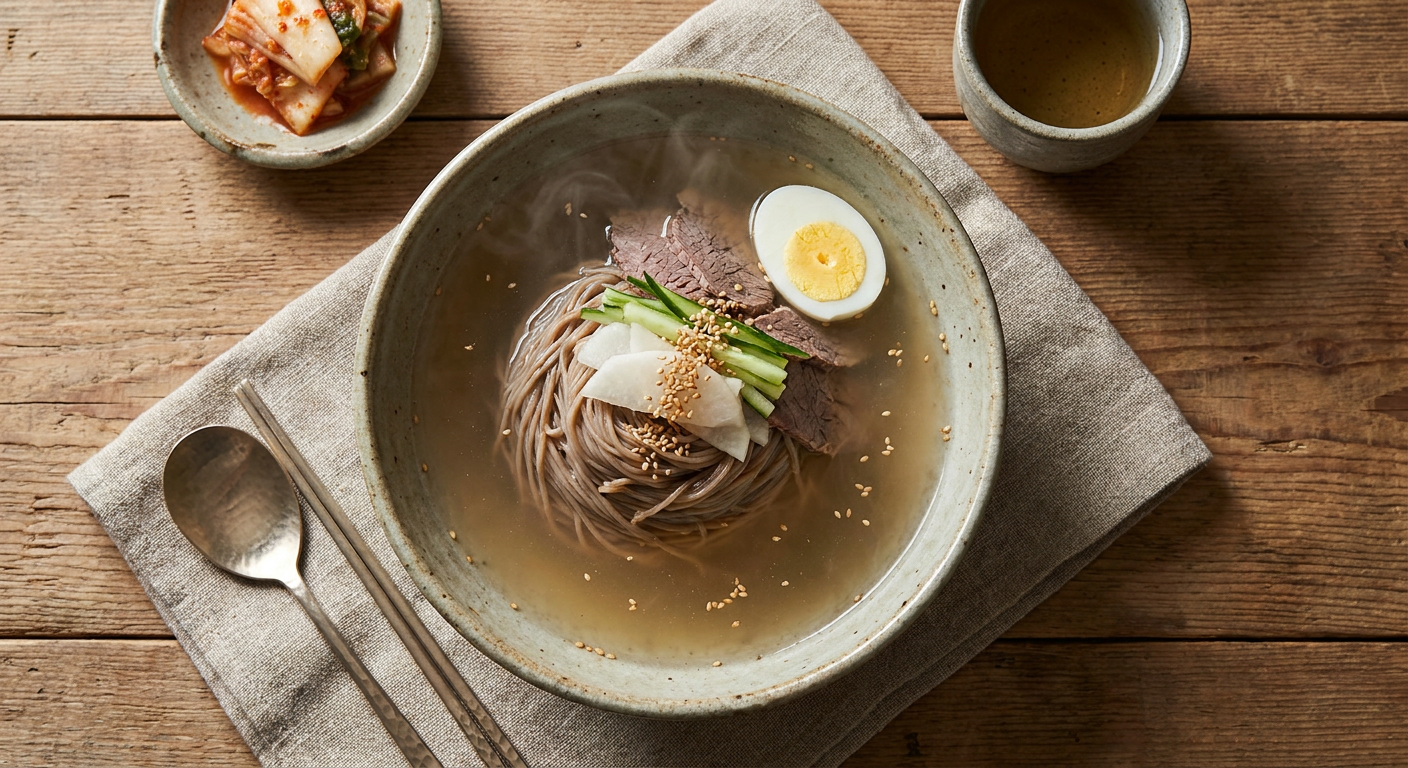
Naengmyeon — cold buckwheat noodles in an icy broth — is Korea's summer counter-punch: long, chewy noodles in a beef broth served nearly frozen, sharpened with vinegar and mustard oil, topped with pickled radish, pear, cucumber, and a slice of beef. The dish's shock value is the design — the colder, the better — and its broth is a technical marvel: a clear beef stock frozen and shaved into slush.
- **Freeze the broth.** The authentic texture is broth-ice slush: freeze the salted, vinegared stock in a shallow tray 3–4 hours and scrape it with a fork into crystals at serving. (The shortcut: broth over crushed ice — good, less magical.)
- **The bridge:** naengmyeon noodles are their own thing — dense, chewy, elastic, dark — sold in bundles in Korean groceries; soba bridges only structurally (buckwheat kin, softer bite). The noodles must be rinsed longer than feels right: 2 minutes in ice water, until each strand is separate and cold to the core.
Naengmyeon
Prep: 30 minutes, plus freezing time · Cook: 30 minutes · Total: About 1 hour (plus the broth's freeze) · Serves 4
Ingredients
The noodles
- 400 g naengmyeon noodles (buckwheat-sweet potato blend, in bundles), boiled per package (4–5 minutes), rinsed long in ice water
The broth (made ahead)
- 1 litre clear beef stock (from the #66's method or good carton stock), salted to taste with 1 tbsp soy and 1 tsp salt, plus 2 tbsp rice vinegar
- Frozen in a shallow tray, then shredded with a fork into slush just before serving (or served deeply chilled with ice)
The toppings (per bowl)
- 4–5 slices cooked beef brisket or shank (the #66's leftovers are perfect)
- ½ Asian pear (about 150 g), thinly sliced; ½ cucumber (about 100 g), julienned, lightly salted
- Pickled radish (about 50 g, or quick-pickle cucumber in vinegar-sugar); 1 boiled egg (about 50 g), halved
- Hot mustard (Korean gyeoja) or Dijon, and a splash of vinegar, at the table
Instructions
- **Boil, rinse hard, ice.** Boil the noodles to just past firm (4–5 minutes), drain, and rinse under cold water while rubbing gently for a full minute, then plunge into ice water 2 minutes more. Drain and portion into coils. Checkpoint — the noodle must be cold to the core and individually slick — warm centers ruin the dish's premise. The strands are long by tradition (longevity noodles, cut once with scissors at the table before eating, never in the kitchen).
- **Build the bowls: slush first.** Put a heap of broth slush (or ice + broth) in each steel bowl, nest the noodle coil in it, and arrange the beef, pear, cucumber, pickled radish, and egg half in a neat circle on top. Checkpoint — the bowl should look like a cold landscape — the noodles frosted in slush, the toppings in their precise ring. Steel bowls (traditional) hold the cold; chill them in the freezer first if you have them.
- **Season at the table and eat fast.** Each diner adds vinegar and mustard to taste, cuts the noodles once with scissors, and mixes from the bottom. The broth is drunk at the end, cold and sharp. Checkpoint — eating test: the first bite is the chew — cold, dense noodles resisting the tooth — then the broth's cold beefy-sour depth, pear's sweet crunch, mustard's nasal burn arriving late. The dish should be painfully cold and invigorating; that is the point. If the broth is merely cool, the freeze step was skipped.
Troubleshooting
| Symptom | Cause | Fix |
|---|---|---|
| Broth watery, dull | Ice melted in it, or under-seasoned | The slush method; season bolder before freezing |
| Noodles gummy, warm | Under-rinsed | 2-minute ice bath minimum, rubbed |
| Dish feels flat | Missing vinegar or mustard | Both are structural at the table |
Storage, Make-Ahead & Variations
- The broth freezes as the method (keep trays of it for instant summer bowls); toppings prep ahead 1 day. Assembled bowls are immediate. - Variations: bibim naengmyeon (the spicy, brothless version with gochujang), mul naengmyeon (this one). The fusion direction — the #150's affogato logic of hot-on-cold — runs opposite; this dish's lesson is cold-on-cold done fully.