Okonomiyaki
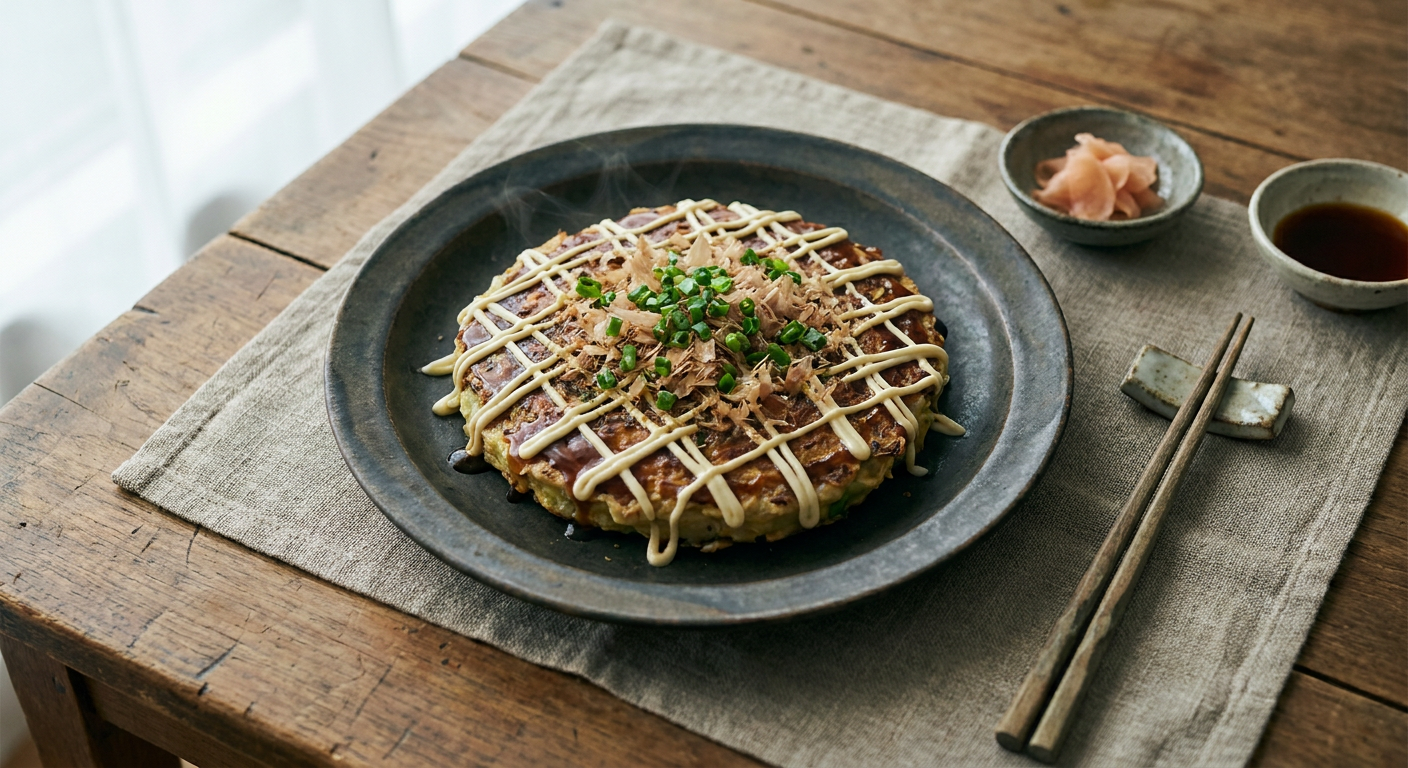
Okonomiyaki — "grilled as you like it" — is Osaka's cabbage pancake and the most forgiving dish on this site. The batter matters less than the method: a pan full of cabbage bound by just enough egg-and-flour to hold, cooked slowly so the inside steams while the outside crisps, then sauced with the two-sauce system and a lattice of mayo. The authentic version is street food; the home version is identical because the street stalls use the same griddle you own.
- **Make the batter thin.** The instinct is pancake batter; the target is thinner than crepe batter. The cabbage carries the dish — the batter is a binder, not a vehicle. Mix the batter first, then fold in the cabbage so every strand is coated, and let sit 5 minutes so the cabbage softens slightly.
- **The bridge:** okonomiyaki sauce is sold in the same aisle as the roux blocks; the Worcestershire blend above is genuinely close. Kewpie mayo's tang comes from rice vinegar and a little MSG — Hellmann's plus a few drops of rice vinegar and a pinch of sugar is the honest bridge; what you lose is the tube, which is part of the fun.
Doneness & Quality Checkpoints
- The batter: thin, mostly cabbage, rested 5 minutes.
- The cook: lidded, patient, deep-brown both sides, springy center.
- The finish: sauced hot, latticed mayo, seaweed and bonito last.
Okonomiyaki
Prep: 20 minutes · Cook: 20 minutes · Total: About 40 minutes · Makes 2 large pancakes (serves 2–3)
Ingredients
The batter and filling
- 100 g flour, 1 egg (about 50 g), 120 ml dashi (or water + a pinch of dashi granules)
- 350 g cabbage (about a quarter of a large head), cored and shredded 5 mm thin
- 2 slices bacon (about 50 g), halved (or pork belly strips); or shrimp, or nothing (see bridge)
- 2 spring onions, sliced; a handful of tenkasu (tempura crisps) or crushed rice crackers
- 1 tbsp pickled red ginger, beni shoga (about 15 g)
The two-sauce finish (per pancake)
- 3 tbsp (about 50 g) okonomiyaki sauce (or make-do: 2 tbsp Worcestershire + 1 tbsp ketchup + 1 tsp soy + 1 tsp honey)
- 2 tbsp (about 30 g) Japanese mayonnaise (Kewpie)
- Aonori (green seaweed powder) or crumbled nori; bonito flakes
Instructions
- **Cook low and slow, lid on (5–6 minutes).** Heat a nonstick pan or flat griddle over medium-low (a surface around 170 °C) with a film of oil. Pour half the cabbage-batter into a round about 2 cm thick — it will look like a loose pile; it is. Lay the bacon over the raw top, press gently, add a splash of water to the pan and lid it — the steam cooks the cabbage through while the bottom sets. Checkpoint — at 5 minutes, the underside should be a deep even brown when you peek with a spatula, and the cabbage should have collapsed from a pile into a coherent pancake. If the bottom is browning before the cabbage softens, the heat is too high — this dish's one discipline is patience.
- **The flip, once.** Slide the pancake onto a plate raw-side down, invert the pan over it, and flip in one confident motion. Cook the second side, lidded, another 4–5 minutes. Checkpoint — the second side should brown evenly too. Press the center — it should feel set and springy, not wet. A skewer into the middle comes out hot and clean. The inside is done when it's moist-cabbage-tender, not wet-batter raw.
- **Sauce, lattice, snow.** Off the heat: brush the surface generously with okonomiyaki sauce while hot. Squeeze the mayo in a lattice — a zip-top bag with the corner snipped is the home tool. Dust with aonori, and lay bonito flakes on last — they will dance in the heat, and that is the point. Checkpoint — the first bite should be: crisp edge, custardy cabbage center, smoky sauce, and mayo-tang, in that order, roughly simultaneously. If the inside is wet, lid it longer next time — the recipe's ratio assumed 5 mm cabbage shreds.
Finish & Plate
Straight from the pan to the board, cut in wedges like a pizza, eaten off the shared board with the spatula — the communal eating is authentic. A cold beer or oolong tea alongside.
Troubleshooting
| Symptom | Cause | Fix |
|---|---|---|
| Center wet and raw | Heat too high, lid skipped | Medium-low, lidded, 5 minutes a side minimum |
| Pancake falls apart at the flip | Too much cabbage for the binder, or flipped too early | One egg and 100 g flour hold 350 g cabbage; wait for the set |
| Tastes flat | Skimped sauce, or missing pickled ginger | The pickles cut the richness — tuck them inside too |
Storage, Make-Ahead & Variations
- Best eaten immediately; a leftover wedge reheats covered in a pan for 4 minutes (revives the steam) and re-sauces decently. Batter doesn't keep — cook what you mixed. - Variations by filling: shrimp, squid, mochi, cheese (the Osaka kids' version), or the fusion direction — kimchi folded in, or green onion pancakes' cousin with Chinese five-spice in the batter. The sauce system stays constant.