Or Lam Stew
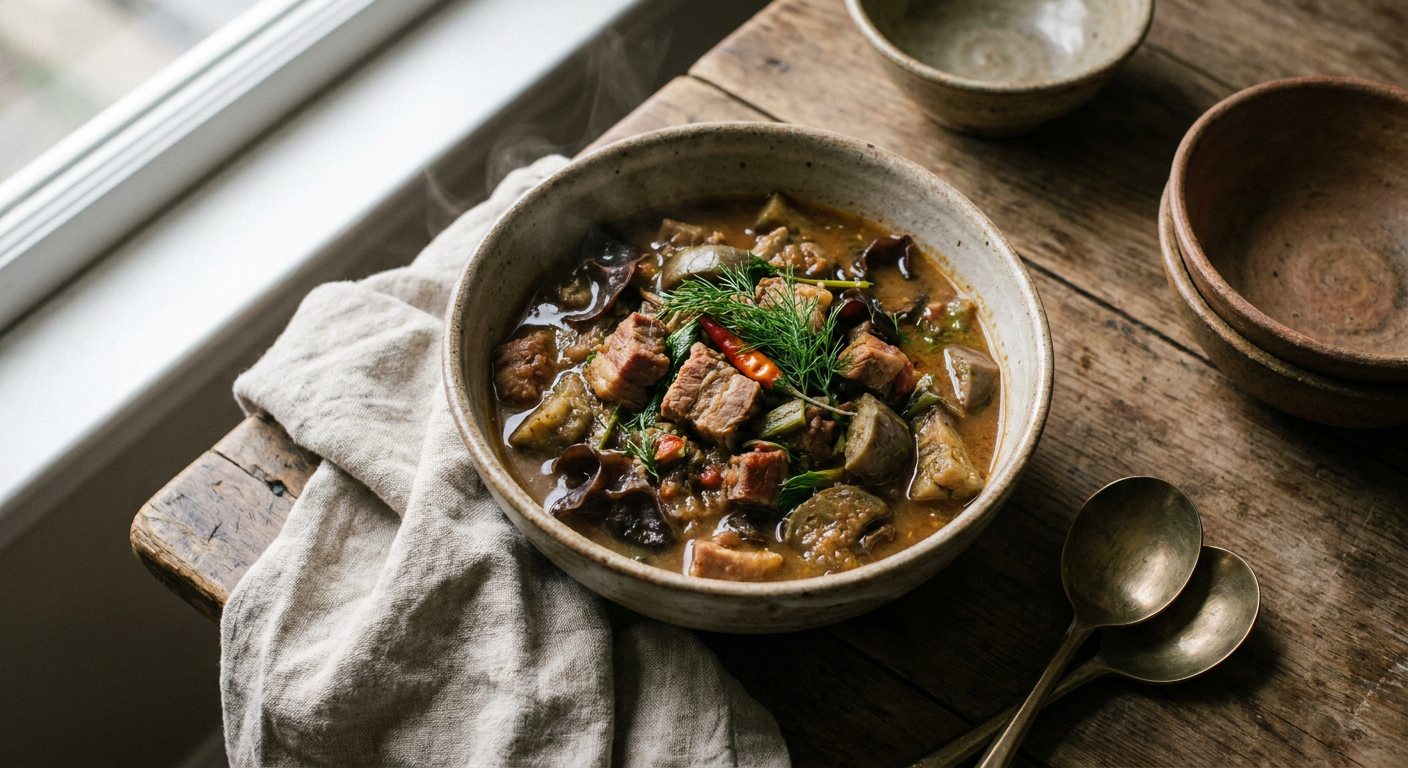
Quantities live in the recipe card.
The stew
- see the bridge
The finish (the fresh register — Lao's signature)
Doneness & Quality Checkpoints
- The rice: toasted grains, clouded body, no floury taste.
- The beef: tremble-tender, unseared, poached in aromatics.
- The finish: herbs and chilies off the heat, dill forward, the sakhan tingle present.
Or Lam Stew
Prep: 25 minutes · Cook: 1 hour 15 minutes · Total: About 1 hour 40 minutes · Serves 4
Ingredients
The stew
- 700 g beef chuck (or water buffalo, the traditional), cut in 4 cm cubes
- 2 stalks lemongrass (about 60 g), bruised; 4 slices galangal (about 20 g)
- 1.5 litres water or light beef stock; 1 tbsp fish sauce, plus more to finish
- 200 g small Lao eggplants or 1 regular eggplant, in chunks; 150 g mushrooms (straw, oyster, or button)
- 50 g green beans; 1 tomato (about 100 g), wedged
- 2 tbsp sticky rice grains (the gentle thickener), toasted dry until golden
- 1–2 pieces sakhan wood (about 10 g), if findable — see the bridge
- 1 tbsp padaek or 1 tbsp fish sauce; a pinch of salt
The finish (the fresh register — Lao's signature)
- A large handful of dill (about 20 g), basil (about 15 g), and long-leaf coriander or culantro (about 10 g)
- 2 spring onions, sliced; 2–3 bird's eye chilies, whole
- 1 tsp toasted rice powder (#46's), optional
Instructions
- **Build the base (15 minutes).** Bring the water or stock to a simmer with the beef, lemongrass, galangal, and the toasted rice grains. Skim, then adjust to the barest tremble. Checkpoint — the liquid should stay gentle — or lam is not a browned-sear stew; the beef poaches into tenderness in an aromatic bath. The toasted rice will cloud the broth faintly within 20 minutes: that cloudiness is the body forming.
- **The long simmer (45–50 minutes).** The pot held at the barest tremble — roughly 90–95 °C on a thermometer, the surface's rarest bubble — through the whole stage. Simmer at the tremble, covered, until the beef is tender — 45 minutes for chuck, longer for buffalo. Add the eggplant and mushrooms at the 35-minute mark, the beans and tomato in the last 8 minutes, and the sakhan (in a spice bag or tied bundle for removal) for the final 20 minutes. Checkpoint — the beef should yield to a chopstick's twist; the vegetables should hold their shapes in the clouded, pale-gold broth. Taste: savory-gentle, the lemongrass and galangal present but soft, and — if the sakhan is in — a faint tingle at the tongue's edges, not a burn. Season with fish sauce and padaek: the stew should taste softly seasoned, not loud.
- **The fresh finish (2 minutes, off the heat).** Off the flame, stir in the dill, basil, coriander, spring onions, and whole chilies. Rest 2 minutes, then serve. Checkpoint — eating test with sticky rice: the broth first — cloudy, gentle, faintly numbing, deeply savory; then the beef's tenderness, eggplant's silk, mushroom's earth, and the herbs' fresh-dill perfume arriving last and changing everything. Or lam should taste calm but complex — the opposite of the Lao laap's (#76) aggression — and the dill is not optional: it is the stew's final voice, as unmistakable here as in the cha ca (#31) a border away.
Finish & Plate
Family style in a deep bowl at the table's center — the cloudy broth, vegetables whole, herbs floating — with the sticky rice basket and the #77's salad beside for the full Luang Prabang table: loud, quiet, and chewed rice between them.
Troubleshooting
| Symptom | Cause | Fix |
|---|---|---|
| Broth thin, clear | Rice grains skipped or under-toasted | Toast them golden; give them time to cloud |
| Stew tastes flat despite tenderness | Sakhan and padaek both missing | The peppercorn bridge; fish sauce by spoons |
| Herbs lost, dull | Simmered instead of finished | Herbs off the heat, always |
Storage, Make-Ahead & Variations
- Keeps 2 days (the herbs fade; refresh with fresh dill at reheating). The buffalo version is the deep-tradition original; chicken runs a shorter clock (30 minutes). - Variations: fish or lam in the same bath. The fusion direction — or lam's gentle-numbing broth as a phở-style noodle soup base (#24 neighborhood) — is a bridge the site's block explores at #142's bouillabaisse; the technique travels.