Pad Thai Goong
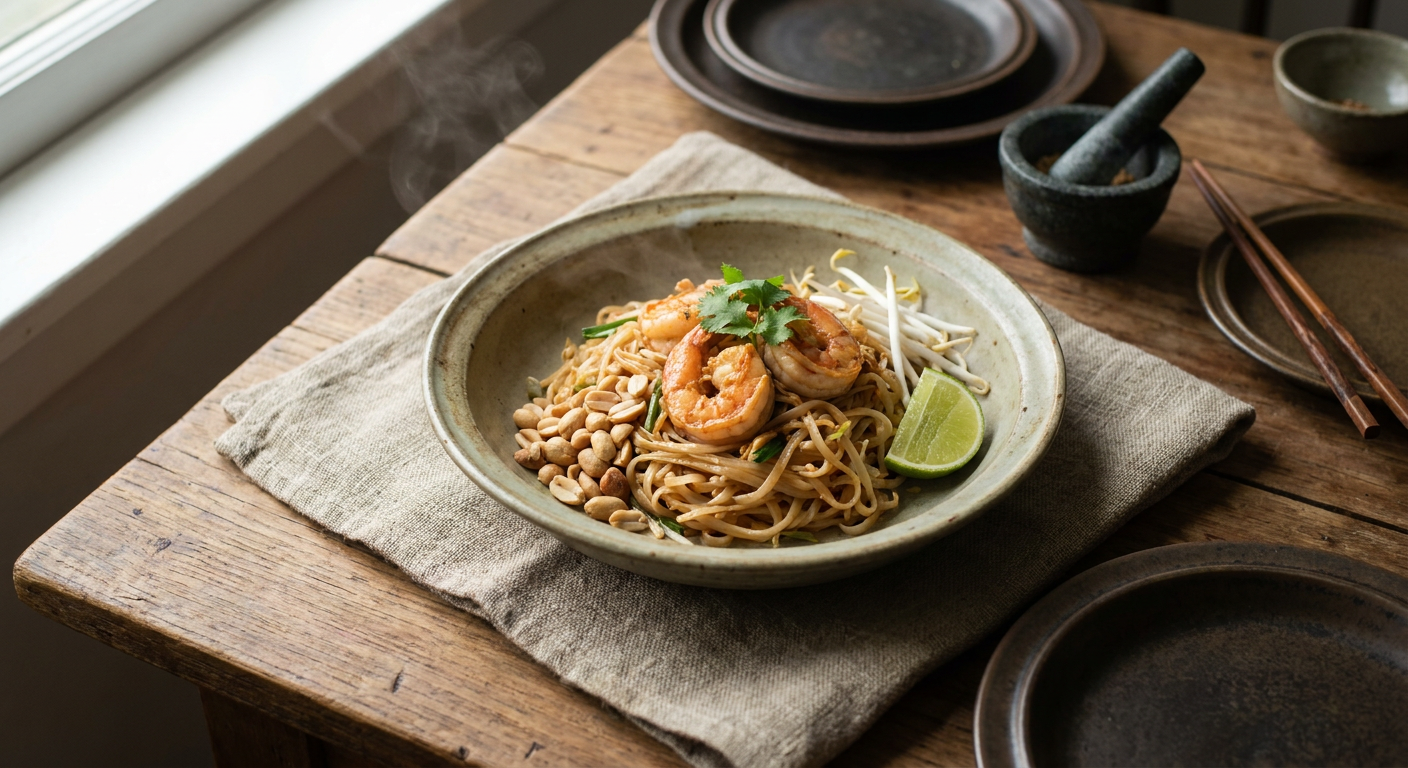
Quantities live in the recipe card.
The noodles
The sauce (mixed ahead — the wok won't wait)
- each unmistakable, none dominant
The wok
Doneness & Quality Checkpoints
- The sauce: sour first, salt second, sweet third — mixed ahead.
- The wok: hot enough to toss, one portion at a time.
- The noodles: soaked to chewy, finished in the sauce, glossy and separate.
Pad Thai Goong
Prep: 30 minutes · Cook: 8 minutes · Total: About 40 minutes · Serves 2 generously
Ingredients
The noodles
- 200 g dried thin flat rice noodles (5 mm, labeled "pad thai noodles"), soaked in warm water 20–30 minutes until pliable but still chewy, drained
The sauce (mixed ahead — the wok won't wait)
- 3 tbsp tamarind paste (about 45 g)
- 2½ tbsp fish sauce (about 35 ml); 2 tbsp palm sugar (about 30 g), grated or chopped
- 1 tsp rice vinegar (optional, for lift)
- Dissolve together, warm if needed, taste: sour first, salt second, sweet third — each unmistakable, none dominant
The wok
- 8 large shrimp (about 200 g), peeled, butterflied
- 100 g firm tofu, small dice; 2 tbsp dried shrimp (about 10 g), rinsed (optional but authentic)
- 3 cloves garlic, minced; 2 shallots, sliced
- 2 eggs; 3 tbsp neutral oil, divided
- 100 g bean sprouts; 3 garlic chives or scallions, cut in 4 cm lengths
- 2 tbsp roasted peanuts, crushed
Instructions
- **Sear the shrimp and tofu (2 minutes).** Heat 2 tbsp oil in the wok until just smoking — the wok's surface past 200 °C at the shimmer, add the tofu and dried shrimp, fry 60 seconds until the tofu colors, then push aside and sear the shrimp 30 seconds a side until just pink. Remove everything. Checkpoint — the shrimp should be barely done — they return to the wok at the end, and twice-cooked shrimp is the classic rubber failure. The tofu should have golden faces.
- **The eggs, then the noodles (2 minutes).** Add the last of the oil, the garlic and shallots for 20 seconds, then crack in the eggs and scramble them half-set in the fat. Add the soaked noodles and toss once, then pour the sauce over and toss continuously — the noodles drink the sauce and finish cooking in it, 60–90 seconds. Checkpoint — this is the technique's heart: the noodles finish in the sauce, absorbing it rather than wearing it. They should soften to springy-tender and turn a light amber. If the wok is dry and the noodles stiff, sprinkle 2 tbsp water and keep tossing; if soupy, the heat is too low.
- **Return, fold, plate (1 minute).** Return the shrimp and tofu, add most of the sprouts and chives, toss twice — the greens barely wilt — and plate immediately, piling the last raw sprouts and chives on top with the crushed peanuts. Checkpoint — eating test: the first bite should be sour-salty-sweet in one hit, then shrimp, then the crunch of sprout and peanut, the chive's raw bite. The noodles should be glossy and separate, not sticky or wet. Lime wedge at the table, chili flakes if wanted. If it tastes sweet first, the sauce was mis-built — the authentic balance starts sour.
Finish & Plate
One plate per portion, the raw sprouts and peanuts crowning, lime and dried chili flakes alongside. Eat immediately — pad thai has a five-minute window, and the street vendor's plate exists because the dish does not hold.
Troubleshooting
| Symptom | Cause | Fix |
|---|---|---|
| Noodles sticky, torn | Over-soaked, or wok crowded | Soak to chewy; cook one portion at a time |
| Tastes sweet-first, flat | Sauce mis-balanced | Rebuild with tamarind and fish sauce; never add sugar at the wok |
| Shrimp rubbery | Fully cooked before, then again | Sear to barely pink; return only at the end |
Storage, Make-Ahead & Variations
- Sauce keeps 2 weeks refrigerated (a jar of it is the weeknight pad thai station); soaked noodles keep 1 day. Cooked pad thai does not keep its point — eat it fresh. - Variations: chicken (slice thin, cook first), the wrapped-in-egg "pad thai hoy tawd" style, or all-tofu vegetarian with soy sauce replacing half the fish sauce. The fusion direction — #126's pad thai pizza — is the site's own bridge, and this recipe is its base.