Panang Curry
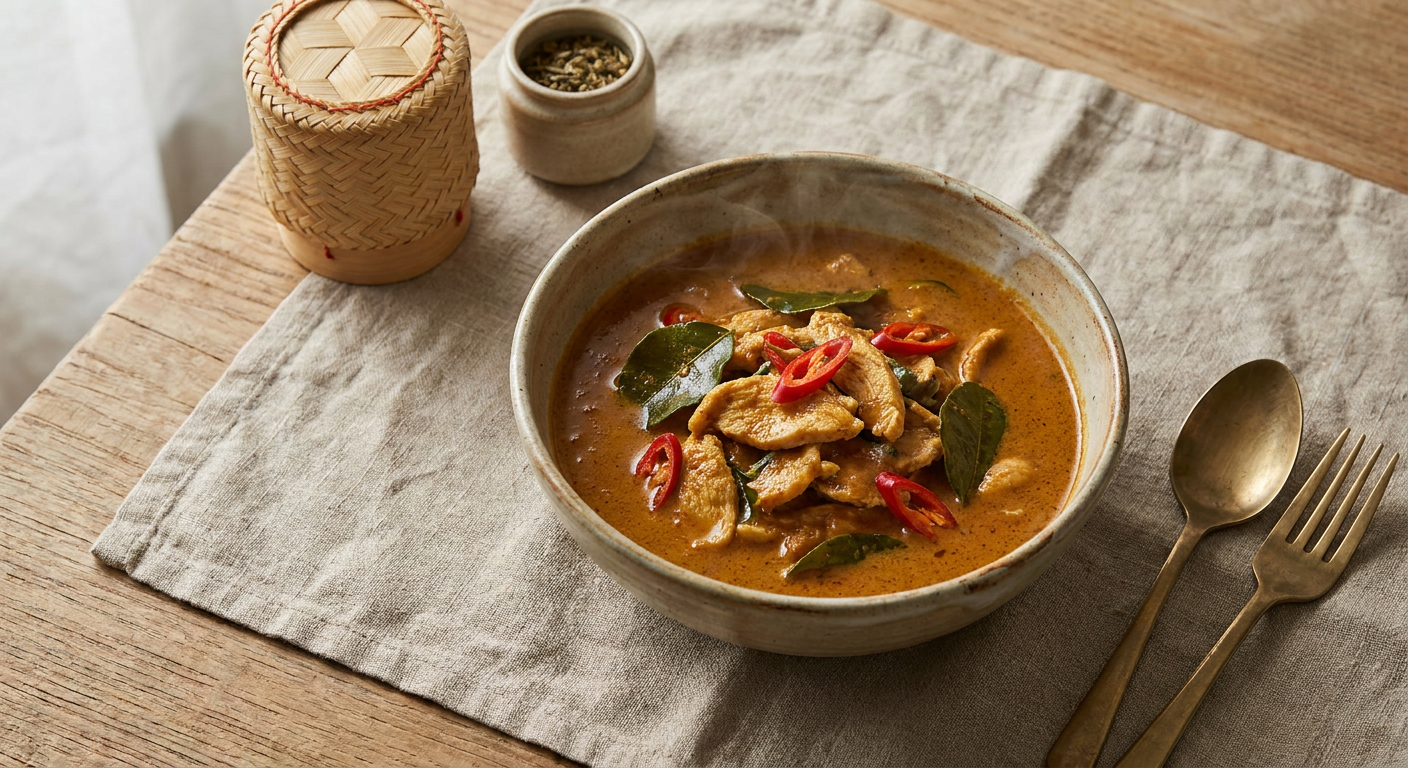
Panang is red curry's richer, thicker, sweeter sibling — a Thai curry fried hard in coconut cream with almost no added liquid, so it cloaks rather than soups. It is finished with torn makrut lime leaves and a spoon of thick coconut cream on top, and it is the curry to serve people who want flavor without soup: a spooning sauce for rice, built on the same crack-and-fry foundation as the green (#43).
- **Crack, fry, and barely loosen — panang's ratio is the identity.** Where green curry takes a can of milk after the paste, panang takes a splash: the sauce stays thick enough to hold a spoon trail. Have everything cut before the wok heats; thick sauces scorch faster than thin ones.
- **The bridge:** panang paste is the one Thai paste where store-bought is genuinely close to the fresh (its dried-spice depth survives processing well). The nutmeg note is the authenticity marker — a fresh grate makes the jar taste rounder.
Panang Curry
Prep: 20 minutes · Cook: 25 minutes · Total: About 45 minutes · Serves 4
Ingredients
The panang paste
- 5 dried red chilies, soaked and seeded; 2 stalks lemongrass (about 60 g), sliced
- 1 tbsp chopped galangal; 4 makrut lime leaves, shredded; 4 shallots (about 120 g); 4 cloves garlic
- 1 tsp coriander seed, ½ tsp cumin seed, toasted; 1 tsp shrimp paste or fish sauce
- ½ tsp white pepper; 1 tsp grated nutmeg or ¼ tsp ground (the panang marker)
- (Or 3 tbsp store panang paste — a reliable bridge)
The curry
- 400 ml coconut cream (thick top of two chilled cans), plus 100 ml thin milk
- 500 g chicken thigh, sliced (or beef, sliced thin)
- 2 tbsp fish sauce (about 30 ml); 1½ tbsp palm sugar (about 20 g)
- 6 makrut lime leaves, torn; 3 tbsp thick coconut cream, for the top
- 2 red chilies, sliced fine, for finish
To serve
- Jasmine rice
Instructions
- **Crack the cream and fry the paste hard (6–8 minutes).** Simmer the cream until the oil splits, add the paste, and fry 3–4 minutes until the oil streaks red and the raw smell cooks off. Add the chicken and turn to coat 2 minutes, frying it in the paste. Checkpoint — this is the same crack-and-fry as #43, pushed further: panang's paste should fry until the oil separates in visible crimson streaks — the sauce-to-be is being built now, in fat, before any liquid joins.
- **Loosen barely, simmer short (8–10 minutes).** Add the thin milk and 50 ml water, the fish sauce and sugar, and the torn lime leaves. Simmer gently 8–10 minutes, until the chicken is cooked and the sauce is a thick, spoon-trailing cloak. Adjust: salt first, sweet close behind — panang runs sweeter than green. Checkpoint — the sauce should mound on a spoon and close slowly behind the trail. If it is pourable like a curry soup, simmer it down; panang's thickness is the dish. Taste: rich-salty-sweet with the makrut's citronella riding over.
- **The two-spoon finish.** Off the heat, stir in the reserved thick coconut cream in one lazy swirl (it should marble, not mix in), top with the sliced fresh chili, and serve. Checkpoint — eating test: the sauce should cling to rice grain by grain, the flavor deep and sweet-savory with makrut perfume; the cream swirl on top adds a cool richness to the first spoonfuls. Panang is eaten as a spooning sauce beside rice — a curry you serve yourself from, not a soup you drink.
Troubleshooting
| Symptom | Cause | Fix |
|---|---|---|
| Sauce thin, soupy | Too much thin milk | Simmer down; the spoon-trail test |
| Tastes flat, one-note | Paste under-fried, lime leaves short | Fry harder; more torn makrut |
| Scorched bottom | Thick sauce at high heat | Gentlest simmer, frequent stirring |
Storage, Make-Ahead & Variations
- Keeps 2 days and improves; paste keeps like the green (#43). The cream swirl is always at serving. - Variations: beef panang (the classic cut, simmered 30 minutes), pork, tofu-and-vegetable. The fusion direction — panang as a burger sauce or over the khao soi's noodles — is the sauce's thickness inviting new vehicles, and this site obliges with #126's neighborhood in mind.