Shabu-Shabu
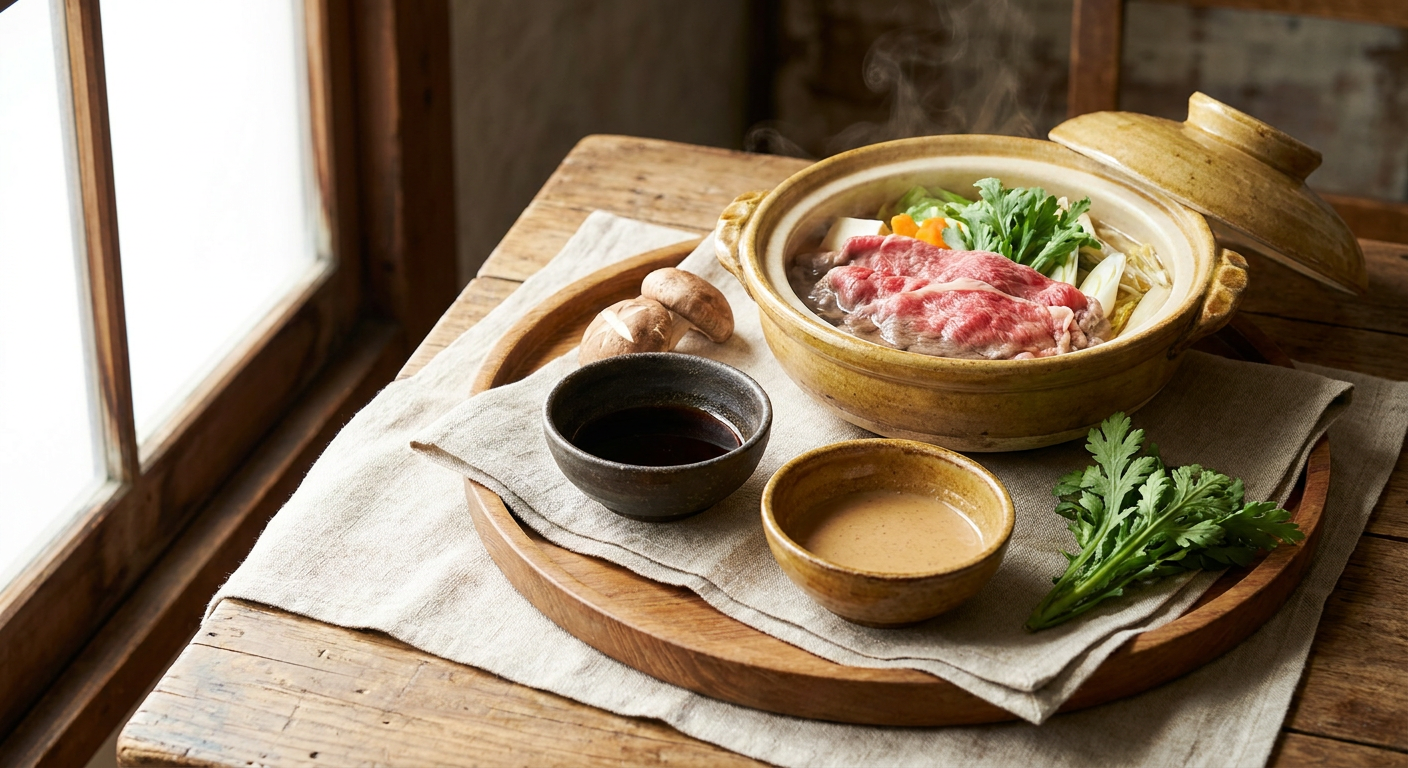
Shabu-shabu is hot pot's minimalist extreme: a kombu-water broth, paper-thin beef swished through it for seconds (the name is the sound), and two dipping sauces. Where sukiyaki (#15) is sweet and rich, shabu-shabu is clean and savory — the broth barely seasoned, because each ingredient is seasoned by its sauce, and the meal ends with the accumulated broth as a soup.
Quantities live in the recipe card.
The pot
- the thinnest slice the butcher offers)
The two sauces (this is the recipe)
- sharp and citrusy
- creamy and nutty
The finish
- **Soak the kombu, don't boil it.** 30 minutes in cold water, then heat gently and remove the kombu just before the boil — boiling kombu turns the broth bitter and slick. This is the entire broth technique.
- **The bridge:** ponzu is sold bottled, and the homemade version above takes 2 minutes. Japanese roasted sesame paste (nerigoma) is richer than tahini, but tahini thinned as above is a genuinely close bridge — toast it in a dry pan 2 minutes first and you close most of the gap.
Shabu-Shabu
Prep: 30 minutes · Cook: 30 minutes at the table · Total: About 1 hour · Serves 4
Ingredients
The pot
- 1.5 litres water; 20 g kombu, soaked 30 minutes
- 500 g beef, sliced 1–2 mm ("shabu-shabu cut" — the thinnest slice the butcher offers)
- 300 g napa cabbage, 200 g spinach or watercress, 150 g shiitake, 200 g tofu, cubed
- 100 g shirataki noodles, rinsed; 6 spring onions; 100 g carrots, paper-thin rounds
- ½ block ito konnyaku or glass noodles, optional
The two sauces (this is the recipe)
- Ponzu: 4 tbsp soy sauce, 3 tbsp rice vinegar or yuzu juice, 2 tbsp dashi, a pinch of sugar — sharp and citrusy
- Sesame (goma): 5 tbsp tahini or Japanese sesame paste, thinned with 2 tbsp dashi, 1 tsp soy, 1 tsp sugar, 1 tsp rice vinegar — creamy and nutty
The finish
- The broth, now a light soup, finished with a splash of soy and the glass noodles; steamed rice
Instructions
- **The pot at a shiver.** Bring the kombu water to a bare simmer — small bubbles, never a rolling boil — at the table burner. Keep it there the whole meal. Checkpoint — a rolling boil toughens the beef instantly and clouds the broth. The surface should barely tremble. This is the opposite of tonkotsu (#5) — the cleanness is the point.
- **Swish in rounds.** Each diner holds a beef slice with chopsticks and swishes it through the shivering broth — one, two, three swishes, 5–8 seconds — for medium-rare, longer for well done. Vegetables go in to simmer (napa ribs and shiitake first, a few minutes; greens seconds; tofu warms through). Dip each bite in ponzu or sesame sauce. Checkpoint — the beef's color change happens in seconds — pull at the pink you prefer. The swishing motion (the dish's name) cooks the slice evenly and quickly. The first broth after 10 minutes of ingredients already tastes of beef and mushroom — the meal builds its own soup.
- **The shime (finish).** When everyone is satisfied, add the glass noodles to the broth with a splash of soy and a pinch of salt, simmer 3 minutes, and ladle the now-complete soup — it has become a light dashi-beef consommé over the meal's course — into small bowls with rice. Checkpoint — the final soup should be delicate and clear, a summary of everything cooked. If it tastes thin, it needed more mushrooms and beef scraps; save that thought for next time — this is a broth that accumulates flavor across the meal.
Troubleshooting
| Symptom | Cause | Fix |
|---|---|---|
| Beef tough | Boiling pot, over-swished | Bare simmer; seconds, not minutes |
| Broth bitter, slicky | Kombu boiled | Remove before the boil, always |
| Meal feels plain | Under-seasoned sauces | The sauces are bold on purpose — sharpen the ponzu |
Storage, Make-Ahead & Variations
- Nothing keeps once assembled — but the broth, strained, is next-day noodle soup stock, excellent with udon. Sliced components hold 1 day. - Variations: pork shabu (same thin slice, fully cooked through — no pink), lamb for the northeastern Japanese style, or the fully vegetable version with the broth finished with miso.