Shan Noodles
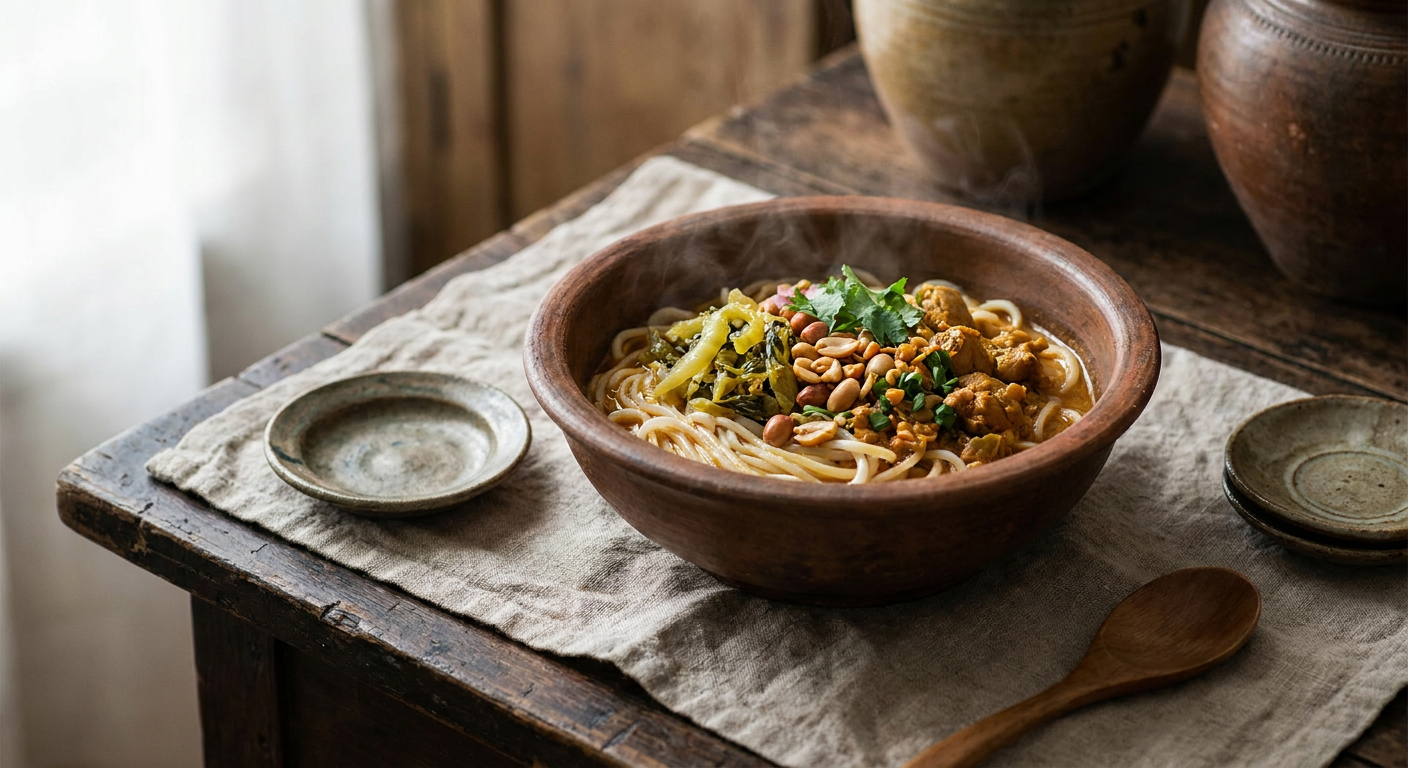
Shan noodles — Myanmar's most beloved noodle dish — come from the Shan state in the east: rice noodles under a lightly tomatoey, gently spiced minced chicken or pork sauce, with a side of clear broth and the raw garnishes. It is the Burmese noodle that closest neighbors the Lao and Thai tables (#79's cousin) — same rice noodles, softer spice hand — and it is Myanmar's everyday lunch.
- **Make the sauce first — it improves sitting.** The Shan sauce is a gentle stir-fry: onion and garlic softened, tomato cooked down to a soft paste, ground meat crumbled through, lightly spiced. It should be loose enough to spoon over noodles, thick enough to cling.
- **The bridge:** Burmese chili powders run mild — paprika plus a pinch of cayenne is the honest blend. The side broth (the traditional "to swim between bites") is simple chicken stock with a scallion; instant dashi or bouillon bridges.
Shan Noodles
Prep: 25 minutes · Cook: 30 minutes · Total: About 55 minutes · Serves 3–4
Ingredients
The sauce
- 300 g ground chicken (or pork)
- 2 tbsp neutral oil; 4 cloves garlic (about 15 g), minced; 1 onion (about 150 g), diced fine
- 3 tomatoes (about 250 g), grated or finely diced, or 3 tbsp tomato paste
- 1 tsp paprika or mild chili powder; ½ tsp turmeric; ½ tsp ground coriander
- 1 tbsp fish sauce (about 15 ml); ½ tsp salt; 1 tsp sugar
- 100 ml water or chicken stock
The noodles and garnishes
- 300 g flat rice noodles (banh pho), soaked and briefly boiled
- A small handful each: crushed roasted peanuts (about 20 g), sesame seeds (about 10 g)
- The #40-style fried garlic and its oil; spring onion and cilantro, sliced
- Lime wedges; sliced chilies; a side bowl of light chicken broth per person (the traditional companion)
Instructions
- **Build the sauce (20 minutes).** Soften the onion and garlic in the oil until translucent-gold, add the spices for 1 minute, then the tomato — cook down 5 minutes until it collapses into a soft paste. Add the ground chicken, breaking it to fine crumbles and frying until it colors, then the fish sauce, sugar, salt, and water. Simmer 5–8 minutes to a spoonable sauce. Checkpoint — the sauce should be a soft red-orange, loose and glossy — the texture of a ragù looser than bolognese. Taste: tomato-sweet first, gentle warmth, fish sauce savor — distinctly softer-spiced than its Thai cousins. The chicken should be in small, sauce-coated crumbles, not chunks.
- **Boil the noodles, warm the broth.** Soak the rice noodles until pliable and boil 1–2 minutes; drain hard. Warm the side broths. Checkpoint — the same noodre law as the #24: hot bowls, hard-drained noodles, everything ready before assembly.
- **Assemble and serve with the broth beside.** Noodles in each bowl, the sauce generously over, peanuts and sesame scattered, fried garlic and its oil, the raw herbs, and lime and chili at the table — with the small broth bowl alongside. Checkpoint — eating test: the first bite is the sauce's tomato-gentle spice over soft rice noodles, peanut crunch and garlic crisps; a sip of the clean broth between bites resets — the Burmese rhythm of seasoned and plain alternating. A squeeze of lime at the end brightens the whole bowl. It should taste quieter than its neighbors (#2, #79) and complete — a lunch dish, not a challenge.
Troubleshooting
| Symptom | Cause | Fix |
|---|---|---|
| Sauce dry, pasty | Over-reduced | Water by spoons to the loose-ragù body |
| Noodles gluey | Over-soaked, under-drained | Watch the clock; drain hard |
| Dish tastes flat | Tomato under-cooked or fish sauce shy | Cook the tomato down fully; season by spoons |
Storage, Make-Ahead & Variations
- The sauce keeps 3 days and improves — the make-ahead lunch; noodles and garnishes to order. The #149's Shan tomato bruschetta — the fusion block's own — carries this sauce onto Italian bread, and the sauce's soft-spiced tomato travels well. - Variations: the pork version, the tofu version, the soupier "shan noodle soup" format. The fusion crossing lives at #149.