Shoyu Ramen Bolognese
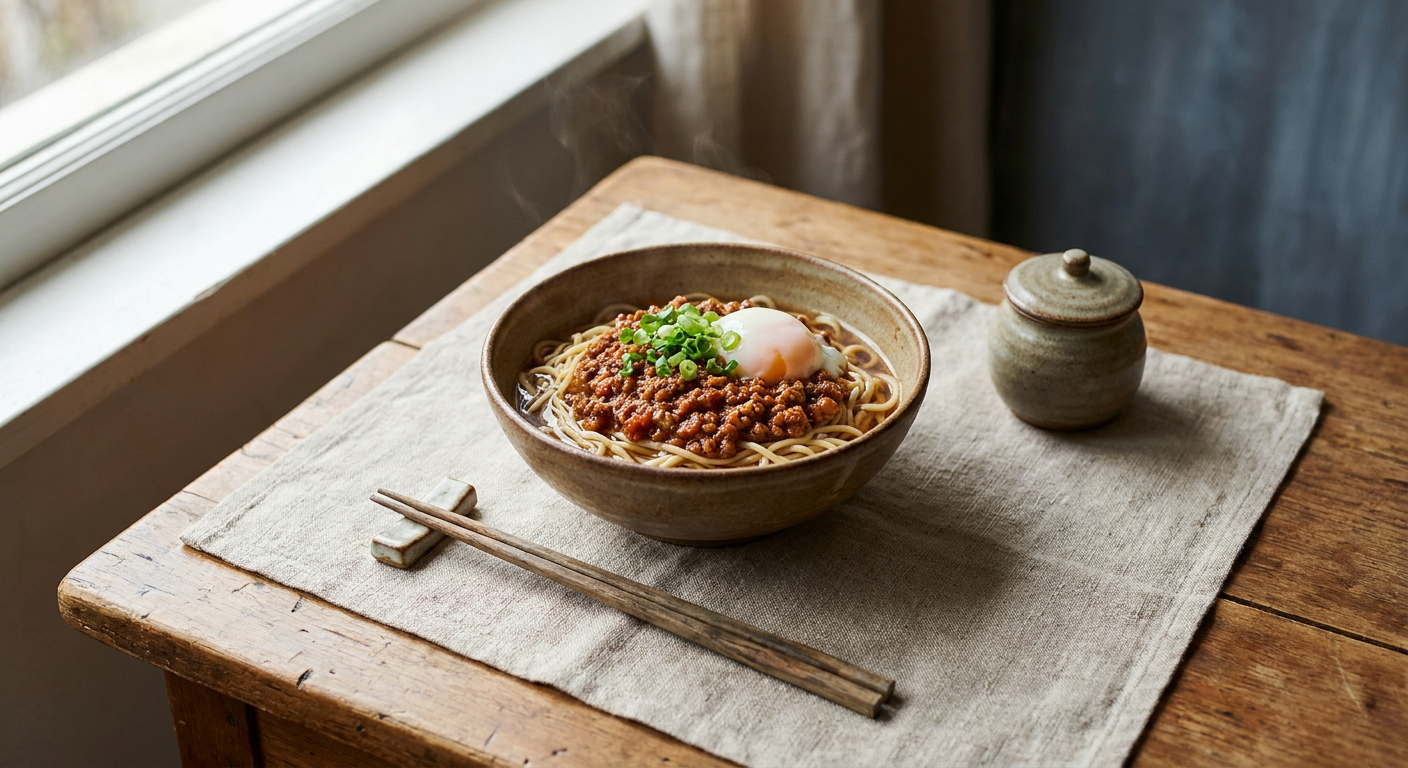
The fusion runs the other direction here: Italian technique, Japanese seasoning. A slow-cooked meat ragù — the bolognese method, patience and all — built on dashi and finished with soy and mirin, so the sauce tastes like a concentrated ramen broth clinging to spaghetti. It is the #5 ramen shop's and the nonna's shared instinct: meat, time, and umami.
- **The swap is complete and disciplined:** where bolognese uses wine and milk and stock, this uses sake, dashi, and soy-mirin — every liquid replaced by its Japanese counterpart, the soffritto and the slow simmer untouched. That is the whole recipe's honesty.
- **The bridge:** dashi from granules is entirely fine here (it will simmer 40 minutes and deepen); the soy should be a good all-purpose Japanese one.
Shoyu Ramen Bolognese
Prep: 20 minutes · Cook: 1 hour · Total: About 1 hour 20 minutes · Serves 4
Ingredients
The ragù
- 300 g ground pork and 200 g ground beef
- 1 onion (about 150 g), 1 carrot (about 100 g), 1 celery stalk (about 80 g) — all minced fine (the soffritto)
- 4 cloves garlic (about 15 g), minced; 2 tbsp tomato paste (about 30 g)
- 100 ml sake or white wine; 300 ml dashi (from 10 g kombu and 5 g katsuobushi, or water + granules)
- 2 tbsp soy sauce (about 30 ml); 1 tbsp mirin (about 15 ml); 1 tsp sugar
- 1 bay leaf; 2 tbsp neutral oil; 1 tbsp butter
- Black pepper
The pasta and finish
- 320 g spaghetti; the ragù; a knob of butter to mount
- Optional crowns: a soft egg 6½-minute halved, scallion, a sheet of nori cut in threads, bonito flakes
Instructions
- **The soffritto, slowly (12 minutes).** Soften the onion, carrot, and celery in the oil over medium-low until glossy and sweet — patient, not browned. Checkpoint — the soffritto should be melting-tender and sweet — this Italian foundation is kept intact, and rushing it costs the ragù's roundness.
- **Brown the meat, add the paste, build (10 minutes).** Add the meats and brown through, breaking to a fine crumble; stir in the tomato paste and garlic for 2 minutes; pour in the sake and let it hiss away. Checkpoint — the meat should be crumbled fine and lightly browned, the paste darkened and roasted onto the meat — the fond is forming. The sake lifts it as wine would.
- **The dashi simmer (40 minutes).** Add the dashi, soy, mirin, sugar, and bay; adjust to the barest simmer and cook 40 minutes, uncovered, until the sauce is thick and the liquid is absorbed into a glossy ragù. Off the heat: the butter, a grind of pepper. Checkpoint — the finished ragù should be a deep mahogany — soy-darkened — thick enough to cling to a spoon, tasting simultaneously like bolognese and like the bottom of a great ramen bowl: savory, faintly sweet, umami stacked on umami. The dashi should be present but not fishy — it reads as depth.
- **Boil the pasta, mount, crown.** Toss the spaghetti through the ragù with a splash of pasta water and the butter; serve with the ramen-shop crowns as you like. Checkpoint — eating test: the first bite is a perfect ragù pasta — then the flavor settles into ramen: soy-mirin at the finish, dashi's hum beneath, and the crowned egg and scallion complete the costume change. It should feel like eating at the counter of a shop that accidentally hired a nonna, which is the block's favorite kind of accident.
Troubleshooting
| Symptom | Cause | Fix |
|---|---|---|
| Tastes like soy-heavy bolognese | Dashi weak or simmer short | Real dashi helps; reduce until glossy |
| Ragù thin, soupy | Under-simmered | The 40 minutes, uncovered — patience |
| Too salty | Soy over-poured | 2 tbsp is the measure; salt at the end only |
Storage, Make-Ahead & Variations
- The ragù keeps 4 days and improves (the #5-tonkotsu-block's make-ahead law); freezes 2 months. Pasta always to order. - Variations: with ground chicken and shio seasoning, the miso-butter version. The block's #109 nori butter pasta is this direction's quick cousin.