Soju Sangria
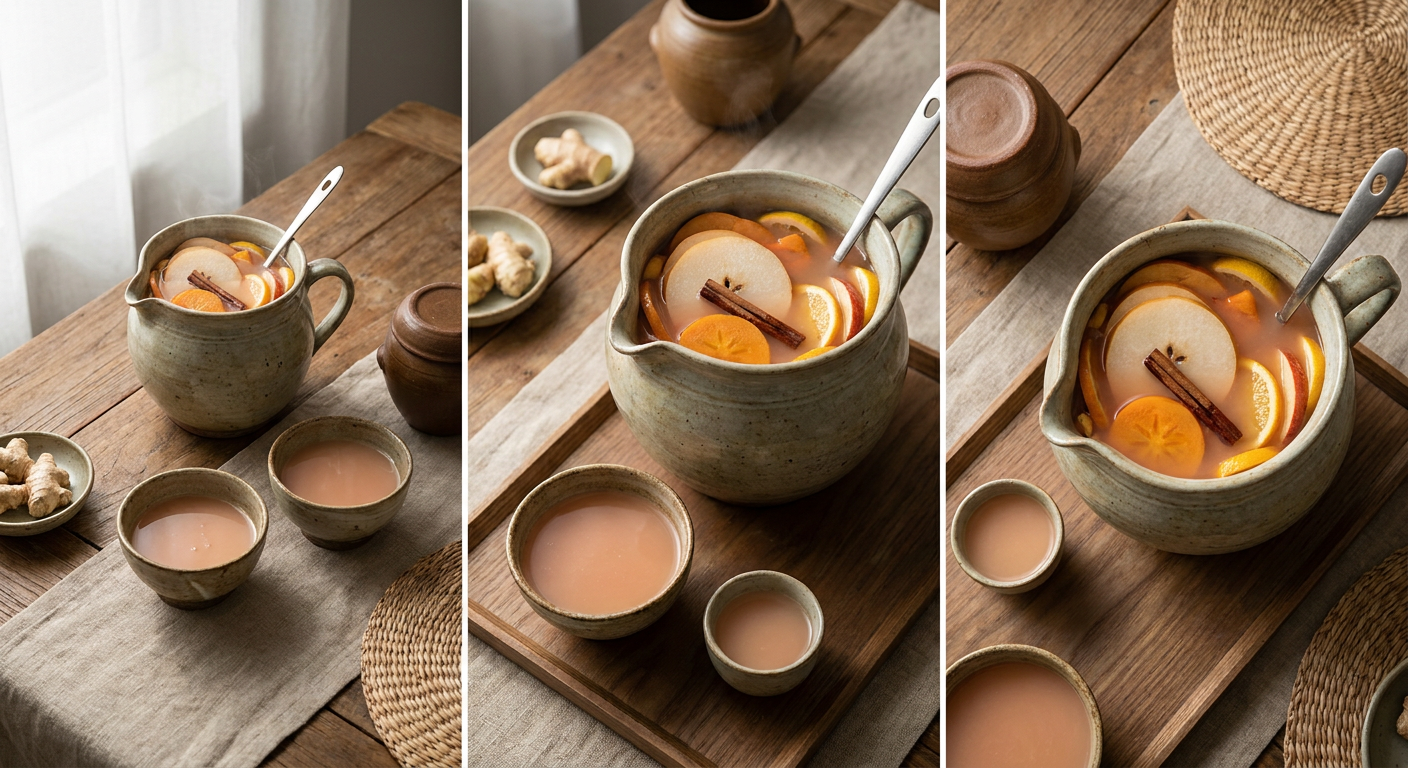
Soju sangria is the block's pitcher drink: Spain's format — fruit macerated in wine and a spirit — with soju and a splash of makgeolli or yuja-cheong syrup carrying Korea's register. Lighter than the original (soju's clean neutrality), lower-alcohol by nature, and the fruit drinks the spirit as it always has.
Quantities live in the recipe card.
The pitcher
- its neutrality is the point)
- **Macerate 1 hour — the fruit is the drink's clock.** The diced apple and pear soak in the soju, wine, and syrup, and their Korean-orchard sweetness is the drink's signature. Longer maceration (up to 4 hours, refrigerated) deepens it.
- **The bridge:** the green-bottle soju is the accessible authentic (any liquor store); yuja-cheong is the Korean accent (the #133's jar), and honey plus citrus bridges. The wine: dry and cheap, per sangria's own law.
Soju Sangria
Prep: 15 minutes, plus 1 hour macerating · Cook: No cook · Total: About 1 hour 20 minutes · Serves 6
Ingredients
The pitcher
- 375 ml soju (half a bottle; the plain green bottle is fine — its neutrality is the point)
- 375 ml dry white wine or rosé (the sangria backbone remains)
- 2 tbsp yuja-cheong (about 40 g) or honey plus the juice of a lemon; 1 tbsp soju-soaked gochugaru, optional, for a faint heat note
- 1 apple (about 150 g) and 1 Asian pear (about 200 g), diced; 1 lemon (about 100 g), sliced thin
- 200 ml sparkling water, at serving (about 200 g); a large handful of ice (about 100 g)
Instructions
- **Build the pitcher and macerate.** Stir the yuja-cheong into the soju until dissolved; add the wine, the fruit, and the lemon slices. Refrigerate 1 hour. Checkpoint — taste the macerating base at the hour: it should be fruit-forward, gently sweet, and the alcohol already softened — the sangria method's whole effect, working at soju's lower register.
- **Serve over ice, topped with sparkle.** Pour into ice-filled glasses (fruit in each), and top each with a splash of the sparkling water — never stirred into the pitcher, which would go flat. Checkpoint — drinking test: the first sip is sangria's structure — cold, fruity, faintly sweet — with soju's clean substitution reading as lighter and rounder than brandy's bite, the pear's crispness and the yuja's bitter floral running through. The optional gochugaru pinch (a few flakes floated) adds a warmth at the swallow that no Spanish sangria ever had.
Troubleshooting
| Symptom | Cause | Fix |
|---|---|---|
| Drink too sweet | Yuja-cheong over-poured | The sparkling water and more ice dilute; balance next batch |
| Fruit flavor faint | Under-macerated | The full hour, refrigerated |
| Flat by the second glass | Sparkling water stirred in | Top each glass, never the pitcher |
Storage, Make-Ahead & Variations
- The macerated base (pre-soda) keeps 1 day refrigerated and improves; the sparkling top is always at pouring. The drunk fruit is the cook's privilege. - Variations: the makgeolli splash for a milky-funky register, the watermelon-soju summer version. The block's #141 is the other half of the brunch argument.