Som Tum Papaya Salad
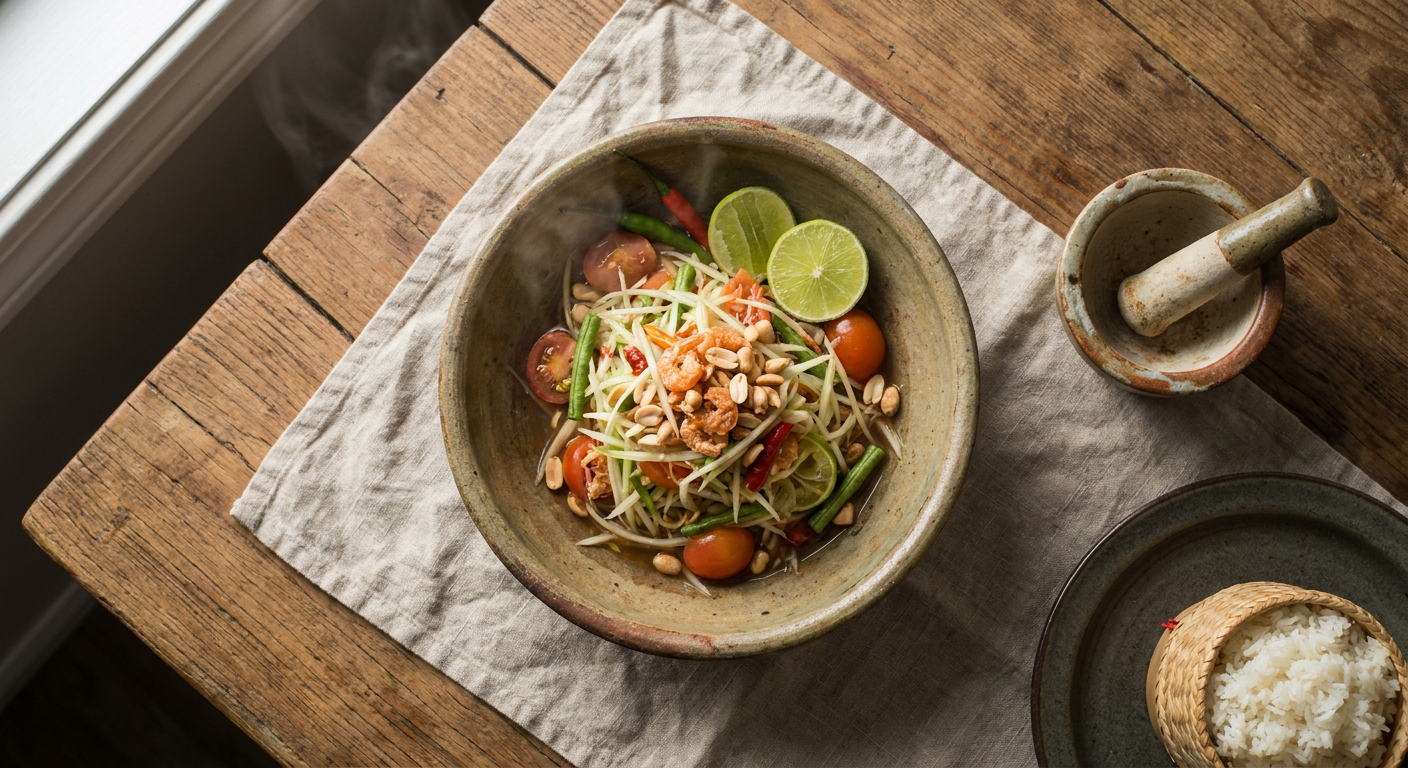
Som tum is Thailand's mortar-and-pestle salad: shredded green papaya pounded briefly with garlic, chili, fish sauce, lime, and palm sugar, plus tomato and green bean, so the dressing is bruised into the fruit rather than tossed over it. It is the four-flavor Thai system in its loudest form — sour, sweet, salty, hot — and the mortar is genuinely the technique: the pounding releases the papaya's juice into the dressing, making an emulsion no bowl-tossed version matches.
- **Toast the peanuts; chill the papaya.** The papaya shreds crisp up with 15 minutes in ice water (drain well after); the peanuts are best freshly toasted in a dry pan.
- **The bridge:** green papaya is sold in most Asian groceries (a firm, green, unbiased fruit — check that the flesh is white, not orange); the honest substitutes that keep the dish's crunch are shredded carrot, cucumber matchsticks, or green apple, in that order — and som tum's dressed-to-crunch logic works on all of them. What you lose is papaya's faint sweetness and its perfect shred; what you keep is the dish.
Som Tum Papaya Salad
Prep: 20 minutes · Cook: No cook · Total: About 20 minutes · Serves 2–3
Ingredients
The salad
- 400 g green papaya, peeled, shredded on a julienne peeler or grater (about half a medium papaya)
- 2 cloves garlic; 2–4 bird's eye chilies (to taste)
- 100 g green beans, cut to 4 cm; 6 cherry tomatoes (about 100 g), halved
- 2 tbsp dried shrimp (about 10 g), rinsed (optional); 2 tbsp roasted peanuts (about 20 g)
The dressing (pounded in, not poured on)
- 2 tbsp fish sauce (about 30 ml); 2 tbsp lime juice (about 30 ml)
- 1½ tbsp palm sugar (about 20 g), grated — or brown sugar
Instructions
- **Pound the base (1 minute).** In a large mortar (or a sturdy bowl with the end of a rolling pin), pound the garlic and chilies to a rough crush — a few hits, not a paste. Checkpoint — the garlic should be smashed into pieces, the chilies bruised open. This crude base is correct: it flavors the dressing and stays in the salad as texture and heat bursts.
- **Add and lightly pound, in order (3–4 minutes).** Add the palm sugar, fish sauce, and lime; stir and crush to dissolve. Add the green beans and lightly pound (they should bruise and split slightly), then the tomatoes — press just until they crack and release juice. Then the papaya shreds and dried shrimp: pound and toss simultaneously (mortar in one hand, spatula in the other — the classic som tum rhythm) 1–2 minutes, until the papaya softens slightly and the whole thing is wet and dressed. Checkpoint — the transformation is visible: the papaya goes from dry shreds to glossy, wet ribbons, and the mortar's bottom holds a small pool of papaya-diluted dressing. This is the emulsion stage — the salad's juice joining the dressing. Over-pounding makes papaya mush; the target is bruised and glossy.
- **Taste and adjust to the four flavors — then eat immediately.** Taste a shred: it should be sour first, then salty, then sweet, with heat building behind. Adjust by drops and pinches — som tum's balance is struck in the mortar. Fold in the peanuts, turn out onto a plate, and eat at once. Checkpoint — eating test: every forkful should crunch, the dressing clinging not pooling, the heat arriving late, and lime at the swallow — with a peanut or tomato burst every few bites. The traditional accompaniment is sticky rice (#57's rice) and this site's khao soi (#2); som tum is the bright, cold note beside rich dishes.
Troubleshooting
| Symptom | Cause | Fix |
|---|---|---|
| Salad watery, dressing thin | Papaya wet from ice bath | Drain and pat the shreds dry before pounding |
| One flavor dominates | Mis-built dressing | Adjust by drops — sour and salt lead, sweet supports |
| Papaya soft, no crunch | Over-pounded or overripe fruit | Light pounding; firm, green papaya only |
Storage, Make-Ahead & Variations
- Made and eaten in ten minutes — som tum does not keep (the papaya weeps and the dressing dulls). All components hold 1 day separately; the dressing's ratio keeps in a jar for a week. - Variations: som tum thai (this recipe), the Lao tam mak hoong with padaek and more funk (#77), som tam with salted crab, and the fruit versions with apple or grape. The fusion direction — #144's tea leaf salad meets som tum — is a mortar conversation this site enjoys having.