Sukiyaki
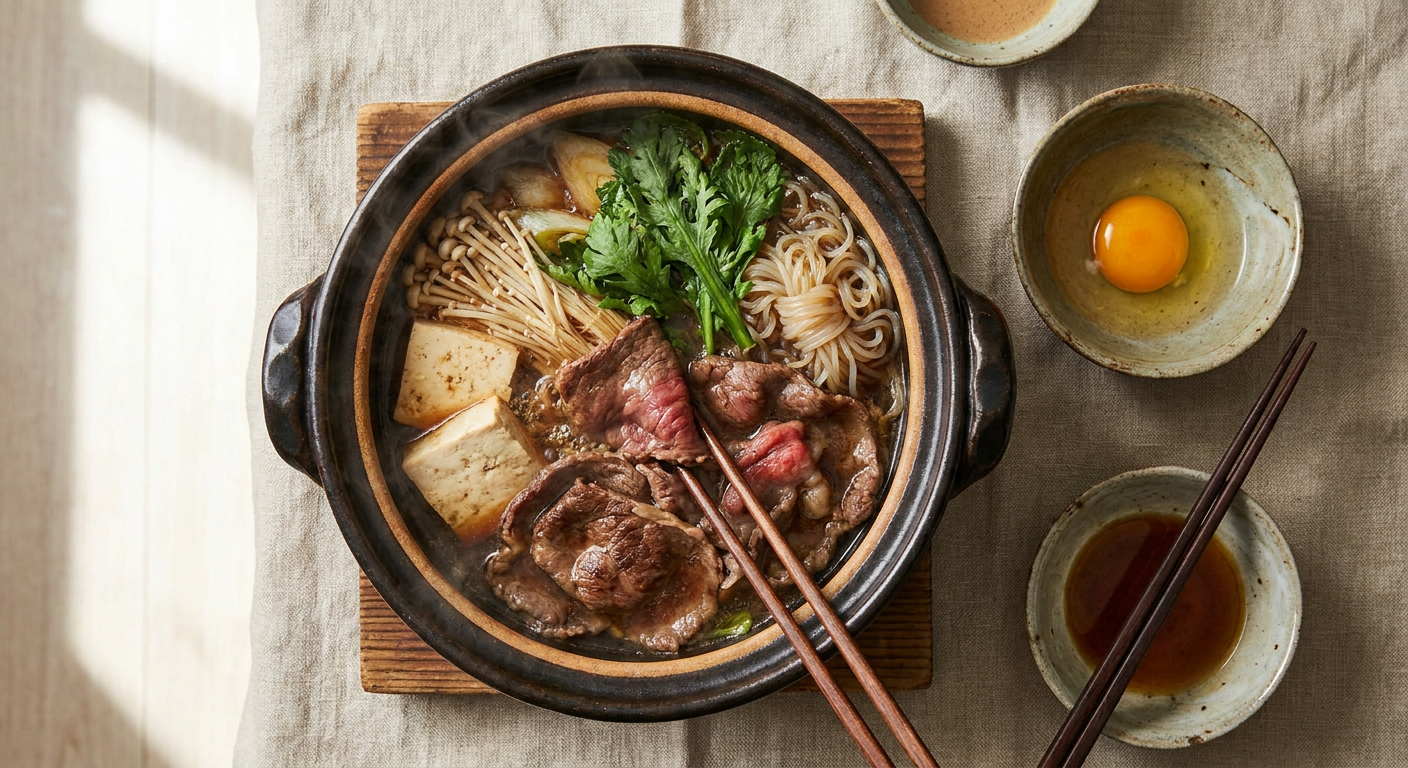
Sukiyaki is winter Japan in a pot: thinly sliced beef, tofu, vegetables, and glass noodles simmered at the table in a sweet-soy warishita broth, each ingredient dipped in raw egg before eating. The broth is closer to a glaze than a soup — intensely seasoned, because every bite is diluted by egg. It is a social dish, cooked in rounds at the table, and the recipe is mostly shopping and slicing.
Quantities live in the recipe card.
The warishita (broth concentrate)
- double it)
The pot
- the same slice as gyudon #12)
- the drier the tofu, the more broth it drinks in the pot
- pure texture, almost no calories)
To eat
- **Slice everything, cook nothing.** The entire meal cooks at the table in a shallow pot (donabe, electric skillet, or wide shallow pan on a portable burner). The mise is the meal — beef on one plate, vegetables arranged by type, broth mixed and in a pitcher.
- **The bridge:** beef quality matters more here than in stir-fries — well-marbled ribeye or chuck roll, sliced thin, renders sweetness into the broth. Frozen-and-sliced-at-home works if the freeze is firm, not solid. Chrysanthemum greens (shungiku) are the authentic bitter note; watercress holds the same role.
Doneness & Quality Checkpoints
- The start: beef seared, warishita caramelized before the liquid.
- The rounds: broth stays strong, topped with warishita not water.
- The finish: the last broth over rice, never wasted.
Sukiyaki
Prep: 30 minutes · Cook: 30 minutes at the table · Total: About 1 hour · Serves 4
Ingredients
The warishita (broth concentrate)
- 150 ml soy sauce, 150 ml mirin, 100 ml sake, 50 g sugar
- (Simmer 3 minutes to dissolve; keeps for weeks refrigerated — double it)
The pot
- 500 g beef, sliced 2 mm ("shabu-shabu cut" — the same slice as gyudon #12)
- 400 g firm tofu, cut in 1 cm slabs (about 350 g after blotting), blotted dry — the drier the tofu, the more broth it drinks in the pot
- 200 g napa cabbage, cut in wide ribbons; 150 g shiitake (about 8 mushrooms), stemmed, cap scored with a cross so they cook through and drink the broth
- 100 g garland chrysanthemum or watercress or spinach; 6 spring onions, cut in 5 cm lengths
- 100 g shirataki or glass noodles, rinsed and cut with scissors (konnyaku is nearly all water — pure texture, almost no calories)
- 1 piece grilled tofu (atsuage) or extra firm tofu, optional
To eat
- 4 eggs, at room temperature, each in its own bowl
- Steamed rice for after
Instructions
- **Start the pot with fat and sugar (5 minutes).** Heat the empty pot, lay in a few beef slices, and sear them briefly. Add a splash of the warishita — it should hiss and reduce instantly to a glaze. This first caramelized layer is the flavor base that a soup-pour start never builds. Checkpoint — the kitchen should smell of caramelizing soy-sugar — the maillard note that defines sukiyaki. If it smells only of simmering soy, the pot was too cool.
- **Build the broth and the first round.** Pour in the remaining warishita plus 200 ml water or dashi, bring to a gentle simmer. Add the tougher vegetables first — napa ribs, shiitake, tofu — letting them take on the broth, then the greens and noodles in the last minutes. Cook and eat in rounds: each diner picks from the simmering pot, dips in their raw egg, and eats with rice. Checkpoint — the broth should stay strong — it reduces as it cooks, and the vegetables release water; top up with more warishita (not plain water) as it concentrates. The egg dip should coat each bite in a cool, savory custard that tames the sweet broth.
- **The finish: the last broth.** When the ingredients are eaten, the remaining broth — now enriched with beef fat, tofu, and mushroom — is served over rice, sometimes with a raw egg stirred in. This closing bowl is half the reason to make sukiyaki, and the reason the pot is never diluted carelessly: every top-up and every ingredient has been quietly seasoning the ending. Checkpoint — the final rice bowl should taste like the entire meal distilled — do not skip it, and do not dilute it.
Finish & Plate
The pot stays at the center of the table on its burner throughout — this is not a plated dish. Each diner's egg bowl and rice bowl are their territory. Serve in rounds; the pot's story is the meal, and the best sessions end when the broth is dark, concentrated, and fought over.
Troubleshooting
| Symptom | Cause | Fix |
|---|---|---|
| Broth too sweet, cloying | Warishita not cut with water/dashi | 200 ml per round, tasting as you go |
| Beef tough and gray | Thick slices, over-simmered | 2 mm slices, swished briefly |
| Vegetables mushy | Everything added at once | Staged rounds — napa ribs before greens |
Storage, Make-Ahead & Variations
- Warishita keeps 2 weeks refrigerated — make a triple batch for future hot pots. Cooked sukiyaki keeps 2 days; the broth is the treasure (freeze it for the next pot's start). - Variations: all-tofu and mushroom for the Buddhist version; the fusion direction — sukiyaki broth as a pan sauce for seared beef over udon (#22's noodles, this broth).