Sundubu Jjigae
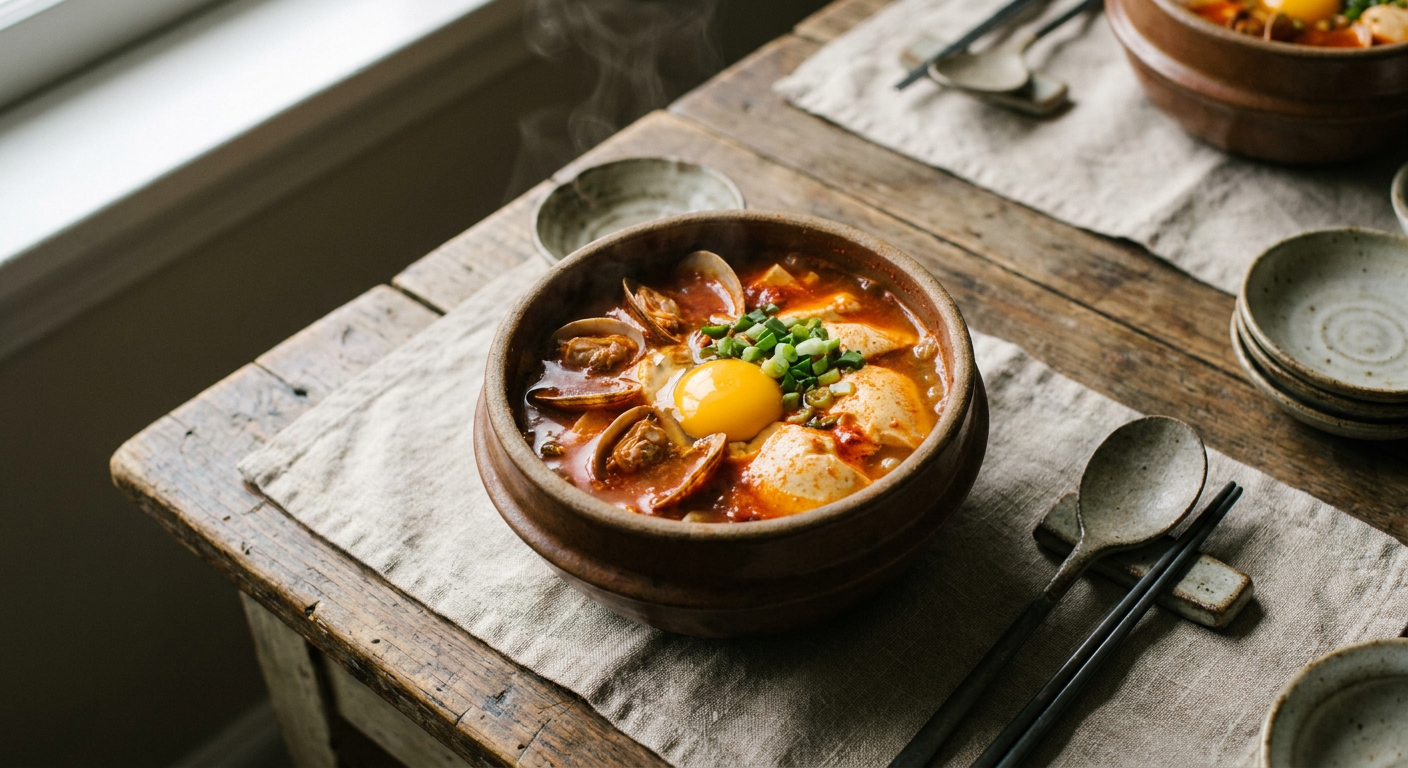
Sundubu jjigae — soft tofu stew — is the bubbling stone pot of barely-set custard tofu in a gochujang-chili broth with seafood or pork, cracked egg stirred in at the table. The entire dish is a texture argument: the tofu is so soft it is ladled, not cut, and the broth is fierce enough to stand up to it.
- **Bloom the chili paste in sesame oil first.** The stew's base is pork rendered, then gochugaru and aromatics fried briefly in the fat-and-sesame oil — 30 seconds, never scorched — before the stock joins. This paste base is the flavor foundation.
- **The bridge:** sundubu (extra-soft tofu in tubes) is sold in Korean groceries and is the authentic texture — it pours in curds. Standard silken tofu bridges honestly; firm tofu is a different, lesser dish.
Sundubu Jjigae
Prep: 15 minutes · Cook: 20 minutes · Total: About 35 minutes · Serves 2–3
Ingredients
The broth
- 150 g pork belly or 150 g small shrimp (or both)
- 1 tbsp sesame oil; 3 cloves garlic, minced; 1 tsp minced ginger
- 1 tbsp gochugaru (about 8 g); 1 tbsp gochujang (about 20 g)
- 400 ml anchovy-kelp stock or water (a 5 cm piece of dashima/kombu and 3 dried anchovies, simmered 10 minutes, is the quick authentic stock)
- 1 tbsp soy sauce (about 15 ml); ½ tsp salt; a pinch of sugar
The tofu and finish
- 800 g soft sundubu tofu (in tubes) or the softest silken tofu, added by the spoonful
- 2 eggs, at room temperature
- 2 spring onions and a fresh chili, sliced; a drizzle of sesame oil; optional: enoki mushrooms, zucchini slices (about 100 g)
Instructions
- **Build the base (5 minutes).** In the stone pot or a small heavy pot, render the pork in the sesame oil, add garlic, ginger, gochugaru, and gochujang, and fry 30 seconds until the oil stains red and the smell rises. Checkpoint — the paste should sizzle gently and turn the oil a deep red-orange. Scorched gochugaru is bitter — 30 seconds at medium heat, no longer.
- **Add stock and simmer (10 minutes).** Pour in the stock and soy, bring to a rolling bubble, and simmer 8–10 minutes until slightly reduced and full-flavored. Add any vegetables in the last 3 minutes. Checkpoint — taste: hot, savory, deeply seasoned — saltier than drinkable because the mild tofu will absorb. The broth must over-deliver; the tofu is its blank canvas.
- **The tofu by spoonful, the egg at the table.** Spoon the soft tofu directly into the bubbling stew in big curds — it barely needs cooking, 3 minutes to warm through. Bring the pot still bubbling to the table; each diner cracks in an egg and stirs it into their side. Checkpoint — eating test: the first spoonful is broth and tofu together — fierce red heat and salt against cool, sweet custard — the egg's raw richness stirred in adds a second silk. The tofu should nearly dissolve at the tongue's pressure. Rice on the side, often added to the finished broth. The bowl-to-table moment matters: the stew must still bubble when it lands.
Troubleshooting
| Symptom | Cause | Fix |
|---|---|---|
| Broth bitter | Gochugaru scorched | 30 seconds at medium, always |
| Tofu broken to mush | Boiled hard or stirred | Gentle bubble, spoon, don't stir |
| Stew tastes flat | Under-seasoned broth | Salt and soy up — boldness is structural |
Storage, Make-Ahead & Variations
- The broth base keeps 2 days; tofu and eggs are always at serving. This is a made-to-order stew, and the stone pot's retained heat is part of the cooking. - Variations: the seafood combination (shrimp, clam, and an anchovy stock is the classic), the pure mushroom version. The fusion direction — soft tofu in the #108-style tom yum broth — is the same silk-vs-fire argument in Thai.