Takoyaki
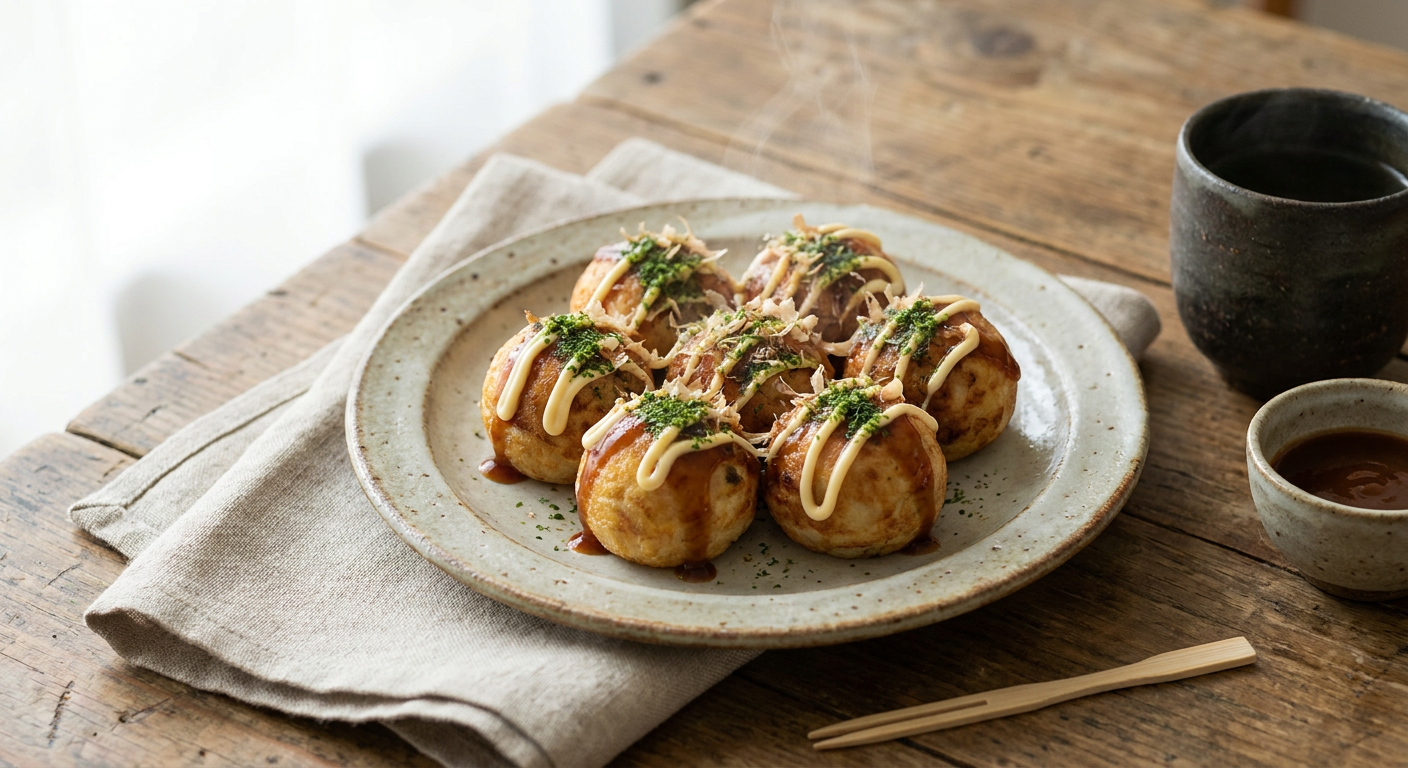
Takoyaki — octopus balls from Osaka — is the one recipe on this site where the equipment genuinely matters: the cast-iron hemispherical pan is not a substitute-friendly tool. The batter is thin, the filling a single cube of octopus, and the entire skill is in the 90-second-per-ball rotation that turns liquid into spheres. The authentic pan costs less than a pizza; get it, or make okonomiyaki (#8) with the same sauce instead.
- **Make the batter thin — thinner than feels right.** It should pour like heavy cream. The eggs and flour provide almost no structure; the hemispheres build themselves by rotation in the hot pan. Rest the batter 15 minutes if you have time.
- **The bridge:** cooked octopus is sold in Japanese and Mediterranean groceries (and frozen in Asian markets); shrimp is the honest substitute, and honestly, most home takoyaki in Japan is made with whatever was in the fridge. What you cannot substitute is the pan.
Takoyaki
Prep: 25 minutes · Cook: 15 minutes · Total: About 40 minutes · Makes about 24 balls
Ingredients
The batter
- 150 g flour, 2 eggs, 400 ml dashi (or water + dashi granules)
- 1 tsp soy sauce; a pinch of salt
- 50 g cabbage, minced very fine (some purists skip it; home versions often include it)
The filling and finish
- 150 g cooked octopus, cut into 1 cm cubes (or cooked shrimp/squid)
- 3 spring onions (about 30 g), minced; a handful of tenkasu (tempura crisps, about 20 g)
- Pickled red ginger, minced (beni shoga)
- Okonomiyaki sauce, Kewpie mayo, aonori, bonito flakes — the #8 sauce system
Instructions
- **Heat the pan to the flick-test.** Heat the takoyaki pan over medium until a drop of batter sizzles and crisps in 4–5 seconds. Oil every hemisphere generously — the balls must be able to spin. Checkpoint — a drop of batter should skitter and brown at the edges, and the pan should look slick in each cup, not pooled.
- **Fill, drop, and flood.** Pour the batter to flood the whole pan surface, just over the cups' rims. Quickly drop one octopus cube into each cup, then scatter tenkasu, spring onion, and pickled ginger across everything. Checkpoint — work fast — the batter starts setting on contact with the pan. Every cup gets octopus; the scallions and crisps can fall between cups, because you will scrape them in.
- **The 90-second rotation.** After about 90 seconds, when the bottoms are set and golden, take two picks (or chopsticks) and turn each ball a quarter-turn, dragging the uncooked batter that flooded around the cups up and over. The outside-cup batter becomes the ball's other hemisphere as you rotate. Keep turning every 30–45 seconds, scraping the connective batter strands into the balls, until each sphere is evenly golden — about 4–5 minutes total. Checkpoint — by the third turn, rough spheres should have formed — they self-smooth as they rotate. Finished: crisp outside, hollow-tender inside, and the ball wobbles on the pick. This is the whole skill, and the first batch is practice — the second batch is dinner.
- **Sauce and serve.** Lift the balls out, pile them in a boat or bowl, sauce generously while hot, mayo lattice, aonori, and bonito. Checkpoint — bite carefully — the inside holds real steam. The center should be soft, almost custardy, around the octopus cube; the shell audibly crisp.
Troubleshooting
| Symptom | Cause | Fix |
|---|---|---|
| Balls stick and tear | Pan under-oiled or under-heated | Oil each cup generously; medium, not low |
| Balls hollow or deflated | Batter too thick or over-cooked | Thin the batter; pull at golden-wobble |
| Can't form spheres | Turning too gently or too late | Scrape the connective batter in with each turn |
Storage, Make-Ahead & Variations
- Takoyaki is made to order and eaten in the first three minutes; a batch can be held warm 10 minutes in a low oven and re-crisped 2 minutes back in the oiled pan. Batter keeps 1 day refrigerated. - Filling variations: cheese and sausage for kids, konjac for the classic, leftover khao soi chicken for the fusion direction (it works; the sauce system is the same family).