Tam Mak Hoong
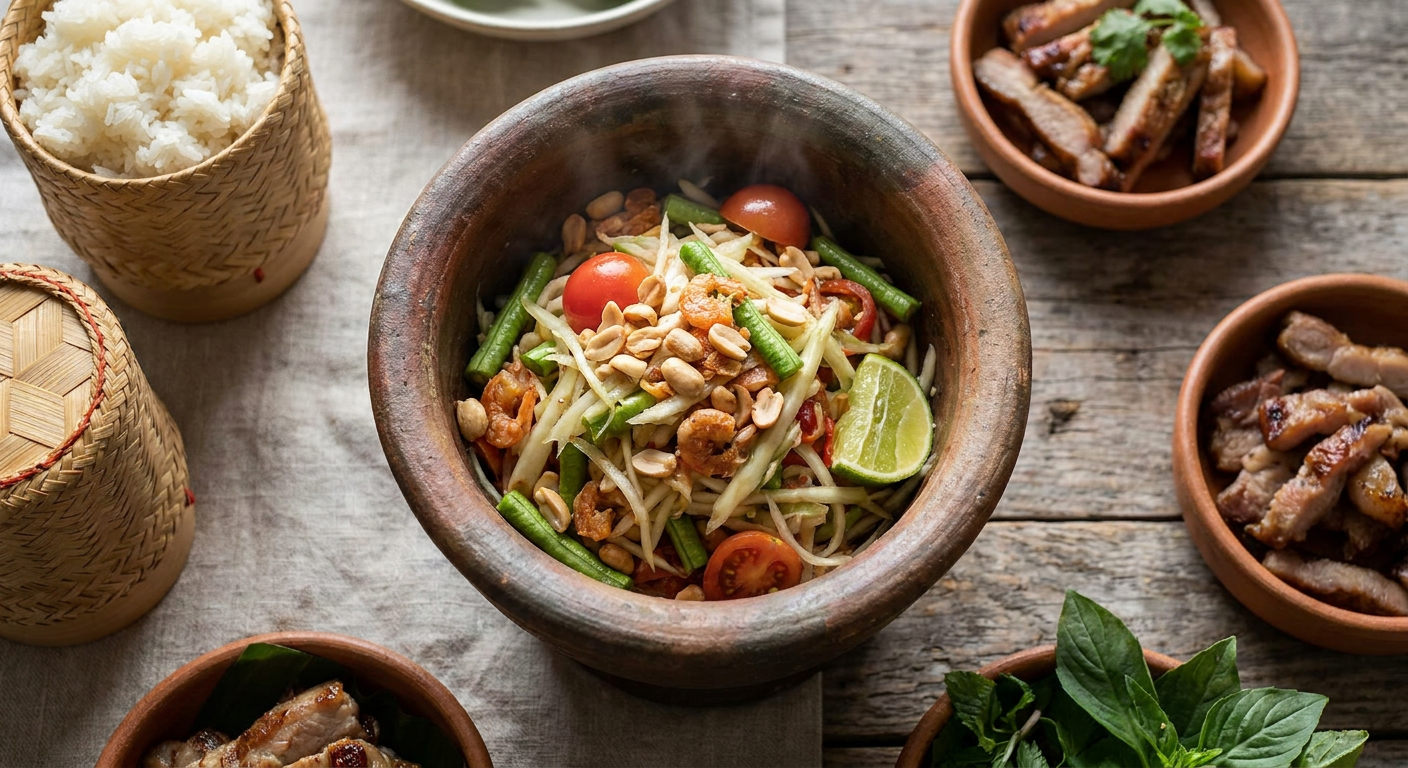
Tam mak hoong — Lao green papaya salad — is the Thai som tum's (#45) direct ancestor and louder sibling: the same mortar, the same green papaya, but dressed with padaek (Lao fermented fish sauce), more garlic, more chili, and often thick crab paste and eggplant — a funkier, hotter, more rustic salad that Laos eats daily with sticky rice. The mortar technique carries whole from #45; the dressing is the argument.
Quantities live in the recipe card.
The salad
- the Lao count; start at three)
- safely omitted)
The dressing (the Lao voice)
- less than the Thai version; the Lao runs saltier and more savory
The table
- cabbage, cucumber, eggplant — and the herb of the moment
- **Pound the garlic and chilies harder than the Thai version.** The Lao mortar base is more crushed, more integrated — the garlic nearly pasted with the chilies — before the papaya joins. See #45 for the full pounding rhythm; this recipe's differences are in the bowl, not the technique.
- **The bridge:** padaek is the soul (see #76's note); the anchovy bridge approximates. The pickled crab is an acquired texture (and a raw-ferment risk the cautious skip); everything else is #45's shopping list.
Tam Mak Hoong
Prep: 20 minutes · Cook: No cook · Total: About 20 minutes · Serves 2–3
Ingredients
The salad
- 400 g green papaya, shredded
- 6 cloves garlic (yes, six — the Lao count; start at three)
- 4–8 bird's eye chilies, to tolerance and beyond
- 100 g green beans, in 4 cm lengths; 6 cherry tomatoes (about 100 g), halved
- Optional and traditional: 2 tbsp padaek directly in; 1 small eggplant, boiled and smashed; a few tiny pickled crabs (the full Vientiane way — safely omitted)
The dressing (the Lao voice)
- 2 tbsp padaek — or 1 tbsp fish sauce + ½ tsp anchovy paste (the bridge)
- 2 tbsp lime juice (about 30 ml); 1 tbsp fish sauce (about 15 ml)
- 1½ tsp sugar (about 6 g) — less than the Thai version; the Lao runs saltier and more savory
- 2 tbsp toasted rice powder (the #46 recipe, toasted dark)
The table
- Sticky rice (#36); raw vegetables — cabbage, cucumber, eggplant — and the herb of the moment
Instructions
- **Pound the base, bruise the beans and tomatoes.** Garlic and chilies crushed to a rough paste; green beans lightly bruised; tomatoes pressed to crack — the #45 sequence, taken a minute further. Checkpoint — the mortar should smell fiercely of raw garlic and chili — louder and earthier than the Thai start. The Lao salad's aggression begins here.
- **Dress with the padaek voice.** Add the papaya, padaek, fish sauce, lime, sugar, and rice powder; pound-and-toss 1–2 minutes until glossy and wet. Checkpoint — taste: salt-funk first (the padaek), sour behind, heat building, sweetness noticeably less than the Thai #45 — the Lao salad is savory and pungent where the Thai runs sweet-tart. Adjust by drops toward salt-sour, not sweet.
- **Serve with sticky rice and raw vegetables.** The salad to the table with its mortar spoon, sticky rice beside, raw cabbage and cucumber to chase. Checkpoint — eating test: a bite of salad, a pinch of rice, a crunch of cabbage — the rhythm the Lao table runs daily. The heat should be a sustained burn that the padaek's depth and the rice's chew keep worth returning to. If it tastes "almost like som tum," the padaek and garlic were under-dosed — this salad should announce its difference in the first bite.
Troubleshooting
| Symptom | Cause | Fix |
|---|---|---|
| Tastes like mild som tum | Padaek/garlic under-dosed | Both up — the Lao voice is loud |
| Too salty to eat | Padaek plus fish sauce doubled | One or the other leads; dilute with papaya |
| Papaya watery, dressing thin | Wet shreds | Drain and pat before pounding |
Storage, Make-Ahead & Variations
- Made and eaten in ten minutes; the rice powder keeps 2 weeks; components hold 1 day. - Variations: with the boiled eggplant, with the crabs, with noodles folded in. The fusion direction — #147's balachaung caesar — runs the same funk-into-dressing logic into a Western salad, and the #144's tea leaf salad is the Burmese cousin of this whole family.