Tempura Moriawase
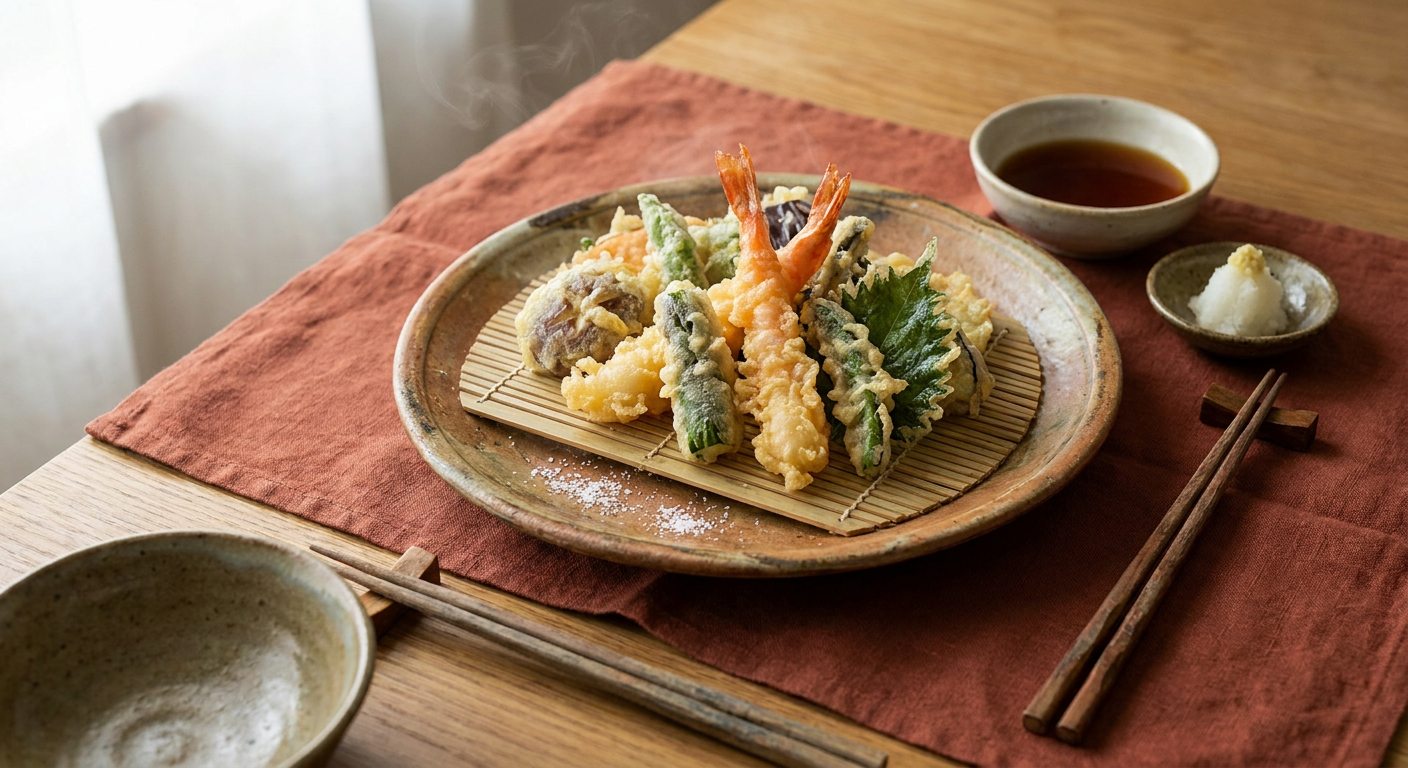
Quantities live in the recipe card.
The batter
- never ahead
The platter (moriawase)
The tentsuyu (dipping broth)
Doneness & Quality Checkpoints
- The batter: icy, lumpy, made at the last second.
- The oil: 175–180 °C, recovered between batches.
- The shells: blotchy gold, audibly crackling, barely attached.
Tempura Moriawase
Prep: 30 minutes · Cook: 20 minutes · Total: About 1 hour · Serves 4 as a shared platter
Ingredients
The batter
- 150 g cake flour or all-purpose (low-protein is the point), chilled
- 1 egg yolk, 200 ml ice-cold sparkling water (or plain water, colder than cold)
- Prepared just before frying — never ahead
The platter (moriawase)
- 12 large shrimp (about 300 g), tempura-cleaned (shell off except tail, deveined, scored on the belly to straighten)
- 100 g sweet potato, sliced 5 mm rounds; 100 g eggplant, half-moons; 100 g green beans
- 6 shiso leaves; 100 g kabocha squash, thin wedges; 50 g onion rings, separated
- Neutral oil, 1.5 litres, for frying at 175–180 °C
The tentsuyu (dipping broth)
- 100 ml dashi, 2 tbsp soy sauce (about 30 ml), 1 tbsp mirin (about 15 g), warmed together
- Grated daikon and ginger, to stir in
Instructions
- **Heat the oil to 180 °C.** Use a thermometer the first few times; after that, a drop of batter should sink slightly, then rise immediately, bubbling hard, and turn golden in about 10 seconds. The oil cools with every batch — let it return between batches. Checkpoint — the too-cool failure mode is greasy, pale shells; the too-hot mode is golden shells on raw interiors. 175–180 °C is the window where a shrimp cooks through in the same time the shell takes to color.
- **Make the batter at the last second.** Whisk the yolk into the icy water, then add the flour all at once and stir with chopsticks — 10–15 strokes, deliberately leaving lumps. The batter should be the texture of thin cream, with dry flour pockets visible. Checkpoint — this batter looks like a mistake. It is not: the lumps become the shell's lacy crisp, and the unmixed gluten stays unformed, which is what keeps it from turning bready. Stirring smooth is the number-one tempura crime.
- **Fry in small batches (90 seconds–2 minutes).** Dip each piece, let the excess drip for a beat, and lay it in the oil away from you. Do not crowd — four or five pieces at most. Flip once. Vegetables by type: beans and shiso 60–90 seconds; eggplant and squash 2 minutes; shrimp 90 seconds to 2 minutes, until the tail's edge crisps deep orange. Checkpoint — good tempura shells are blotchy gold and barely attached — tap one on the pan's edge and it should audibly crackle. Lift pieces onto a rack, never paper, and salt very lightly while hot. Flick a few drops of batter into the oil mid-fry — the random crisps (kasu) are a cook's privilege.
- **Serve immediately, in rounds.** Tempura is served from fryer to plate to hand in sequence — a moriawase platter is built in waves, eaten as it comes, the cook eating standing at the stove as the tradition allows. Checkpoint — eating test: the shell should shatter cleanly, leaving the ingredient's own flavor — sweet potato's candy edge, shrimp's snap — with only salt and the faintest oil. Dip lightly in tentsuyu with a pinch of daikon: the broth seasons, it does not soak.
Finish & Plate
A sheet of absorbent paper on a bamboo basket or wire rack, pieces added as they leave the oil, the platter never deeper than one layer. Tentsuyu in small cups, daikon and ginger on the side. Beer or cold tea; beer is traditional and correct.
Troubleshooting
| Symptom | Cause | Fix |
|---|---|---|
| Shells greasy, heavy | Oil too cool or batter over-stirred | Recover to 180 °C; 10 strokes, lumps stay |
| Shell detached in the fryer | Wet ingredients or thick dripping | Pat dry; drain the dip for a beat |
| Interiors raw, shells dark | Oil too hot | Down to 175 °C; squash and sweet potato thinner |
Storage, Make-Ahead & Variations
- Tempura is eaten within minutes — there is no storage answer, only a 160 °C oven holding a finished batch for 5 imperfect minutes while the next fries. Components (cut vegetables, cleaned shrimp, tentsuyu) hold 1 day. - Seasonal rotation is the tradition: spring vegetables, autumn mushrooms, winter white fish and anago eel. The fusion direction — tempura-fried soft-shell crab in a banh mi (#25) — works precisely because the shell contributes crunch without flavor, a bridge in batter form.