Thai Basil Pesto Pasta
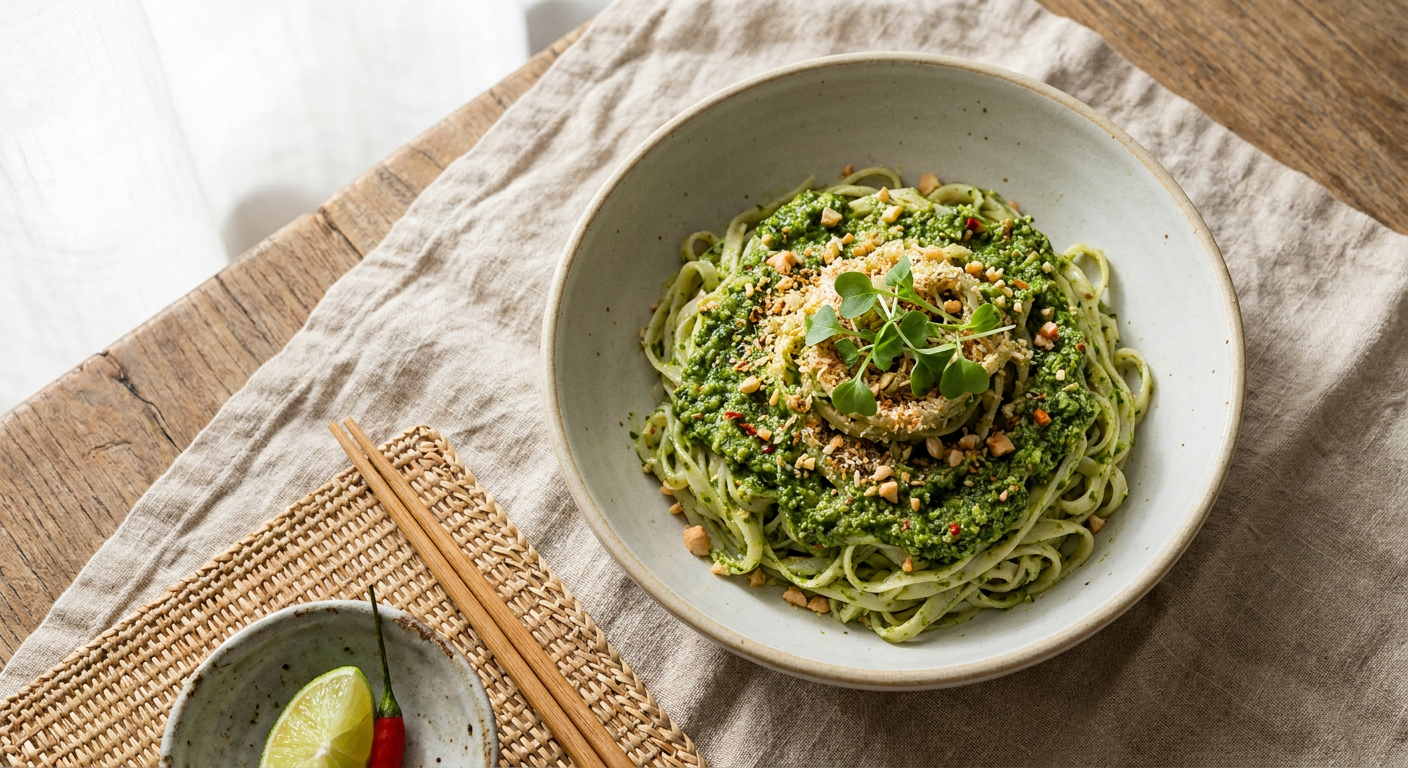
Thai basil pesto swaps the herb and the nuts, keeps the method: the #43's anise-sweet basil pounded with cashews, garlic, and fish sauce instead of parmigiano's salt, over spaghetti. It is the pesto of a Bangkok summer — louder, sweeter, hotter — and its best trick is that pasta pad kaphrao (Thai basil stir-fry) has existed for decades: this crossing was already home.
- **Taste the pesto raw and adjust it hard.** Fish sauce is the parmigiano here — the salt and umami — and its measure is the recipe's balance point. The pesto should taste like pad kaphrao's sauce in a spoon: sweet-basil, salty-fish, hot, with lime lifting.
- **The bridge:** Thai basil (bai kaphrao/horapha) is the soul; Italian sweet basil makes a fine distant cousin; mint plus regular basil approximates the anise at a real loss. Cashews bridge nothing — they are authentic to the Thai kitchen anyway.
Thai Basil Pesto Pasta
Prep: 15 minutes · Cook: 12 minutes · Total: About 30 minutes · Serves 3–4
Ingredients
The pesto
- 60 g Thai basil leaves (a large-market bunch; regular basil bridges at a loss of anise)
- 40 g roasted cashews; 2 cloves garlic (about 8 g)
- 1–2 bird's eye chilies, or a pinch of flakes
- 2 tbsp fish sauce (about 30 ml); 1 tbsp oil (neutral or the pesto's own olive, the fusion's both-ways note); 1 tsp sugar (about 4 g)
- A squeeze of lime; 2 tbsp hot pasta water at the toss
The pasta
- 320 g spaghetti; a spoon of oil for the boil
- Optional garnishes: extra cashews, basil, fried garlic, a fried egg (the pad kaphrao crown)
Instructions
- **Pound or blitz the pesto.** In a mortar (the texture's best self) or a food processor (a genuine weeknight equal): basil, cashews, garlic, chilies, sugar, and fish sauce to a coarse paste, then work in the oil and the lime. Checkpoint — coarse and slightly chunky, vividly green, smelling of anise and garlic — the pesto should be assertive beyond Italian instinct; the pasta and water will dilute it.
- **Boil the pasta to just past al dente**, reserving a mug of the starchy water. Checkpoint — the pesto is a cold sauce; the pasta's heat and its water are the only cooking it gets. The pasta should be a minute shy and very hot at the drain.
- **Toss off the heat.** In the warm pot off the flame: pesto, drained pasta, and pasta water by splashes, tossed vigorously 30–60 seconds until each strand is coated in a glossy, loosened green sauce. Checkpoint — eating test: the first forkful is pesto's format with a Thai accent — anise-sweet basil, cashew's butter, fish sauce's salt, chili's building fire, and the lime's lift at the swallow. The fried egg crown (runny yolk over the green) turns it fully into pad kaphrao's pasta cousin, and nobody at the table will call it a novelty. That is the block's quiet test, passed.
Troubleshooting
| Symptom | Cause | Fix |
|---|---|---|
| Pesto bitter | Basil over-blitzed or over-packed | Pulse, don't run; a pinch more sugar |
| Tastes like garlic-herb pasta | Fish sauce or chilies shy | Both up — the Thai register is loud |
| Sauce tight, clumps | No pasta water | The starchy water is the emulsion's third leg |
Storage, Make-Ahead & Variations
- The pesto keeps 3 days under a film of oil (or freezes in spoons a month); pasta to order. The block's #121 is this recipe's axis-mate. - Variations: with ground pork tossed through (the full pad kaphrao pasta), the kale-and-Thai-basil split. The block's #135 is the Korean direction's answer to the same question.