Tom Yum Goong
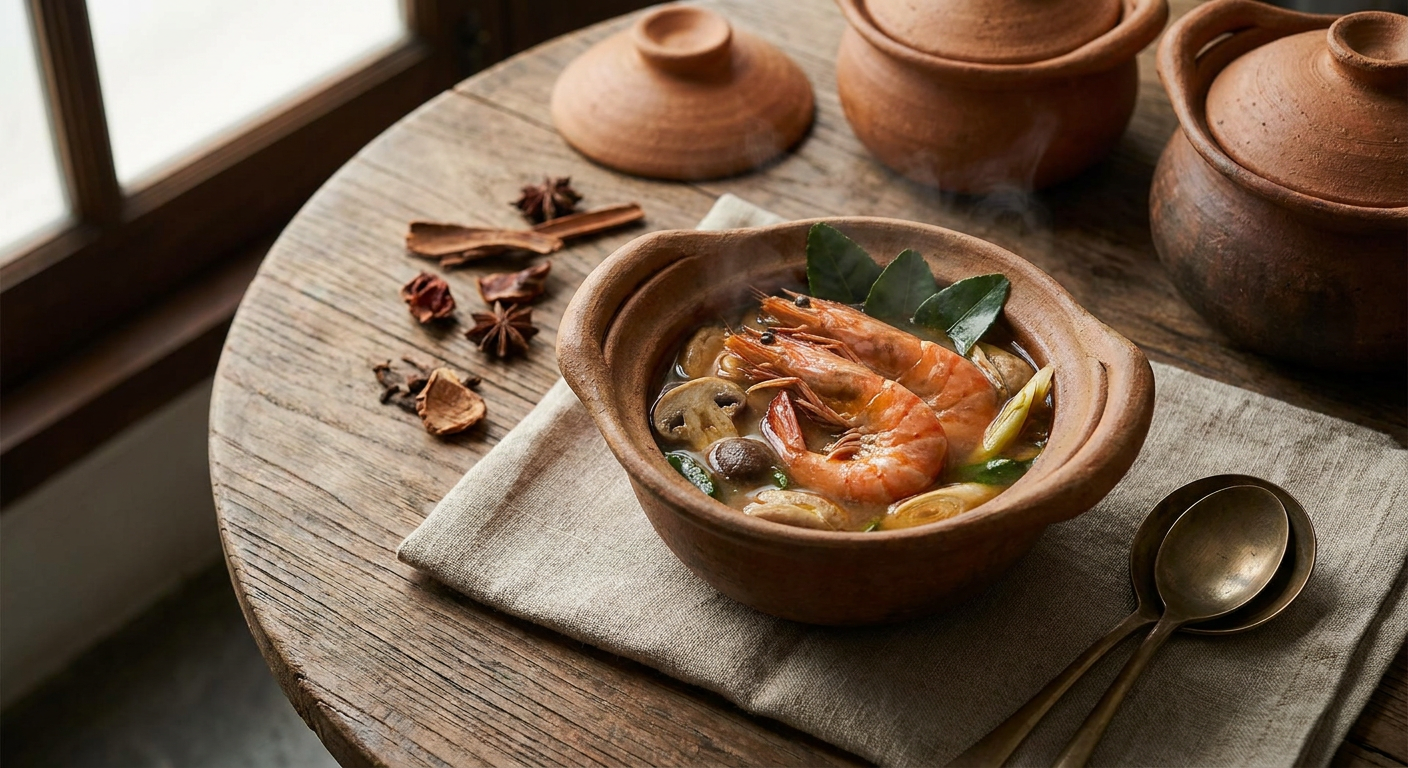
Quantities live in the recipe card.
The aromatic base (all left whole — the diner pushes them aside)
The soup
- optional but transformative
The creamy option (nam khon)
- not coconut milk, though coconut bridges
Doneness & Quality Checkpoints
- The broth: shell stock, aromatics steeped at a tremble, never boiled hard.
- The shrimp: 90 seconds, just curled.
- The finish: fish sauce and lime off the heat, tasted to the sour-salt balance.
Tom Yum Goong
Prep: 20 minutes · Cook: 20 minutes · Total: About 40 minutes · Serves 4
Ingredients
The aromatic base (all left whole — the diner pushes them aside)
- 3 stalks lemongrass (about 90 g), bottom thirds bruised and cut in 4 cm lengths
- 6 slices galangal (about 30 g); 6 makrut (kaffir) lime leaves, torn
- 4 bird's eye chilies, bruised whole (or sliced, for more fire)
The soup
- 600 g shell-on shrimp (the shells are the broth), or 400 g shrimp plus extra shells
- 800 ml water or light chicken stock
- 3 tbsp fish sauce (about 45 ml), plus more at the finish
- 200 g mushrooms (straw mushrooms are authentic; oyster or button bridge), halved
- 2 tsp Thai chili paste (nam prik pao) for the creamy version — optional but transformative
- 3 tbsp lime juice (about 45 ml), always last; 1 tsp sugar (about 4 g)
- A handful of cilantro, stems and leaves; 2 cherry tomatoes, halved (the modern addition, welcome)
The creamy option (nam khon)
- 3 tbsp evaporated milk (about 45 ml) — not coconut milk, though coconut bridges
Instructions
- **Infuse the broth (5 minutes at a tremble).** The broth held just under a boil — 90 °C or so, the surface barely moving — through this stage. Bring the shell broth to a bare simmer with the lemongrass, galangal, lime leaves, and bruised chilies. Let it steep 5 minutes — the aromatics should perfume it thoroughly without ever boiling hard (which turns them bitter). Checkpoint — taste the broth now: it should be fragrant, faintly citrus-pine, with a warming hum of chili — not yet seasoned fully. This is the extraction stage; the flavor layers are being pulled, not cooked. Push the aromatics around and smell: it should smell unmistakably of tom yum before anything else goes in.
- **Add the mushrooms and tomatoes (3 minutes).** Simmer until the mushrooms are just tender. If making the creamy version, stir in the chili paste now — it should darken the broth brick-red and deepen the smell toward roasted. Checkpoint — nam prik pao is the creamy version's open secret: roasted chili paste with tamarind and garlic, and a spoon of it adds a smoky depth that a clear tom yum never has. Both versions are complete; the paste version is the Bangkok street style.
- **The shrimp, then — off the heat — the lime (3 minutes).** Drop in the shrimp and cook 90 seconds, until just curled and opaque. Off the flame, add the fish sauce and sugar, stir, then the lime juice, taste, and adjust — more lime almost always, more fish sauce if it needs depth. The evaporated milk goes in off the heat (creamy version). Cilantro over. Checkpoint — eating test: the first spoonful should hit sour and salt at once, then the aromatics' perfume — lemongrass up front, galangal's pine, the lime leaves' citronella — then chili heat arriving late and staying. The shrimp should be just-tender, the mushrooms slippery-fresh. The final taste adjustment is done off the heat because lime juice cooked into the soup turns flat and slightly bitter; its brightness must be added last.
Finish & Plate
Ladle into wide bowls, the aromatics in evidence (their presence is the sign of the real thing), cilantro crowning, and jasmine rice alongside. Eat while it steams — tom yum's perfume is half its flavor and it fades fast.
Troubleshooting
| Symptom | Cause | Fix |
|---|---|---|
| Soup tastes like lime water | No shell stock | Fry the shells, simmer, strain — 10 minutes |
| Bitter, metallic edge | Lime juice boiled, aromatics boiled | Add lime off heat; tremble, never boil |
| Flat despite seasoning | Needs fish sauce depth, or nam prik pao | Fish sauce by teaspoons; a spoon of paste |
Storage, Make-Ahead & Variations
- The aromatic broth (through step 1) keeps 2 days and improves — a weeknight tom yum station. Shrimp and lime are always last-minute. The finished soup does not keep its brightness. - Variations: chicken (poach slices in the broth), mixed seafood, or the clear/nam-sai version skipping paste and milk. The fusion direction — #120's tom yum risotto — carries this broth into Italian rice, and it works because sour-plus-aromatic is a universal appetite.