Tteokbokki
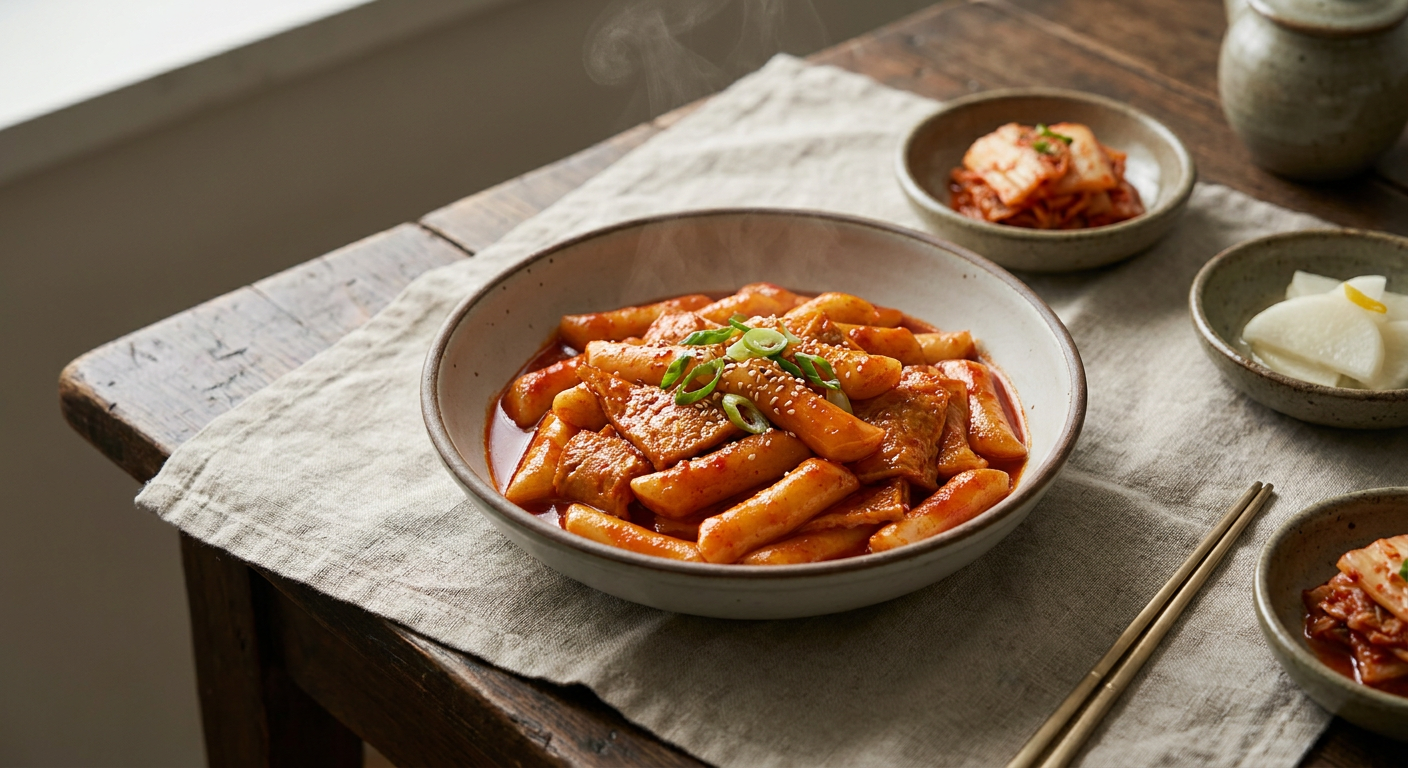
Tteokbokki — chewy rice cakes simmered in gochujang — is Korea's street food monarch: the red, bubbling, sweet-spicy brazier at every market stall, ladled into cups with fish cakes and boiled egg. The dish's genius is its textural core — garae-tteok rice cakes that stay chewy through a hard simmer — and its sauce, which is closer to a sweet-spicy glaze than a soup.
- **Use a wide, shallow pan.** Tteokbokki reduces as it cooks — the sauce needs surface area to thicken around the rice cakes. A deep pot leaves you boiling; a wide pan gives you the glaze.
- **The bridge:** garae-tteok (Korean rice cakes) are in every Korean grocer's cooler and freeze well; there is no substitute (rice cake ≠ pasta, and Western "rice noodles" are a different thing entirely). Fish cakes bridge with any mild white fish cake or can be skipped at a real loss of the street flavor.
Tteokbokki
Prep: 15 minutes · Cook: 15 minutes · Total: About 30 minutes · Serves 3–4
Ingredients
The base
- 400 g garae-tteok (cylinder rice cakes), fresh or frozen-thawed, soaked 10 minutes if hard
- 100 g fish cakes (eomuk), in triangles; 2 boiled eggs, peeled
- 1 onion (about 150 g), sliced; 2 spring onions, cut in lengths; optional: 100 g cabbage
The sauce
- 2 tbsp gochujang (about 40 g); 1 tbsp gochugaru (about 8 g) for extra fire
- 1 tbsp soy sauce (about 15 ml); 2 tbsp sugar or honey (about 30 g)
- 2 cloves garlic, minced; 1 tsp sesame oil (about 5 ml)
- 350 ml anchovy-kelp stock or water (the quick kombu-anchovy broth from #61)
To finish
- Toasted sesame seeds; a slice of processed cheese or mozzarella (the street-cart's creaminess trick — optional but beloved)
Instructions
- **Simmer the flavor base (5 minutes).** Combine the stock, gochujang, gochugaru, soy, sugar, and garlic in the pan and bring to a bubble, stirring until the paste dissolves. Checkpoint — taste the liquid: sweet, spicy, savory — noticeably sweet. The sauce should taste almost over-seasoned now; it will dilute and thicken onto the rice cakes.
- **Add rice cakes, fish cakes, egg (12–15 minutes).** Add the tteok, fish cakes, onion, and eggs and simmer at a lively bubble, stirring often (the tteok stick and scorch given a chance), until the sauce has reduced to a glossy, thick glaze and the rice cakes are tender-chewy and inflated. Checkpoint — the finished sauce should coat a lifted rice cake heavily and close slowly off the spoon; the tteok should be swollen, glossy red, and still chewy at the tooth (about 12 minutes for fresh, longer for thawed). This is not soup: when it looks like a glaze holding everything together, it is done.
- **Finish and serve hot.** Stir in the sesame oil and spring onion, scatter sesame seeds, and serve in cups or small bowls with a fork and a warning about the heat of enthusiasm. Checkpoint — eating test: the bite is the chew — the sauce's sweet-spicy hit lands and then the tteok's dense, satisfying resistance continues for another two seconds. Fish cake adds its savor; egg carries the sauce into the mild bites. The cheese, if used, melts creamy against the spice — the street carts know what they are doing.
Troubleshooting
| Symptom | Cause | Fix |
|---|---|---|
| Sauce thin, soupy | Under-reduced or deep pot | Wide pan, simmer until glaze-thick |
| Rice cakes stuck, scorched | Walked-away simmer | Stir often — the bottom needs attention |
| Tteok hard at center | Undercooked or stale cakes | Fresh cakes; simmer until inflated and tender |
Storage, Make-Ahead & Variations
- Made and eaten hot; the tteok toughen in the fridge (a reheat with a splash of water revives them passably). Sauce base keeps 3 days for the on-demand batch. - Variations: the cream (rosé) version with a splash of milk, the soy-garlic (ganjang) version, the instant-ramen addition. The fusion direction — #135's alfredo — is this dish's own logical extreme, and the site built it there.