Unadon (Grilled Eel Rice)
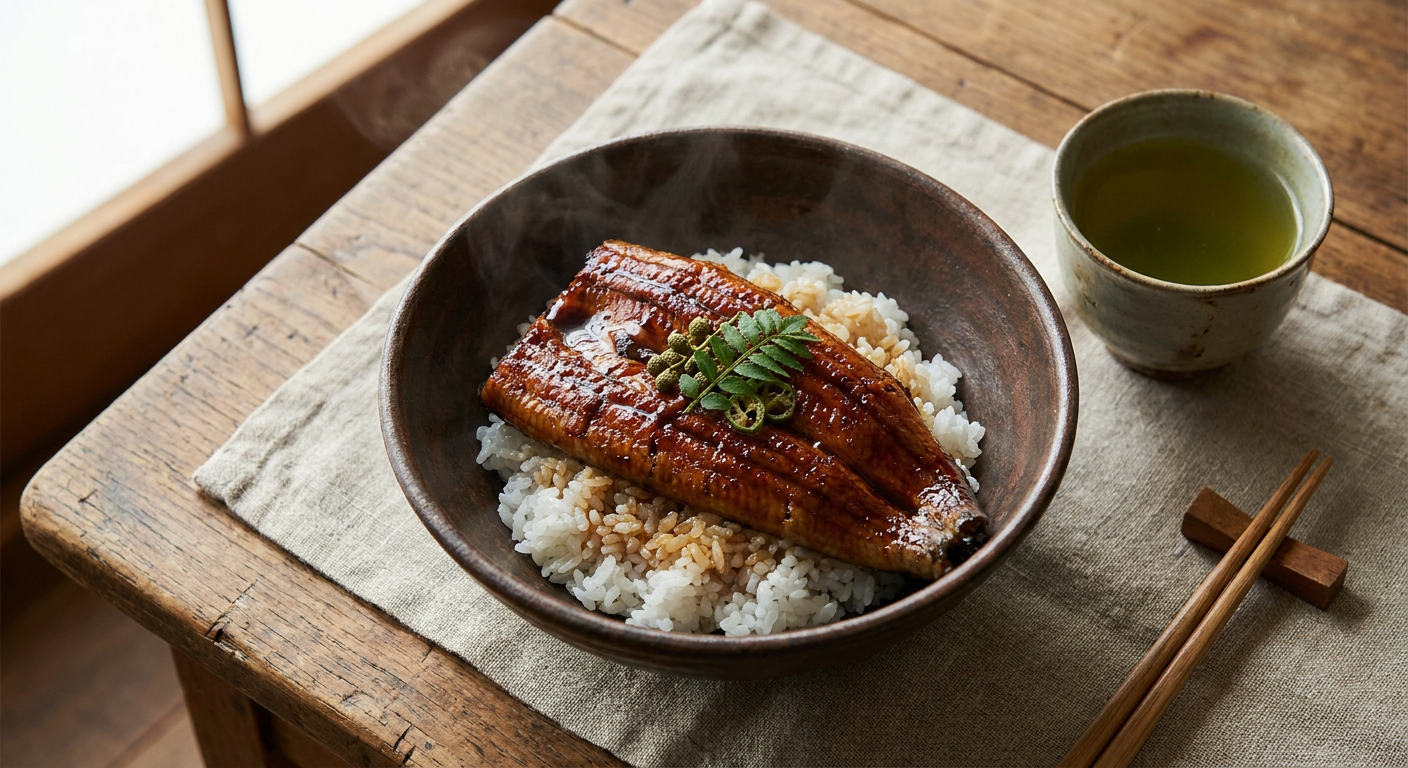
Unadon is the shortcut to one of Japan's great flavor systems: kabayaki — eel glazed in a sweet soy reduction over charcoal. The authentic version is a specialist's craft (skewering, grilling, steaming, grilling again); the home version starts from the vacuum-packed unagi that Japanese groceries sell, which is honestly good, and builds the same finish with a fresh tare glaze and a hot broiler. What the restaurant adds is char and texture; what the home version keeps is everything else.
Quantities live in the recipe card.
The eel
The tare (glaze)
The rice and finish
- or a scrape of fresh lime zest plus a pinch of ground Sichuan pepper as the bridge
- **Reduce the tare slowly.** Simmer soy, mirin, sake, and sugar together 8–10 minutes at a bare bubble until it thickens enough to brush — it should coat a spoon in a film, not a syrup. It keeps for weeks in the fridge; make a triple batch.
**Checkpoint —** the tare's test: a finger dragged across the coated spoon leaves a clean line that fills back slowly — the glaze's working thickness before it ever meets the broiler, and a 10 g taste-spoon now should read sweet-soy balanced with the sake's edge cooked out.
- **The bridge:** sansho pepper is the authentic finish — citrusy, numbing, faintly herbal — sold in small tins at Japanese groceries. Lime zest plus a whisper of ground Sichuan pepper is remarkably close; what you lose is sansho's green intensity. This bridge works because both peppers are in the same botanical family, and it is the shared numbing note — not the citrus itself — that does most of the work against a rich, sweet glaze: the tongue's faint anesthesia resets the palate between bites of eel and tare, which is exactly the job sansho has held in the unagi shop for two centuries.
Doneness & Quality Checkpoints
- The tare: reduced to a brushable coat, sweet-soy balanced.
- The eel: lacquered, blistered, not burnt.
- The bowl: sauce on the rice first, sansho at the finish.
Unadon (Grilled Eel Rice)
Prep: 15 minutes · Cook: 20 minutes · Total: About 35 minutes · Serves 2
Ingredients
The eel
- 2 vacuum-packed unagi (freshwater eel) fillets, about 150 g each (300 g total), thawed if frozen
The tare (glaze)
- 4 tbsp soy sauce (about 60 ml), 3 tbsp mirin (about 45 ml), 2 tbsp sake, 1½ tbsp sugar (about 20 g)
- Optional: a small strip of kombu, steeped in the mix 10 minutes, then removed
The rice and finish
- 2 bowls hot steamed short-grain rice (about 300 g cooked per bowl, from 150 g dry)
- Sansho pepper (about 1 g per bowl, Japanese pepper powder) — or a scrape of fresh lime zest plus a pinch of ground Sichuan pepper as the bridge
- A folded sheet of nori (about 3 g), sliced thin (optional)
Instructions
- **Glaze and broil the eel (8–10 minutes).** Heat the broiler to high — the element's radiant zone running past 250 °C — with a rack close to it. Lay the fillets skin-side down on foil, brush generously with tare, and broil 4–5 minutes until the glaze blisters. Flip carefully (the eel is delicate), brush again, and broil 3–4 minutes more, until the surface is lacquered and spotted with char. Checkpoint — the tare should bubble and darken at the edges but not burn black — the sugar's line is thin. The flesh should look glazed and glossy, not dry. The packet eel is already cooked; you are caramelizing, not cooking through.
- **Build the donburi.** Hot rice in each bowl — the rice must be steaming, because the final glaze goes on the rice too. Brush or drizzle a spoon of tare over the hot rice so it soaks in, lay the whole eel fillet (or cut into thirds across) on top, brush once more, and dust with sansho. Checkpoint — the first bite should be a full stack: sweet-savory glazed eel, vinegary-soft rice that has drunk the tare, and the sansho's citrus-numbing lift at the swallow. The sansho is not decoration — it cuts the eel's richness the way pickles cut fried food.
Finish & Plate
One fillet per bowl over a full bowl of hot rice, sansho dusted from a height so it lands evenly, nori threads at the side. Miso soup and pickles complete the meal. Eat while the rice still steams.
Troubleshooting
| Symptom | Cause | Fix |
|---|---|---|
| Glaze burnt to bitterness | Broiler too close, sugar too far reduced | Watch the last 2 minutes; foil, higher rack |
| Eel dry and tough | Over-broiled past glaze | The eel is pre-cooked — stop when lacquered |
| Tare thin and runs off | Under-reduced | Simmer to the film-on-spoon stage |
Storage, Make-Ahead & Variations
- The tare keeps refrigerated for a month and improves — start your own pot. Unagi packets keep frozen 3 months; a broiled fillet doesn't keep — cook to eat. - Variations: unaju (the same meal in a lacquer box, which changes the rice's steam); the same tare over grilled chicken thigh becomes a weeknight "toridon" — the sauce system, not the eel, is the recipe.