Uni Carbonara
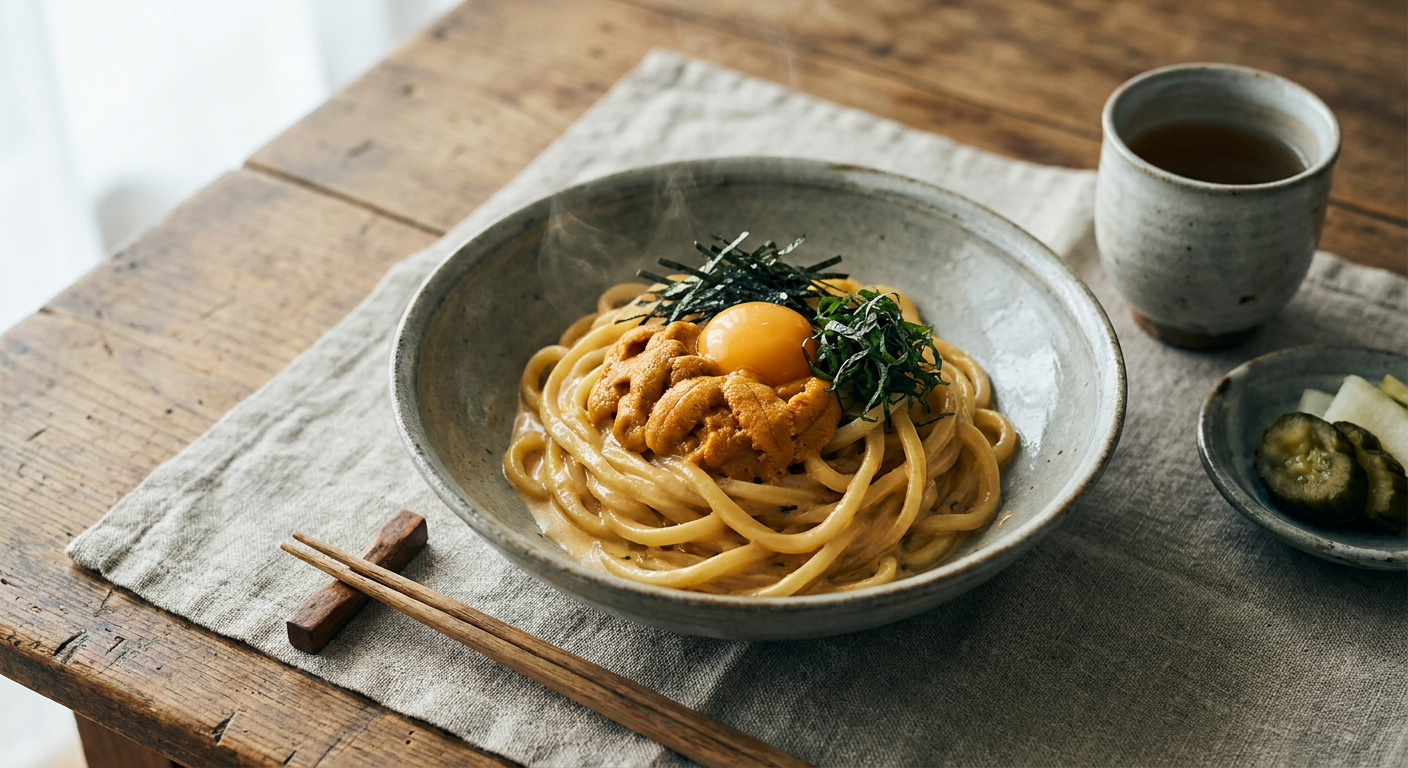
Uni carbonara is the fusion block's most elegant argument: sea urchin's custardy brine replacing (or partnering) carbonara's egg and cured pork, so the sauce arrives oceanic and rich at once. Japan has made uni pasta its own for decades — this is the home version, honest about the one rule that matters: the heat never touches the eggs, or in this case, the uni.
- **Buy the uni right.** Sushi-grade uni is sold in wooden trays at Japanese fishmongers and good seafood counters — firm, plump tongues, briny-sweet, no ammonia smell. The bridge, honestly: this is one of the block's few unbridgeable luxuries. If uni is truly out of reach, the egg-and-bottarga version approximates the oceanic-salt effect at a different tier.
- **The technique law:** carbonara is an emulsion finished off the flame — the pasta's heat cooks the egg-uni mixture just enough. Residual heat is the stove here; a direct flame scrambles it into expensive mistake.
Doneness & Quality Checkpoints
- The uni: sushi-grade, half mashed, half whole, never scrambled.
- The sauce: off-heat emulsion, glossy coat, pasta-water loosened.
- The pork: glassy-crisp, its fat the pan's base.
Uni Carbonara
Prep: 15 minutes · Cook: 15 minutes · Total: About 30 minutes · Serves 2
Ingredients
The pasta
- 200 g spaghetti or linguine
- 100 g uni (sea urchin tongues, 4–6 good pieces; sushi-grade, from a trusted fishmonger)
The sauce
- 2 egg yolks (about 40 g); 60 g uni, mashed to a paste — plus 40 g left whole for the crown
- 40 g pecorino or parmesan, finely grated; a grind of black pepper
- 60 g guanciale or thick-cut bacon, diced small, its fat rendered crisp
- 1 tbsp sake or white wine, in the rendered fat
- A pinch of salt only if needed (uni is salty)
Instructions
- **Render the pork crisp (6 minutes).** The pan at medium — an oil surface around 150 °C — Fry the guanciale in a dry pan over medium until glassy-crisp and the fat runs; splash in the sake and let it hiss out. Kill the heat. Checkpoint — the fat should be liquid gold and the pork pieces shattering-crisp at the edges. The sake's steam lifts the fond — a Japanese half-step in an Italian base, and it works.
- **Boil the pasta to just past al dente.** Reserve a mug of the starchy water. Drain. Checkpoint — the pasta should be a minute from the package's al dente — it finishes in the pan, and the starch water is the emulsion's third partner.
- **The off-heat marriage (90 seconds).** In the warm (not hot) pork pan off the flame, toss the drained pasta in the fat; then add the egg-uni-cheese mixture and a splash of pasta water, and toss vigorously and constantly — the sauce should turn from loose to creamy-silky as the egg thickens in the pasta's heat alone. Add the whole uni pieces in the last tosses, just to warm through. Checkpoint — the sauce should coat each strand in a glossy, pale-gold cream — uni's color unmistakable — with no scrambling (which shows as graininess). If the pan feels hot against your palm, it is too hot; let it cool 30 seconds before the toss. The whole uni pieces should be just warmed, barely holding shape.
- **Serve immediately, crowned.** Twirl into warmed bowls, the whole uni pieces on top, extra pepper and cheese. Checkpoint — eating test: the first forkful is carbonara's silk made oceanic — the uni's sweet brine running through the egg and cheese, the guanciale's crisp salt against it, black pepper cutting. The uni should read as richness with the sea behind it, not "fish pasta" — and the whole tongues on top, barely warm, dissolve against the hot pasta. This is the block's luxury plate: one ingredient moved across the world, and both cuisines improved.
Finish & Plate
Two warmed bowls, the twirls crowned with the whole tongues, pepper ground over at the table. A dry sake or a crisp white; this dish wants quiet company.
Troubleshooting
| Symptom | Cause | Fix |
|---|---|---|
| Sauce grainy, scrambled | Pan too hot at the toss | Off-flame, patience, cooler pan next time |
| Uni flavor absent | Over-mashed into the heat too early | Half in late, whole pieces on top |
| Sauce loose, pools | Under-tossed or water-shy | Vigor and pasta water by splashes |
Storage, Make-Ahead & Variations
- Made and eaten in the moment — carbonara waits for no one and uni less. Components hold 1 day (uni best the day bought). - Variations: with bottarga showered over, the cream-enriched Tokyo café version. The block's #105 shoyu bolognese runs the opposite direction — the Italian chassis fully rebuilt in Japanese seasonings.