Yukhoe
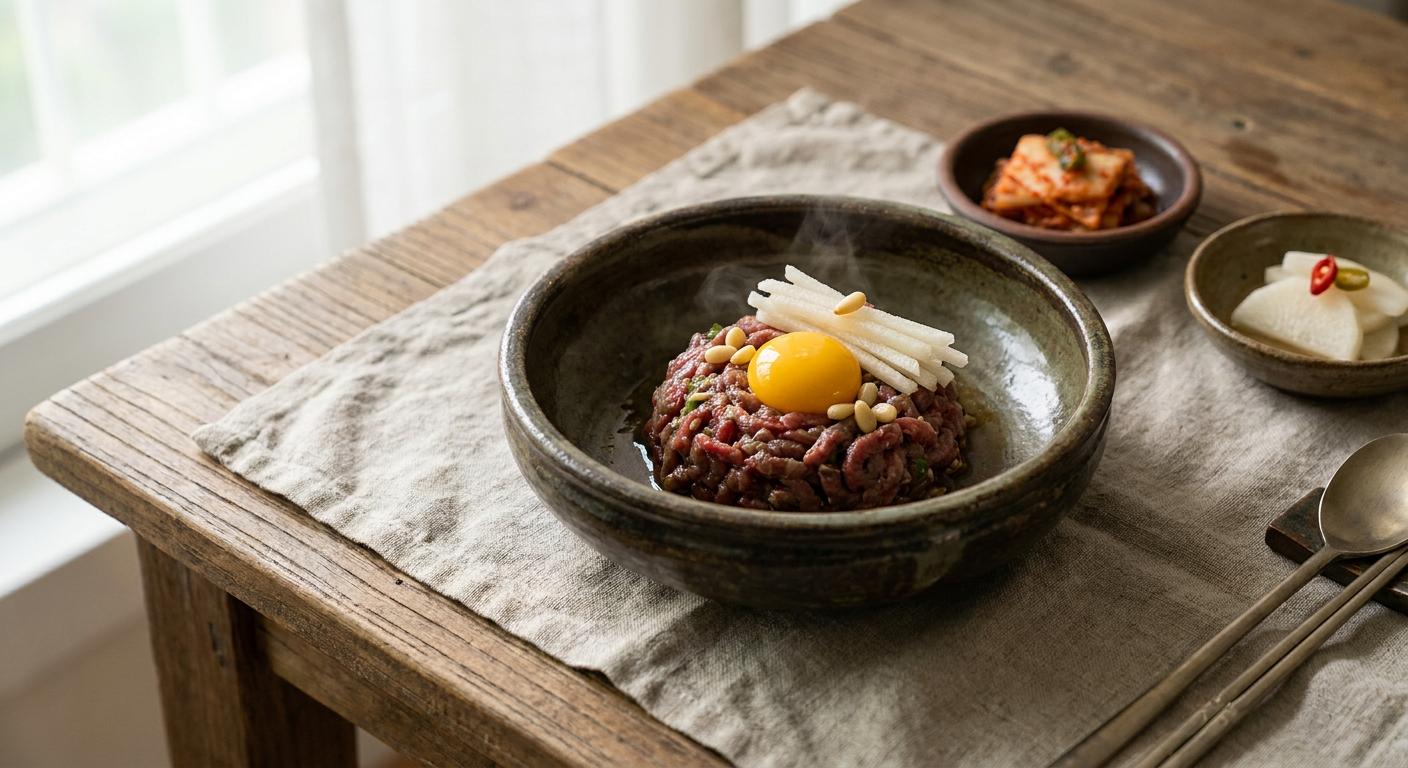
Yukhoe — Korean beef tartare — is the raw-beef classic of royal-court origin: hand-cut prime beef in a pear-sweet, soy-sesame dressing, crowned with the egg yolk and pine nuts. The site's steak tartare (#19 on the sister site) is its French cousin; the Korean distinction is the pear — juicy sweetness against the beef's iron — and the confidence of raw garlic and sesame.
- **The egg and the beef are safety decisions.** Raw beef requires sashimi- or tartare-grade (ask the butcher directly; freeze at -20 °C for 14 days as a home precaution if not certified), and the yolk requires the same pasteurized-egg discipline as the tamago kake gohan (#19). What you lose by skipping both is the dish; what you risk by skipping the precautions is not worth it. Source deliberately.
- **The bridge:** there is no bridge for the beef's quality — this dish is entirely a shopping decision with a dressing. The pear is structural: its juice at the bottom of the bowl seasons the last bites of beef. Apple bridges; do not skip the fruit.
Yukhoe
Prep: 25 minutes · Cook: No cook · Total: About 25 minutes · Serves 2–3
Ingredients
The beef
- 300 g very fresh beef tenderloin (or top sirloin), chilled firm, hand-cut into 5 mm cubes — never ground
- The freshest egg yolk you can source, per serving
The dressing
- 1½ tbsp soy sauce (about 22 ml); 1½ tsp sugar or honey (about 6 g)
- 2 tsp toasted sesame oil (about 10 ml); 1 tsp toasted sesame seeds
- 1 small clove garlic, grated fine; ½ tsp grated ginger
- A pinch of black pepper; a few drops of rice vinegar or lime (optional lift)
The classic accompaniments
- ½ Asian pear (about 150 g), julienned
- 1 tbsp pine nuts (about 10 g), toasted; thin slivers of scallion (about 10 g); a slice of fresh chili (about 5 g)
Instructions
- **Cut, dress, taste.** Hand-cut the chilled beef into cubes (the hand-cut texture — distinct fibers, not paste — is the point; a machine grind ruins it). Toss gently with the dressing ingredients, tasting and adjusting: soy-salt first, sweetness behind, sesame and garlic in the finish. Checkpoint — taste a cube: it should be sweet-savory with the sesame aroma riding, garlic a whisper not a shout. The beef's own flavor must lead — if the dressing dominates, back everything off.
- **Build the plate.** Mound the dressed beef in the center, press a well in the top, set the whole yolk in it, and arrange the pear matchsticks around the base like a nest. Pine nuts and scallion over. Checkpoint — the classic presentation — yolk crowning beef, pear surrounding — is functional: each bite is built by the diner, mixing yolk through and wrapping beef on pear.
- **Break the yolk at the table, mix, and eat with the pear.** Each diner breaks the yolk, folds it through, and eats spoonfuls of beef on pear spears, occasionally chasing a pine nut. Checkpoint — eating test: the beef's cool, clean chew with the dressing's sweet-soy-sesame, the yolk's silk enriching, the pear's cold juice and crunch cutting every few bites, garlic arriving late. It should taste immaculate — the whole dish is only as good as the beef's freshness and the knife's cleanliness.
Troubleshooting
| Symptom | Cause | Fix |
|---|---|---|
| Beef weeping, watery plate | Dressed too early | Dress at serving; serve immediately |
| Garlic overwhelming | Grated too much | A whisper — the smallest clove |
| Texture pasty | Machine-ground beef | Hand-cut cubes, always |
Storage, Make-Ahead & Variations
- No storage — assembled to order and eaten within minutes. The dressing keeps 1 day. - Variations: yukhoe with julienned pear stirred through, the octopus (muchim) and the other raw-muchim cousins require their own expertise. The fusion direction — yukhoe over the #6's chirashi rice — is a raw-protein summit this site endorses for the well-sourced kitchen.