Zaru Soba
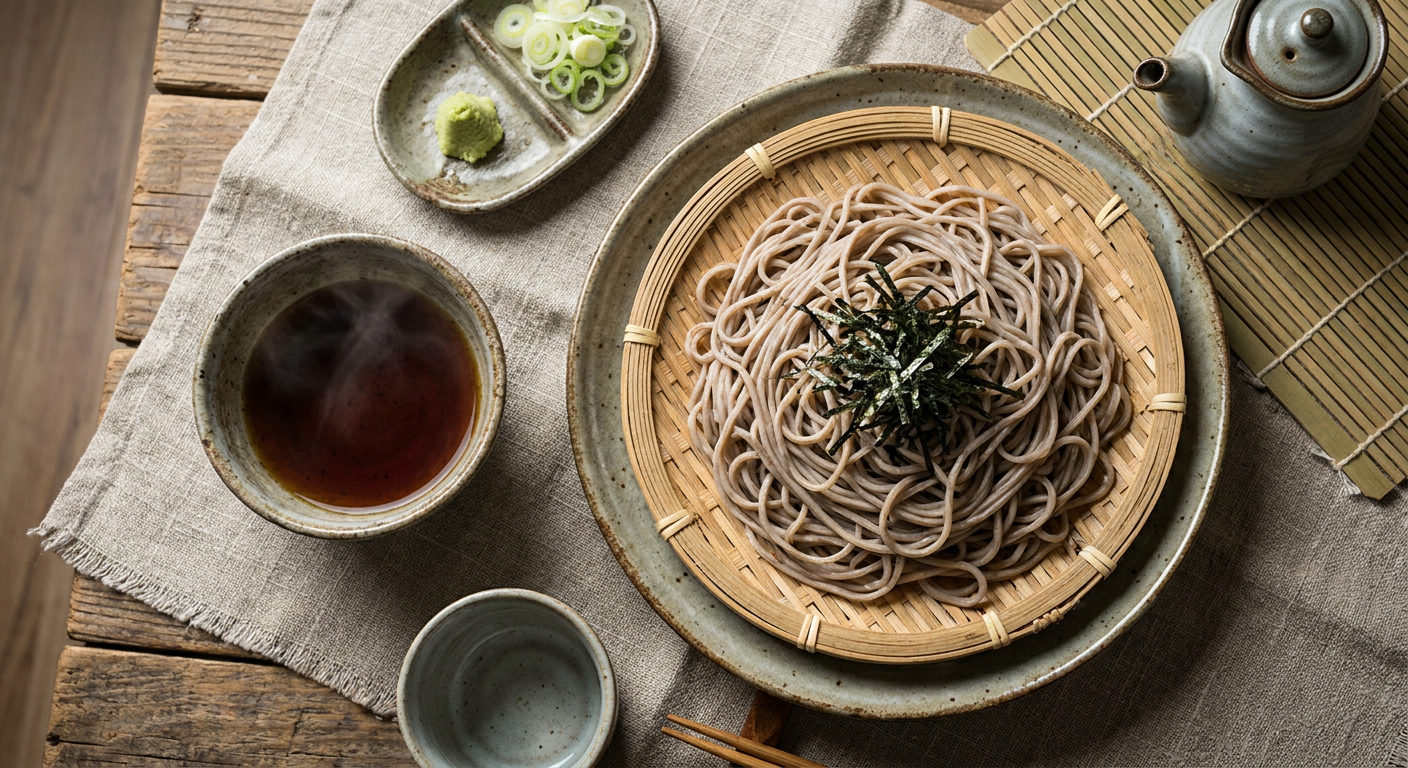
Zaru soba — cold buckwheat noodles on a bamboo mat with a concentrated dipping sauce — is summer Japan's answer to the hot noodle bowl. The noodles' buckwheat flavor is the point, the sauce is a seasoning instrument, and the whole meal takes twenty minutes. The one discipline: soba overcooks in seconds, and the rinse is not optional.
Quantities live in the recipe card.
The noodles
- the ratio is on the package)
The dipping sauce (mentsuyu)
The garnish plate
- **Chill the sauce, ready the ice.** The mentsuyu is served cold — simmer it briefly (2 minutes) to marry, then refrigerate while the noodles cook. Have a bowl of ice water ready at the sink.
- **The bridge:** high-buckwheat soba (juwari, 100%) is fragrant, fragile, and expensive; 80% buckwheat is the everyday authentic choice and holds together better. "Soba" blends below 40% buckwheat are wheat noodles in disguise — you lose the nutty flavor that is the dish's reason to exist.
Zaru Soba
Prep: 10 minutes · Cook: 10 minutes · Total: About 20 minutes · Serves 2
Ingredients
The noodles
- 200 g dried soba (80% buckwheat or higher if you can find it — the ratio is on the package)
The dipping sauce (mentsuyu)
- 150 ml dashi (from 5 g kombu and 3 g katsuobushi, or water + granules)
- 2 tbsp soy sauce (about 30 ml), 2 tbsp mirin
- 1 tsp sugar (about 4 g); a small piece of kombu, steeped 10 minutes and removed
The garnish plate
- 2 spring onions, minced; 1 tsp wasabi; 1 sheet nori, cut to fine threads; grated daikon (about 50 g), squeezed
Instructions
- **Cook the soba by the package's clock, minus 30 seconds (4–5 minutes typically).** Drop the dried bundles into a large pot of UNSALTED boiling water — salting buckwheat toughens it — and stir gently to separate. The water will foam and turn starchy-cloudy: both are correct. Checkpoint — taste a noodle 30 seconds before the package time: it should be tender with the faintest firm thread at the center. Soba's window from al dente to mush is the narrowest on this site — set the timer and stand there.
- **The rinse — longer than feels right (90 seconds).** Drain the soba into a colander and immediately rinse under cold running water while rubbing the noodles gently between your hands — you are washing off the surface starch that makes them gluey and warm. Keep rinsing until the noodles feel slick and separate, and the water runs clear. Checkpoint — properly rinsed soba is individually slippery, not tacky — when you lift a bundle, the strands fall apart cleanly. This step is the difference between zaru soba and a starch clump; the authentic noodle shops rinse in flowing water for minutes.
- **Serve: noodles on ice, sauce in cups, garnish in piles.** Drain the noodles hard, arrange on a zaru (bamboo mat) or a plate lined with nori threads, and set out small dipping cups of the chilled mentsuyu with the scallion, wasabi, and daikon beside. Each diner seasons their cup (a pinch of scallion, a dab of wasabi), dips a bundle halfway, and slurps. Checkpoint — eating test: the noodle should taste of toasted buckwheat first — nutty, faintly sweet — with the sauce as the salty-sharp frame, not the flavor. The slurp is functional: it cools and aerates. If the noodle itself tastes of nothing, the soba was a wheat blend; now you know what the package ratios meant.
Troubleshooting
| Symptom | Cause | Fix |
|---|---|---|
| Noodles gluey, clumped | Under-rinsed | Rinse 90 seconds, rubbing, until slick |
| Noodles mushy | Overcooked past the window | Package time minus 30 seconds, tested |
| Sauce tastes thin | Under-reduced or weak dashi | Simmer the mentsuyu 2 minutes; real dashi helps |
Storage, Make-Ahead & Variations
- Mentsuyu keeps 1 week refrigerated (it is the same base sauce as the #22 udon's broth, concentrated) — make a bottle. Cooked, rinsed soba holds 1 day but is best in the hour. - Variations: tororo (grated mountain yam) over the noodles; tempura (#13) beside them — the classic pairing; in winter, the same noodles and sauce served hot in the broth is kake soba. The fusion direction: the mentsuyu as a vinaigrette base for cold vegetables.